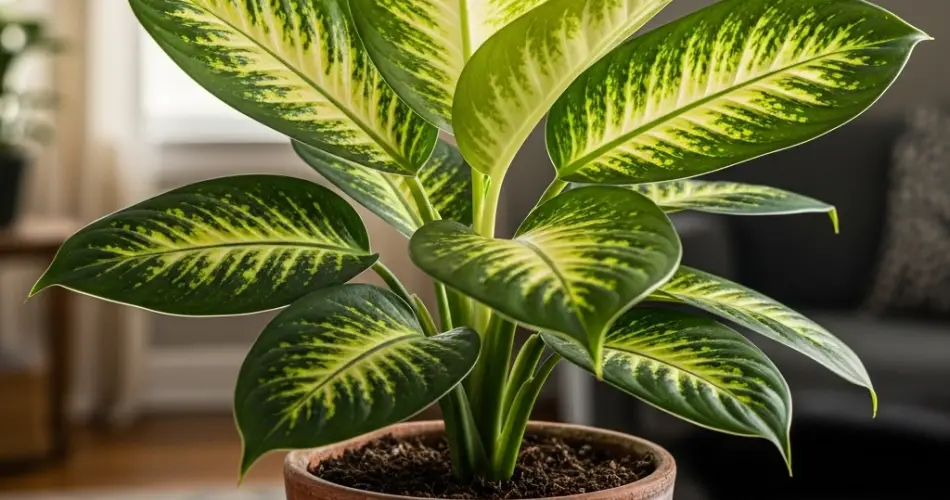
Dieffenbachia, often called dumb cane, is loved for its large, variegated leaves and ability to brighten indoor spaces. Despite its beauty, this plant contains toxic compounds that can be harmful to humans and pets if ingested. Knowing how to handle, place, and care for Dieffenbachia safely ensures that you can enjoy its decorative charm without putting your household at risk.
Understanding Dieffenbachia Toxicity
The main toxic component in Dieffenbachia is calcium oxalate crystals, found in the plant’s sap. When chewed or bitten, these microscopic needle-like crystals embed in the tissues of the mouth, tongue, and throat, causing irritation and swelling.
Common symptoms after contact or ingestion include:
-
Burning sensation in the mouth or lips
-
Swelling of the tongue and throat
-
Difficulty speaking or swallowing
-
Excessive salivation
-
Skin irritation from sap contact
In severe cases, especially in children or pets, swelling in the throat can interfere with breathing, which may require immediate medical attention.
Households with Children and Pets
Because Dieffenbachia’s attractive foliage might tempt curious hands or paws, extra care should be taken in homes with small children, cats, or dogs. Cats, in particular, may chew leaves out of boredom or curiosity, while dogs may playfully grab at foliage.
To reduce risks:
-
Keep the plant out of reach, either on high shelves, hanging planters, or plant stands.
-
Avoid placing it on low tables, floors, or anywhere pets regularly roam.
-
Teach older children about the plant’s toxicity and discourage touching or chewing on the leaves.
Safe Placement Options
Choosing the right placement for your Dieffenbachia balances safety with its growing needs:
-
High Shelves or Cabinets: Position the plant on top of sturdy furniture where it still receives bright, indirect light but remains inaccessible to small hands or pets.
-
Hanging Planters: If your ceilings are high enough, hanging baskets can keep the plant safe while adding visual interest to the room.
-
Corner Plant Stands: Tall plant stands with weighted bases can be used in corners away from high-traffic areas.
-
Behind Barriers: Place the plant in a room or behind furniture where pets and children cannot easily reach it.
Handling Dieffenbachia Safely
Whenever you prune, repot, or handle the plant, take precautions to avoid direct contact with the sap:
-
Wear gloves to protect your skin.
-
Wash hands immediately after handling the plant.
-
Avoid touching your face, especially your eyes or mouth, while working with it.
-
Use clean, sharp scissors or pruning shears to make cuts, and disinfect tools afterward.
What to Do If Exposure Occurs
Despite precautions, accidents can happen. If someone in your home comes into contact with the sap or ingests part of the plant:
-
For skin contact: Rinse the area thoroughly with soap and water.
-
For eye exposure: Rinse eyes immediately with clean water for several minutes and seek medical advice.
-
For ingestion: Rinse the mouth with water and offer a cold drink or ice chips to soothe irritation. Seek prompt medical care, especially if swelling or breathing difficulty occurs.
-
For pets: Contact your veterinarian or a pet poison hotline immediately.
Balancing Safety and Aesthetics
It’s possible to enjoy the lush greenery of Dieffenbachia without compromising household safety by combining smart placement and mindful care:
-
Use tall or wall-mounted planters to both decorate your space and keep the plant out of reach.
-
Group Dieffenbachia with other tall, non-toxic plants to create an attractive plant display that discourages direct handling.
-
Place plants in rooms that can be closed off when young children or pets are present.
Alternatives for High-Risk Homes
If you have a home with highly curious pets or toddlers and don’t want to take any risks, you might consider replacing Dieffenbachia with visually similar but non-toxic alternatives:
-
Parlor Palm (Chamaedorea elegans) – Pet-safe, lush, and adaptable to low light.
-
Areca Palm (Dypsis lutescens) – Elegant fronds with no toxicity concerns.
-
Calathea species – Colorful patterned leaves without harmful compounds.
These can give you a similar decorative impact while removing toxicity concerns entirely.
Final Thoughts
Dieffenbachia can be a stunning addition to any home, but its toxicity means it must be handled and placed thoughtfully. By understanding the risks, keeping the plant out of reach, and taking protective measures during handling, you can safely enjoy its tropical beauty.
With the right placement and precautions, Dieffenbachia can remain a long-lasting and striking focal point in your indoor plant collection—without putting your family or pets in harm’s way.


