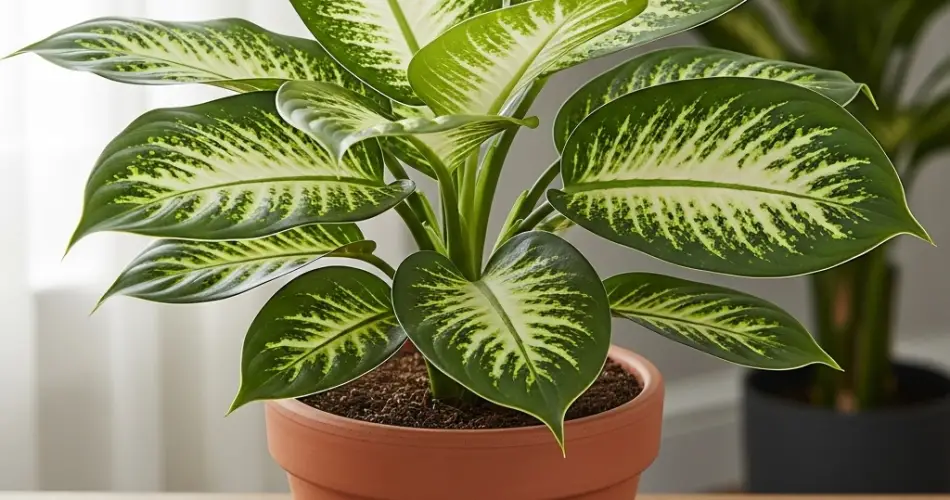
Dieffenbachia, also known as dumb cane, is a striking indoor plant celebrated for its bold, patterned leaves and ability to brighten any space. While it’s considered relatively low-maintenance, one of the most critical aspects of its care lies in managing soil quality and moisture levels. Providing the right growing medium and balanced watering routine is key to keeping this plant thriving year-round.
Inconsistent watering or unsuitable soil can lead to problems such as root rot, stunted growth, and leaf discoloration. By understanding the plant’s natural needs, you can create the perfect environment for it to flourish.
Understanding Dieffenbachia’s Natural Preferences
In its native tropical habitats of Central and South America, Dieffenbachia grows under the canopy of larger plants, where it benefits from high humidity, warm temperatures, and soil that drains well yet holds consistent moisture. This environment offers important clues about how to care for the plant indoors.
The key is to mimic those conditions: provide a light, airy potting mix that retains some water without becoming soggy, and maintain a moisture level that supports steady growth without suffocating the roots.
Choosing the Best Soil Mix
The ideal soil for Dieffenbachia is both moisture-retentive and well-draining. A good potting mix should allow excess water to flow freely while keeping enough moisture for the roots to access between waterings.
A recommended mix can include:
-
Two parts high-quality potting soil – for essential nutrients and structure.
-
One part peat moss or coco coir – to help retain moisture without creating waterlogged conditions.
-
One part perlite or coarse sand – to improve aeration and drainage.
This combination ensures that water moves efficiently through the soil while still keeping roots hydrated. Using a container with drainage holes is equally important to prevent water from pooling at the bottom.
The Role of Drainage
Poor drainage is one of the most common causes of Dieffenbachia decline. Without a way for excess water to escape, the soil can remain overly wet, creating an oxygen-poor environment that encourages root rot.
To improve drainage:
-
Always use pots with multiple drainage holes.
-
Avoid placing decorative cachepots directly around the plant without removing excess water.
-
If using a saucer, empty it shortly after watering to prevent water from reabsorbing into the soil.
Watering for Optimal Health
Watering Dieffenbachia correctly requires paying close attention to soil moisture rather than following a strict schedule. Environmental factors such as temperature, humidity, and light exposure can all influence how quickly the soil dries out.
General watering guidelines:
-
Check before watering – Insert your finger about an inch into the soil. If it feels dry at that depth, it’s time to water.
-
Water thoroughly – Pour water evenly across the soil surface until it begins to drain from the bottom.
-
Avoid frequent shallow watering – This can encourage weak root growth near the surface instead of a healthy, deep root system.
-
Reduce in winter – Growth slows in cooler months, so the plant needs less water. Allow the top inch or two of soil to dry out before the next watering.
Recognizing Moisture Imbalances
Dieffenbachia clearly signals when it’s receiving too much or too little water.
-
Overwatering signs – Yellowing lower leaves, mushy stems, persistent wet soil, and a foul smell from the pot.
-
Underwatering signs – Drooping leaves, dry or crispy edges, and slower growth.
If overwatering occurs, allow the soil to dry more between waterings and consider repotting into fresh, well-draining soil. If underwatering is the issue, adjust your watering frequency and ensure the soil mix can retain enough moisture.
Maintaining Ideal Humidity
Since Dieffenbachia is a tropical plant, it appreciates moderate to high humidity. While it can adapt to average indoor conditions, maintaining humidity around 50–60% can improve leaf health and reduce browning edges.
To boost humidity:
-
Group plants together to create a shared microclimate.
-
Place a humidity tray filled with water and pebbles beneath the pot.
-
Use a room humidifier during dry months.
Extra Tips for Soil and Moisture Success
-
Repot every 1–2 years – This refreshes nutrients and prevents soil compaction, which can hinder drainage.
-
Use room-temperature water – Cold water can shock the roots.
-
Avoid overcompacting the soil – Keep it loose to allow air to reach the roots.
-
Clean leaves regularly – Dust-free leaves photosynthesize more efficiently, making better use of the water and nutrients provided.
Final Thoughts
The right soil and moisture practices are at the heart of Dieffenbachia’s long-term success. By using a well-draining yet moisture-retentive potting mix, ensuring proper watering habits, and maintaining a humidity level that mimics its natural environment, you can enjoy a lush, vibrant plant that continues to brighten your indoor space for years.
Dieffenbachia rewards attentive care with bold, tropical beauty—proof that getting the basics right makes all the difference in plant health.


