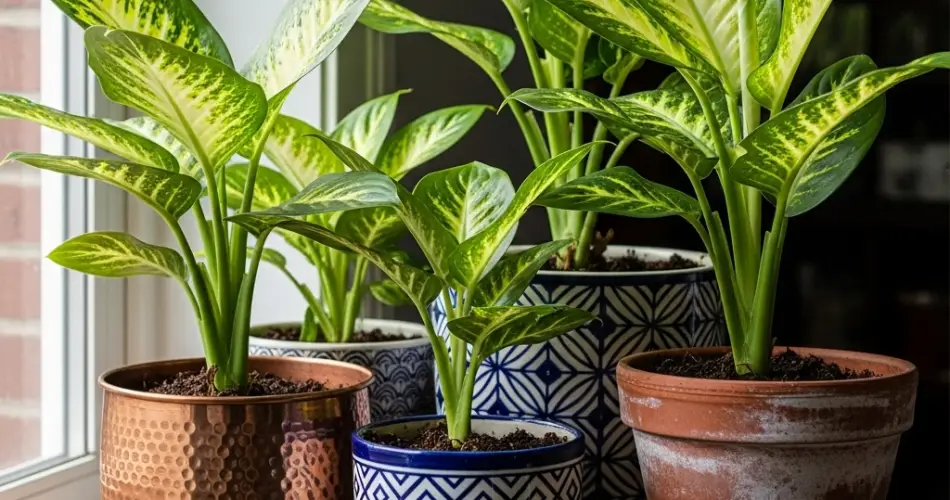
Dieffenbachia, also known as dumb cane, is a popular tropical houseplant loved for its bold, patterned leaves and easygoing nature. With its striking foliage and upright form, it adds instant greenery and a touch of the exotic to indoor spaces. However, to keep your potted Dieffenbachia looking lush and vibrant, you’ll need to pay attention to a few key care practices.
Whether you’re growing it on a windowsill, corner shelf, or in a shady living room nook, this guide will help you maintain a healthy and beautiful plant all year long.
Light Requirements
Dieffenbachia thrives in bright, indirect light but can tolerate lower light levels. The variegation on its leaves is more pronounced when it receives enough light. However, avoid direct sun, as this can scorch the foliage. East- or north-facing windows are ideal, or place the plant a few feet back from a bright south-facing window.
If your plant begins to lose its variegation or stretch toward the light, it’s a sign that it needs more brightness. On the other hand, yellowing or scorched leaves suggest it’s getting too much direct sun.
Watering Tips
Proper watering is crucial to keep Dieffenbachia lush. It prefers consistently moist—but not soggy—soil. Let the top inch of soil dry out between waterings. Stick your finger into the soil or use a moisture meter to check the level.
In summer, your plant may need watering once or twice a week. In winter, growth slows, so reduce watering to once every 10–14 days, depending on indoor humidity and temperature.
Avoid overwatering, which is a common cause of root rot in Dieffenbachia. Ensure the pot has good drainage, and empty saucers after watering.
Choosing the Right Pot and Soil
Dieffenbachia does well in regular indoor potting mix. A well-draining mix with a base of peat, coco coir, or compost works best. To improve aeration, you can add perlite or pumice.
Always use a pot with drainage holes. Terracotta or breathable ceramic pots are ideal for preventing waterlogged roots. Repot every 2–3 years or when roots begin to circle the pot and poke out of the drainage holes.
Feeding for Foliage Health
Feed your Dieffenbachia during the growing season—spring through early autumn—using a balanced liquid houseplant fertilizer once a month. Dilute the fertilizer to half the recommended strength to avoid chemical buildup.
Avoid feeding in winter, as the plant’s growth naturally slows down and excess nutrients can harm the roots.
Humidity and Temperature Needs
Dieffenbachia enjoys a humid environment, similar to its native tropical habitat. If your home is dry, especially during the winter heating season, try one of the following:
-
Use a humidity tray
-
Group it with other plants
-
Run a humidifier
-
Mist the leaves occasionally (avoid doing this in very cool environments)
Temperature-wise, this plant thrives between 18–26°C (65–79°F). Avoid cold drafts, sudden temperature drops, and anything below 15°C (59°F), which may cause leaf drop.
Pruning and Grooming
To keep your plant tidy and bushy, prune leggy stems just above a node. This encourages new shoots and fuller growth. Remove yellow or dying leaves regularly to keep the plant looking fresh and to prevent pest or fungal issues.
Wipe the leaves occasionally with a damp cloth to remove dust. Clean leaves not only look better, but they also absorb more light.
Pest Prevention and Control
Dieffenbachia can be affected by common houseplant pests like spider mites, aphids, and mealybugs. Signs of infestation include speckled leaves, sticky residue, and webbing.
To treat pests:
-
Spray the plant with insecticidal soap or neem oil.
-
Quarantine the affected plant to prevent spread.
-
Repeat treatment weekly until the problem is gone.
Routine inspection and wiping of leaves help keep pests at bay.
Safety Note
Dieffenbachia gets its nickname “dumb cane” from the calcium oxalate crystals in its sap, which can irritate the mouth and throat if ingested. Keep it out of reach of pets and children. Always wash your hands after handling or pruning the plant.
When and How to Repot
Repotting every couple of years revitalizes the plant by providing fresh soil and space for root expansion. Choose a pot one size larger, and repot in early spring before active growth resumes.
When repotting:
-
Water the plant a day before.
-
Gently remove it from its current pot.
-
Loosen the roots and trim any rotted or circling roots.
-
Replant in fresh soil at the same depth as before.
Water well after repotting and place in bright, indirect light.
Final Thoughts
With the right balance of light, moisture, and attention, Dieffenbachia can thrive as a bold centerpiece or accent in any indoor space. Regular grooming, timely feeding, and a humidity-friendly environment will keep your plant lush and vibrant for years to come.
Whether you’re a beginner or seasoned plant enthusiast, Dieffenbachia rewards consistent care with elegant, tropical beauty that brightens any room.


