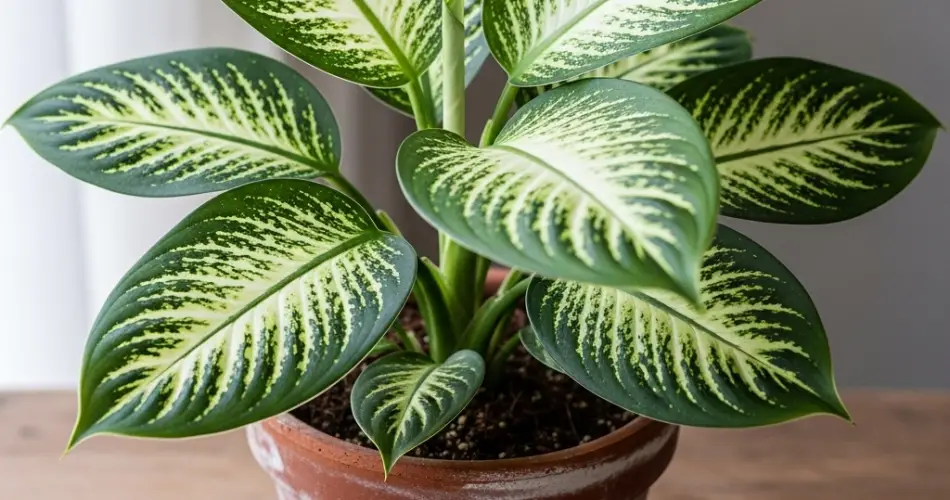
Dumb Cane (Dieffenbachia) is a popular indoor plant known for its large, patterned leaves and lush, upright growth. It’s an excellent choice for adding vibrant greenery to interiors, especially in low to moderate light environments. But to ensure the plant thrives indoors, choosing the right pot is just as important as the care you give it. The ideal pot should provide stability, proper drainage, and suit the plant’s rapid growth habit.
In this article, you’ll discover the best types of pots for Dumb Cane and how each style supports the plant’s health while enhancing your indoor décor.
Why the Right Pot Matters for Dumb Cane
Dumb Cane is a fast-growing tropical plant with a thick stem and large leaves, making it top-heavy as it matures. It’s prone to tipping if placed in lightweight or undersized containers. Additionally, its roots require well-draining soil, and the plant doesn’t tolerate soggy conditions for long. A poorly chosen pot can lead to root rot, poor air circulation, or stunted growth.
Therefore, a good pot for Dumb Cane should offer:
-
Stability to support upright growth
-
Adequate drainage to prevent overwatering
-
Sufficient depth to accommodate expanding roots
-
Aesthetic appeal to match your home interior
Let’s explore the best options.
1. Heavy Ceramic Pots for Stability and Style
Ceramic pots are one of the top choices for Dumb Cane. Their weight gives the plant much-needed support, especially as it grows taller and more leaf-heavy. Glazed ceramic pots come in various colors and textures, allowing you to complement your room’s décor—whether modern, rustic, or minimalist.
Opt for ceramic containers with drainage holes. Pair with a matching saucer to catch excess water and protect floors or furniture.
2. Terracotta Pots for Breathable Root Health
Terracotta pots are made from clay and are naturally porous. This allows moisture to evaporate from the soil more efficiently, which helps prevent waterlogging. This is particularly beneficial for Dumb Cane, which dislikes overly wet roots.
However, because terracotta dries out faster, it’s best used in environments where humidity is high or for growers who are attentive to watering. The earthy, natural look of terracotta also pairs well with the lush green of Dumb Cane’s leaves.
3. Plastic Pots for Lightweight Versatility
Plastic pots are budget-friendly, lightweight, and easy to move around—a great choice if you like to rearrange your plant displays often. They come in a wide range of colors and sizes, and many include built-in saucers.
Just ensure any plastic pot has proper drainage holes at the bottom. Because they retain moisture longer than ceramic or terracotta, adjust your watering habits accordingly to prevent soggy soil.
For extra stability, place a plastic grow pot inside a decorative outer container made from a heavier material like stone or concrete.
4. Self-Watering Pots for Low-Maintenance Care
Self-watering pots offer convenience and reduce the risk of overwatering. These containers include a water reservoir at the base that allows the plant to absorb moisture as needed. They’re particularly helpful if you tend to forget watering or travel frequently.
Choose a self-watering pot that allows airflow to the roots to avoid stagnant moisture. This type is best suited to medium-sized Dumb Cane plants and works well in offices or minimalist indoor settings.
5. Concrete or Stone Pots for Large Specimens
If you’re growing a tall or mature Dumb Cane plant, concrete or stone planters offer maximum stability and a sleek, modern aesthetic. These pots are extremely durable and almost impossible to tip over, making them perfect for floor placement.
However, they are very heavy—especially when filled with soil—so place them in their intended spot before adding the plant. Make sure they have drainage holes or use a plastic inner pot to help with maintenance.
6. Decorative Planter Covers (Cachepots)
For those who want to blend practicality with decorative flair, using a cachepot is a smart choice. Simply place your Dumb Cane in a plain nursery pot with drainage, then insert it into a decorative planter without holes.
This method makes it easy to water the plant separately and pour off excess water while enjoying the aesthetic of your chosen outer pot. Basket-style covers, woven fiber pots, or painted ceramics are popular options that add texture and warmth to interiors.
Pot Size Tips
When selecting a pot, avoid one that’s too large. Dumb Cane prefers being slightly root-bound. If repotting, increase the pot size by only 1–2 inches in diameter. A pot that’s too big may retain too much water and stress the roots.
Check for drainage holes and use a well-draining potting mix formulated for tropical houseplants. Keep the soil lightly moist and avoid water pooling at the base.
Final Thoughts
Choosing the right pot for your Dumb Cane ensures not only the plant’s health but also enhances the beauty of your space. Whether you prefer the natural texture of terracotta, the elegance of glazed ceramics, or the practicality of plastic and self-watering pots, there’s a perfect container to match your needs and style.
Prioritize drainage, stability, and size when selecting your pot, and your Dumb Cane will reward you with vibrant, healthy growth for years to come.


