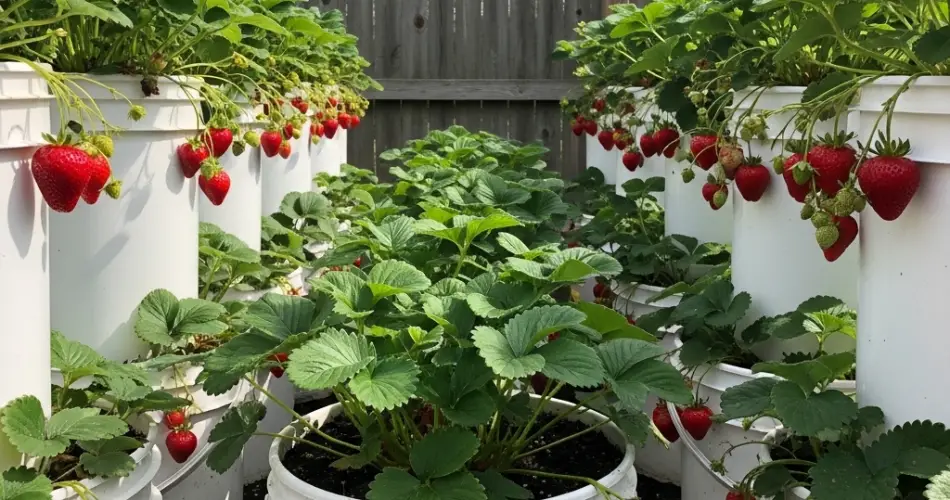
Growing strawberries in buckets is an excellent way to enjoy fresh, juicy berries even if you don’t have a large garden. Strawberries are compact, productive plants that adapt well to container gardening. Whether you have a balcony, patio, or a small yard, growing strawberries in buckets allows you to maximize limited space while keeping the plants easy to manage and harvest.
Here’s a step-by-step guide to growing strawberries in buckets for healthy plants and bountiful harvests.
Why Grow Strawberries in Buckets?
Strawberries thrive in containers for several reasons:
-
Mobility: You can move the buckets to the sunniest spots as needed.
-
Pest Control: Elevating the plants reduces the risk of pests and diseases found in soil.
-
Space Efficiency: Ideal for balconies, patios, or small garden corners.
-
Improved Drainage: Buckets provide better control over water levels.
By growing strawberries in buckets, you can also avoid soil-borne diseases and tailor the soil mix to the plant’s exact needs.
Choosing the Right Strawberry Variety
There are three main types of strawberries:
-
June-bearing: Produce one large harvest in early summer. Ideal for those who want a big crop for freezing or jam-making.
-
Ever-bearing: Provide two to three harvests per season—typically spring, summer, and early fall.
-
Day-neutral: Produce fruit continuously throughout the growing season in moderate climates.
For buckets, ever-bearing or day-neutral varieties are often preferred because they offer a steady supply of berries throughout the season.
Selecting the Right Bucket
Choosing the right container is essential for healthy strawberry growth.
-
Size: Use a bucket that holds at least 3–5 gallons (12–20 liters). This gives each plant enough room to grow and develop strong roots.
-
Drainage: Ensure there are multiple holes in the bottom of the bucket for drainage. Poor drainage leads to root rot and poor fruit production.
-
Material: Plastic buckets are lightweight and retain moisture better, while clay pots offer better breathability.
If you’re planting multiple strawberries, use a wide bucket or consider vertical stacking planters to save space.
Preparing the Soil
Strawberries prefer slightly acidic, well-draining soil with a pH of 5.5 to 6.5. Here’s how to prepare an ideal mix:
-
Combine one part garden soil, one part compost, and one part perlite or coarse sand.
-
Mix thoroughly to ensure a fluffy, aerated texture.
-
Avoid heavy clay or soggy soil as it can suffocate roots and promote fungal diseases.
You can also use high-quality, pre-mixed potting soil labeled for fruits or vegetables.
Planting Strawberries in Buckets
-
Fill the bucket with prepared soil, leaving about 1–2 inches of space at the top.
-
Position the plants so that the crown (where the leaves meet the roots) is just above the soil surface.
-
Space each plant about 8–10 inches apart if planting multiple in one container.
-
Water thoroughly after planting, ensuring the soil is evenly moist.
If starting from bare-root plants, soak the roots in water for 30 minutes before planting.
Sunlight and Watering Requirements
Strawberries need 6–8 hours of direct sunlight daily to produce sweet, flavorful fruit. Place the buckets in a spot with full sun—like a balcony, rooftop, or south-facing patio.
Water the plants regularly, keeping the soil consistently moist but not soggy:
-
In hot weather, water once a day or every other day.
-
Reduce watering during cooler or rainy periods.
Avoid wetting the leaves or fruit, as this can invite fungal infections. A drip irrigation setup or watering at the soil level works best.
Feeding and Fertilizing
Strawberries are heavy feeders, especially when grown in containers where nutrients are limited.
-
Apply a balanced, slow-release fertilizer at planting time.
-
Supplement with a liquid fertilizer every 2–3 weeks during the growing season.
-
Once flowers appear, switch to a fertilizer higher in potassium to encourage fruit development.
Avoid over-fertilizing with nitrogen as it promotes lush foliage at the expense of fruit.
Pruning, Pollination, and Maintenance
-
Remove runners (long stems that produce baby plants) unless you want to propagate new plants. This directs more energy into fruit production.
-
Hand-pollinate flowers if grown indoors or in areas with limited insect activity. Use a soft brush to transfer pollen between flowers.
-
Mulch the surface with straw or coco coir to retain moisture and keep fruit clean.
Regularly check for pests like aphids, spider mites, and slugs. Neem oil or insecticidal soap can help manage infestations naturally.
Harvesting Your Strawberries
Strawberries are ready to harvest when fully red and slightly soft. Check plants daily during peak ripening times.
-
Pick in the morning when fruits are cool for the best flavor.
-
Use scissors or pinch gently to avoid damaging the plant.
-
Store unwashed berries in the fridge and rinse just before eating.
Final Thoughts
Growing strawberries in buckets is a simple and satisfying way to enjoy homegrown fruit, even if you only have a small space. With the right soil, sunlight, and care, a single bucket can produce handfuls of delicious strawberries throughout the season.
This approach is perfect for urban gardeners, beginners, or anyone who wants a convenient, attractive container garden that offers a sweet reward.


