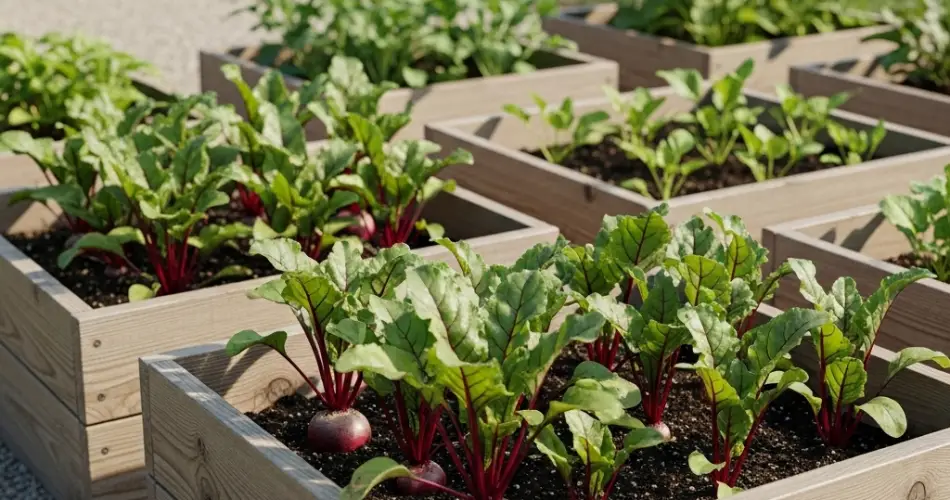
Red beets are one of the most rewarding vegetables to grow at home. Known for their earthy sweetness, vibrant color, and rich nutritional content, beets are versatile in the kitchen and easy to cultivate, even in limited spaces. If you don’t have a traditional garden plot, rustic wooden containers offer an excellent alternative. They not only provide the right growing environment but also bring a charming, natural touch to patios, balconies, or small yards.
This guide will take you step by step through growing red beets in wooden containers, from selecting the right planter to harvesting your crop.
Why Wooden Containers Are Ideal for Beets
Wooden boxes provide several benefits for growing root crops like beets. Their insulating properties help maintain steady soil temperatures, which is especially important for root development. The rustic aesthetic also enhances outdoor or indoor spaces, making your garden both productive and attractive.
Unlike planting directly in the ground, container gardening gives you full control over soil quality and drainage. This is essential for beets, since compacted or poorly draining soil can lead to small, misshapen roots. A well-prepared wooden container ensures optimal growth conditions.
Step 1: Choosing the Right Wooden Container
Beets develop underground, so the depth of your container is important. A wooden box that is at least 10 to 12 inches deep allows enough space for roots to expand. The width and length depend on how many plants you want to grow, but a medium-sized container can yield a satisfying harvest.
Make sure your box has proper drainage holes to prevent waterlogging. Woods like cedar or pine are excellent choices, as they naturally resist rot. Avoid treated wood, as the chemicals can leach into the soil and affect your vegetables.
Step 2: Preparing the Soil
Beets prefer light, loose, and well-draining soil that is rich in organic matter. A suitable soil mix includes:
-
1 part garden soil or topsoil
-
1 part compost for nutrients
-
1 part sand or perlite for drainage
The soil should be free of stones and debris to ensure roots grow smoothly. A pH between 6.0 and 7.5 is ideal. Mixing in a slow-release organic fertilizer before planting will give your beets the nutrients they need for both leafy tops and plump roots.
Step 3: Planting Beets
Beets are typically grown from seeds. Since beet seeds are actually clusters containing multiple seeds, thinning will be necessary later.
-
Sow seeds about ½ inch deep and 2 inches apart in rows.
-
Leave about 6 inches between rows if planting multiple rows in the same container.
-
Water gently after sowing.
Within 5 to 10 days, you should see the first sprouts emerging. Once the seedlings are 2 to 3 inches tall, thin them by snipping extra seedlings at the soil level, leaving one strong plant per cluster. This ensures the roots have space to develop properly.
Step 4: Sunlight and Watering Needs
Beets thrive in full sun, requiring at least 6 hours of direct sunlight daily. Place your wooden container in a sunny location, such as a balcony, patio, or yard corner.
Consistent watering is key. The soil should stay evenly moist but not waterlogged. In containers, soil can dry out more quickly, so check moisture regularly. Mulching the surface with dried leaves or straw helps retain moisture and keeps roots cool. Uneven watering may result in cracked or woody roots, so aim for steady, moderate hydration.
Step 5: Fertilizing and Care
Beets benefit from balanced nutrition. While nitrogen supports leafy tops, too much can reduce root development. Instead, choose a fertilizer that balances nitrogen, phosphorus, and potassium. A liquid fertilizer every three to four weeks works well for container-grown beets.
Weeds are rarely an issue in wooden containers, but keep the soil surface clear to allow proper airflow. If pests like aphids appear, they can be managed with insecticidal soap or a spray of water. Beets are generally hardy and not prone to many diseases when grown in containers with good drainage.
Step 6: Harvesting Beets
Red beets are usually ready for harvest 7 to 9 weeks after planting. The ideal size is when roots are about 1.5 to 3 inches in diameter. Larger beets can become woody, so harvesting at the right time ensures tender, flavorful roots.
To harvest, gently loosen the soil around the beet and pull it up by the greens. The leafy tops are also edible and can be used in salads, sautés, or soups, offering an extra bonus from your harvest.
For a continuous supply, sow beet seeds every 2 to 3 weeks throughout the growing season. This staggered planting guarantees fresh beets over several months.
Benefits of Growing Beets in Wooden Containers
Growing red beets in rustic wooden containers comes with many advantages:
-
Space-saving solution: Perfect for balconies, patios, or compact gardens.
-
Soil control: Custom mixes ensure optimal root development.
-
Rustic charm: Wooden boxes add beauty to the gardening space.
-
Quick results: Harvest fresh beets in just two months.
-
Edible dual purpose: Both roots and greens can be enjoyed in meals.
Final Thoughts
Beets are a nutrient-rich and visually striking crop that adapts well to container gardening. Rustic wooden boxes provide the ideal environment for growing them, offering both practicality and charm. By preparing the right soil, ensuring proper sunlight and watering, and harvesting at the right time, you can enjoy a steady supply of homegrown red beets.
This method of gardening proves that even in small or urban spaces, it’s possible to cultivate healthy, delicious vegetables. With a little care and consistency, your rustic wooden containers can transform into a productive beet garden that delivers both nourishment and beauty.


