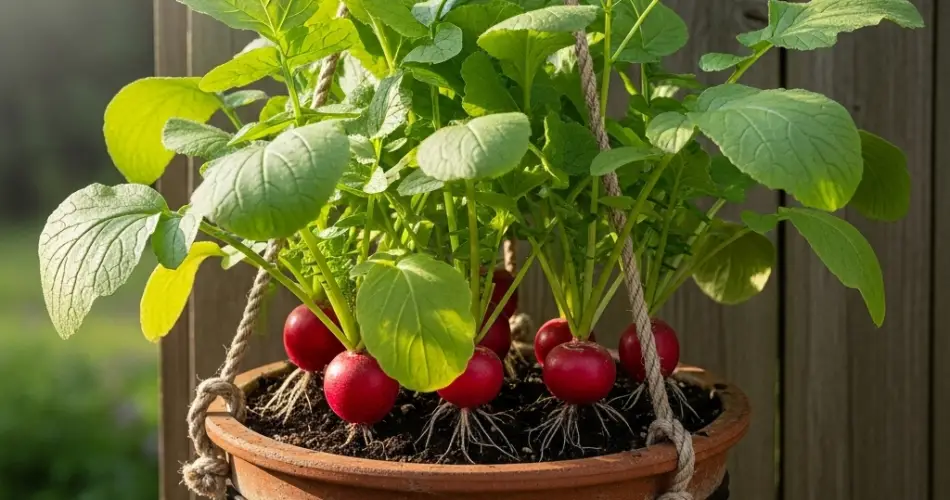
Radishes are a quick-growing, crunchy, and flavorful vegetable that can thrive even in small spaces. Their peppery taste makes them ideal for salads, sandwiches, and garnishes. While traditionally grown in garden beds, radishes are perfectly suited to container gardening, including hanging containers. This method is excellent for apartment balconies, patios, and other limited-space areas, offering a convenient way to enjoy fresh, homegrown radishes without a yard.
Hanging containers allow radishes to grow in a controlled environment with proper drainage and airflow, helping prevent common soil-borne diseases. With consistent care, these containers can produce tender, crisp radishes throughout the growing season.
Why Hanging Containers Work for Radishes
Radishes are well-suited for hanging containers for several reasons:
-
Space-saving: Ideal for small balconies, porches, or urban gardens.
-
Good drainage: Elevated containers reduce the risk of waterlogged roots, which can lead to rot.
-
Pest protection: Hanging plants are less accessible to ground-dwelling pests like slugs and snails.
-
Aesthetic appeal: The vibrant green leaves and colorful roots add visual interest to your space.
These advantages make hanging containers a practical and attractive solution for growing radishes in limited spaces.
Choosing the Right Hanging Container
Selecting an appropriate container is essential for healthy radish growth:
-
Size: Choose a container at least 8–10 inches deep and 10–12 inches wide. Radishes need enough soil to allow their roots to develop properly.
-
Material: Plastic, woven, or wire baskets lined with coconut coir or moss work well. The lining helps retain soil while allowing water to drain.
-
Support: Ensure the hanging mechanism—chains, hooks, or brackets—can support the weight of soil, water, and growing plants.
-
Drainage: Proper drainage holes prevent water accumulation and promote healthy root development.
A well-chosen container provides stability, adequate aeration, and an ideal environment for radishes to grow quickly.
Preparing Soil
Healthy soil is key to producing crisp, flavorful radishes:
-
Lining: Use coconut coir, moss, or burlap to hold soil while allowing excess water to drain.
-
Drainage layer: Add a thin layer of small stones or gravel at the bottom of the container.
-
Soil mix: Use a lightweight, well-draining potting mix enriched with compost. Incorporating perlite or vermiculite improves aeration and prevents compaction.
Well-prepared soil encourages rapid growth, strong roots, and lush green tops.
Planting Radishes
Radishes grow quickly from seeds, making them ideal for container gardening:
-
Sowing seeds: Plant seeds about ½ inch deep and 1–2 inches apart.
-
Thinning seedlings: Once seedlings reach 1–2 inches tall, thin them to 2–3 inches apart to allow room for root development.
-
Watering: Keep the soil evenly moist until germination, which usually occurs within 3–7 days.
For continuous harvests, sow radish seeds in stages every 2–3 weeks. This ensures a steady supply of fresh radishes throughout the season.
Sunlight and Temperature
Radishes thrive in moderate temperatures and adequate sunlight:
-
Sunlight: Provide at least 6 hours of direct sunlight per day.
-
Temperature: Ideal growing temperatures range between 50–70°F (10–21°C).
-
Placement: Position containers in a sunny spot while avoiding areas with strong winds that could damage the plants.
Proper sunlight and moderate temperatures promote fast root growth and tender, flavorful radishes.
Watering and Care
Consistent watering is critical for container-grown radishes:
-
Frequency: Check soil daily and water when the top inch feels dry.
-
Depth: Water thoroughly to reach the entire root zone, but avoid waterlogging.
-
Mulching: A thin layer of straw or shredded leaves helps retain moisture, regulate temperature, and reduce weed growth.
Regular care ensures radishes remain tender and crisp while preventing bolting or splitting.
Harvesting Radishes
Radishes are fast-growing, typically ready to harvest 3–5 weeks after planting, depending on the variety:
-
Pick regularly: Harvest roots when they reach 1–2 inches in diameter for optimal flavor and texture.
-
Method: Gently pull each radish from the soil to avoid damaging surrounding roots.
-
Continuous harvest: Frequent harvesting encourages ongoing growth and maintains consistent production.
Timely harvesting ensures sweet, tender, and peppery radishes.
Common Challenges
-
Pests: Aphids, flea beetles, and slugs may target radishes. Organic sprays like neem oil or insecticidal soap can help.
-
Diseases: Good drainage and airflow reduce the risk of fungal issues such as powdery mildew.
-
Bolting: High temperatures or irregular watering can cause radishes to bolt and become woody or bitter.
Monitoring plants and adjusting care keeps radishes healthy and productive.
Final Thoughts
Growing radishes in hanging containers is an excellent way to enjoy fresh, crunchy vegetables even in small spaces. By choosing the right container, preparing nutrient-rich soil, providing consistent care, and harvesting at the proper time, you can enjoy a steady supply of flavorful radishes right from your balcony, patio, or urban garden.
This method maximizes vertical space while creating a productive and decorative garden feature. With proper sunlight, watering, and attention, container-grown radishes can provide fresh, homegrown vegetables throughout the growing season.


