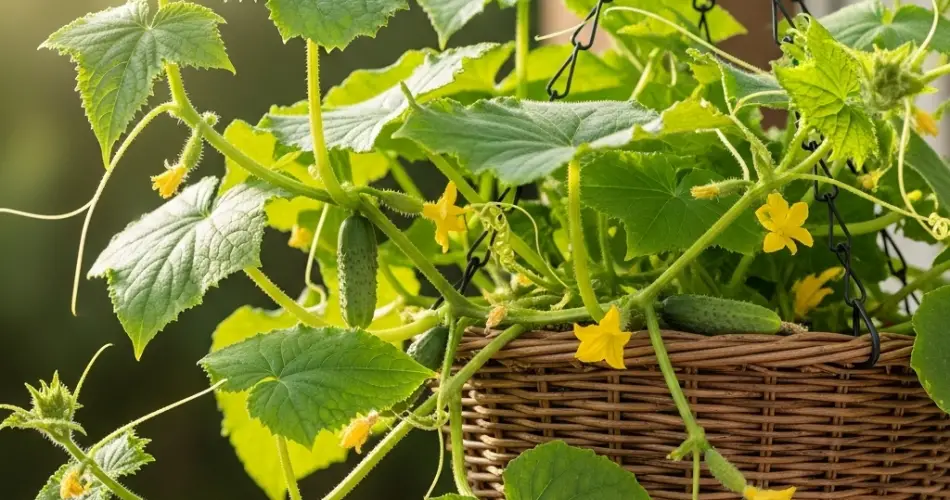
Cucumbers are a refreshing, crisp, and versatile vegetable that can be enjoyed fresh in salads, pickled, or used in various dishes. For gardeners with limited space, hanging basket gardening provides an excellent method for growing cucumbers at home. Hanging baskets offer mobility, good drainage, and easy access, making them ideal for balconies, patios, or compact garden spaces. This guide outlines how to plant, care for, and harvest cucumbers successfully in hanging baskets.
Why Grow Cucumbers in Hanging Baskets
Hanging baskets offer several benefits for cucumber cultivation:
-
Space-Saving: Perfect for small spaces or urban gardens where traditional beds are not feasible.
-
Drainage: Baskets allow excess water to escape, reducing the risk of root rot and fungal problems.
-
Mobility: Baskets can be moved to follow sunlight or protect plants from heavy rain and wind.
-
Ease of Access: Harvesting and care are convenient, and baskets add aesthetic appeal to your garden or balcony.
Choosing the Right Cucumber Varieties
Selecting the right variety is essential for success in hanging baskets. Compact, bush, or dwarf varieties are best suited for containers:
-
‘Bush Champion’: A compact, bushy cucumber that produces medium-sized fruits ideal for salads.
-
‘Spacemaster’: Dwarf variety with high yield and good flavor.
-
‘Patio Snacker’: Produces small, tender cucumbers perfect for fresh eating.
Vining varieties can also be grown, but they require trellising or support to prevent stems from tangling or drooping.
Selecting and Preparing Hanging Baskets
Choose a sturdy hanging basket with a diameter of 12–16 inches and a depth of at least 12 inches. Ensure it has adequate drainage holes to prevent waterlogging. Line the basket with coconut coir, burlap, or landscape fabric to retain soil while allowing excess water to escape. Proper depth and drainage are critical for healthy root development and robust cucumber growth.
Preparing the Soil
Cucumbers grow best in fertile, well-draining soil. For hanging baskets, prepare a mix that includes:
-
High-quality potting soil
-
Compost or well-rotted organic matter for nutrients
-
Perlite or coarse sand to improve drainage and aeration
Avoid using dense garden soil, which can restrict root growth. Cucumbers prefer slightly acidic to neutral soil with a pH of 6.0–7.0. Incorporating a slow-release fertilizer at planting will provide essential nutrients for strong vines and fruit production.
Planting Cucumbers in Hanging Baskets
Follow these steps for successful cucumber planting:
-
Fill the basket with prepared soil, leaving about 2 inches from the top.
-
Plant cucumber seeds ½ inch deep or transplant seedlings carefully.
-
Space seedlings 6–8 inches apart for bush varieties and 12–18 inches for vining types.
-
Water gently to settle the soil and keep it evenly moist.
For vining cucumbers, install a small trellis or support in the basket to allow the vines to climb. This encourages airflow, reduces disease, and helps fruits develop straight and uniform.
Sunlight and Temperature
Cucumbers thrive in full sun, requiring 6–8 hours of direct sunlight daily. Place hanging baskets in the brightest location available. Cucumbers prefer warm temperatures between 70–85°F (21–29°C). Protect plants from cold drafts and provide partial shade during extremely hot weather to maintain consistent growth.
Watering and Care
Consistent soil moisture is critical for cucumbers. Water baskets regularly to keep soil evenly moist, avoiding waterlogging. Mulching with straw or bark chips helps retain moisture and reduce temperature fluctuations.
Fertilize every 2–3 weeks with a balanced, water-soluble fertilizer to support vigorous vine growth and abundant fruit production. Remove yellowing leaves and dead or damaged stems to maintain plant health.
Harvesting Cucumbers
Cucumbers are usually ready to harvest 50–70 days after planting, depending on the variety. Pick fruits when they reach the desired size and are firm to the touch. Regular harvesting encourages continuous production and prevents cucumbers from becoming overripe and bitter.
Benefits of Hanging Basket Cucumber Gardening
-
Efficient use of small spaces
-
Improved drainage and soil control
-
Mobility to optimize sunlight or protect from weather
-
Continuous fruit production with proper care
-
Decorative and functional addition to balconies, patios, or small gardens
Final Thoughts
Growing cucumbers in hanging baskets is an efficient and rewarding approach for gardeners with limited space. By choosing compact varieties, providing nutrient-rich, well-draining soil, and maintaining consistent care, you can enjoy a continuous supply of fresh, crisp cucumbers throughout the growing season. Hanging baskets offer mobility, convenience, and aesthetic appeal, making them perfect for urban and small-space gardening. With proper planting, watering, and harvesting techniques, basket-grown cucumbers can provide delicious produce while enhancing the beauty and functionality of your home garden.


