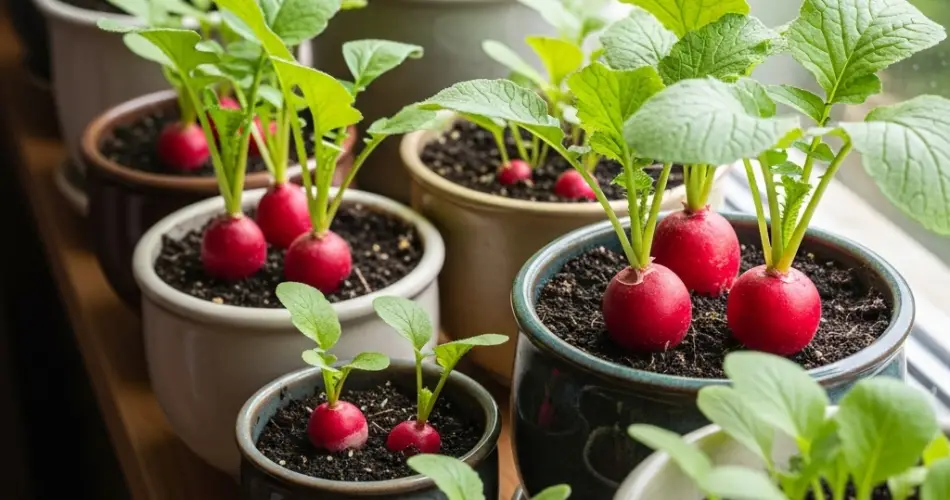
Radishes are among the easiest and fastest vegetables to grow, making them a great choice for new gardeners and anyone with limited space. Their crisp texture and peppery flavor add a refreshing bite to salads, sandwiches, and stir-fries. The best part? You don’t need a large garden to grow them—radishes thrive in small containers on balconies, patios, or sunny windowsills.
With minimal effort, you can harvest fresh, crunchy radishes in as little as 25 days. This guide will show you how to grow them successfully in containers from seed to harvest.
Why Choose Radishes for Small-Space Gardening?
Radishes are compact, fast-growing, and highly adaptable. Their shallow root systems and short growing season make them ideal for container gardening. Even with limited space, you can grow multiple harvests of radishes throughout the year.
Benefits of growing radishes in containers:
-
Quick harvest—ready in 3–4 weeks
-
Perfect for tight spaces and small homes
-
Low maintenance and beginner-friendly
-
Great for kids and first-time growers
-
Helps break up compacted soil when intercropped with other plants
Best Radish Varieties for Containers
Some radish types are better suited for container growing due to their size and speed. Look for small, round, or cylindrical varieties that mature quickly.
Top container-friendly varieties:
-
Cherry Belle – Crisp, round, and matures in about 22 days
-
French Breakfast – Cylindrical shape, mild flavor, and very fast
-
Easter Egg – Colorful mix with purple, white, and pink skins
-
Sparkler – Attractive red with white tips, perfect for shallow pots
-
Rover – Round, uniform, and great for consistent results
These varieties don’t require deep soil and can easily thrive in small containers.
Materials You’ll Need
To grow radishes in containers, you’ll need the following:
-
Container (6–8 inches deep, with drainage holes)
-
Potting mix and compost
-
Radish seeds
-
Trowel or spoon for sowing
-
Watering can or spray bottle
-
Sunny location (4–6 hours of sunlight daily)
You can use plastic pots, wooden boxes, grow bags, or even recycled plastic bottles—just make sure there’s good drainage.
Preparing Your Container
-
Choose the Right Pot
Radishes don’t need deep soil. A pot that is at least 6 inches deep and 8–12 inches wide will support several plants. -
Add Drainage Holes
Ensure your container has adequate drainage. If reusing a container, clean it well before planting. -
Fill with Potting Mix
Use a loose, well-draining potting mix. Combine standard potting soil with compost in a 70:30 ratio. Avoid heavy clay soils. -
Level and Moisten
Smooth the surface and water lightly so the soil is moist but not soggy.
Planting Radish Seeds
-
Sow Directly
Radishes don’t transplant well, so plant the seeds directly in the container. -
Spacing and Depth
-
Sow seeds ½ inch deep and 1 inch apart.
-
For rows, leave about 2 inches between them.
-
Lightly cover with soil and gently pat it down.
-
-
Water Gently
Mist or use a fine spray to avoid displacing the seeds.
Sunlight and Temperature
Radishes grow best in cool weather, ideally between 50–75°F (10–24°C). Place your container in a sunny location where it receives at least 4–6 hours of direct sunlight daily. If temperatures rise too high, radishes may bolt (flower early), making the roots woody and inedible.
Caring for Your Radishes
-
Watering: Keep the soil consistently moist. Uneven watering can cause split or woody roots. Water when the top inch of soil feels dry.
-
Thinning: Once seedlings are 2 inches tall, thin them to about 2 inches apart. Use scissors to snip the extras at the soil line. The thinnings can be eaten as microgreens.
-
Feeding: If your soil is rich in compost, no additional fertilizer is needed. Otherwise, a light feeding of a low-nitrogen organic fertilizer can help. Too much nitrogen encourages leafy growth at the expense of the root.
Common Problems and Tips
-
Bolting: Avoid planting in very hot weather or ensure your container stays cool with partial afternoon shade.
-
Pests: Flea beetles and aphids may appear. Neem oil spray or insecticidal soap works well.
-
Poor Root Formation: Caused by overcrowding, too much nitrogen, or insufficient thinning.
Tip: Successively sow new seeds every 1–2 weeks to enjoy a continuous supply of radishes.
Harvesting Your Radishes
Radishes are ready to harvest in 20–30 days, depending on the variety. Check by gently brushing away some soil to see if the roots are a desirable size (about 1 inch across).
To harvest, grasp the base of the leaves and pull gently. Wash the roots and trim off the leaves if storing in the fridge.
Note: Leaving radishes in the soil too long can cause them to become pithy or overly spicy.
After the Harvest
After harvesting, you can reuse the same container. Remove any leftover roots and refresh the soil with compost. Then, replant a new round of seeds. Radishes grow quickly enough that you can fit multiple harvests into one season.
Final Thoughts
Radishes are the perfect crop for small containers, offering fast results with very little effort. Their crisp bite and short growth cycle make them ideal for beginner gardeners and anyone looking to grow their own food in tight spaces.
Whether you place a pot on a windowsill, balcony, or kitchen step, you can enjoy homegrown, crunchy radishes all year long with just a bit of care and sunlight.


