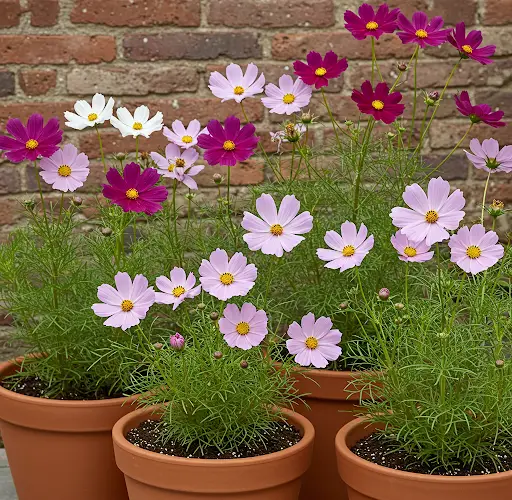
Cosmos are one of the easiest and most rewarding flowers to grow in containers. Known for their feathery foliage and cheerful, daisy-like blooms in pink, white, orange, and purple shades, cosmos bring vibrant color and pollinator activity to patios, balconies, and small gardens. If you’re new to container gardening or simply want low-maintenance blooms all summer, growing cosmos from seed in pots is an excellent choice.
This guide walks you through every step—from sowing seeds to enjoying continuous blooms.
Why Choose Cosmos for Pots?
Cosmos (Cosmos bipinnatus and Cosmos sulphureus) are annual flowers that thrive in containers. They are drought-tolerant, attract bees and butterflies, and bloom from early summer until the first frost. These flowers require minimal care and are great for filling vertical space in small gardens.
Step 1: Choose the Right Pot
When growing cosmos in containers, size matters. Cosmos grow tall and need room for strong root development.
-
Pot size: Use a container that’s at least 12 to 14 inches in diameter and depth for a single plant or several small ones. Larger varieties like ‘Sensation’ or ‘Cosmic Orange’ benefit from even bigger pots or deep window boxes.
-
Drainage: Ensure your pot has several drainage holes to prevent waterlogging, which cosmos dislike.
Step 2: Select the Right Soil
Cosmos prefer poor to average soil and will thrive in loose, well-draining potting mix.
-
Use an all-purpose potting mix with added perlite or sand to improve drainage.
-
Avoid overly rich or fertilized soil—it can cause excessive leafy growth with fewer flowers.
Step 3: Sowing Cosmos Seeds
Cosmos seeds are large and easy to handle, making them perfect for beginners. You can sow them directly into the container or start them indoors.
Direct Sowing into Pots:
-
Fill your container with potting mix, leaving about an inch from the top.
-
Moisten the soil lightly before sowing.
-
Press seeds gently onto the soil surface, spacing them about 6 to 8 inches apart.
-
Cover them with a thin layer of soil—no more than 1/4 inch deep.
-
Mist or water gently to avoid displacing the seeds.
Starting Indoors (Optional):
-
Start seeds 4–6 weeks before your last expected frost date.
-
Use seed trays or small pots.
-
Transplant seedlings into containers once they have 2–3 true leaves and the risk of frost has passed.
Cosmos typically germinate within 7 to 10 days under warm conditions (65°F to 75°F or 18°C to 24°C).
Step 4: Provide Proper Light
Cosmos love sunlight. Place containers in a location that receives at least 6 to 8 hours of direct sunlight daily.
If growing indoors or in a shaded space, you can use grow lights to encourage strong, upright growth, but natural sunlight is best for prolific blooming.
Step 5: Watering and Feeding
Cosmos are low-maintenance, but consistent watering is important during early growth and hot spells.
-
Water when the top inch of soil feels dry. Don’t overwater—cosmos are slightly drought-tolerant once established.
-
Avoid daily watering unless it’s extremely hot.
-
Fertilizing is not essential. If desired, use a balanced, diluted liquid fertilizer once a month. Overfeeding can reduce blooms and encourage too much foliage.
Step 6: Supporting Tall Varieties
Some cosmos varieties can grow up to 4 feet tall, even in pots. To prevent flopping:
-
Use plant stakes or small tomato cages for support.
-
Place pots in a sheltered area if exposed to strong winds.
Compact cosmos varieties like ‘Sonata’ or ‘Dwarf Sensation’ are better for small containers and often don’t need support.
Step 7: Deadheading and Maintenance
To keep cosmos blooming all season:
-
Deadhead regularly: Snip off spent blooms to encourage new flower production.
-
Pinch early growth: Once the plant is about 6 inches tall, pinch the top to encourage bushier growth and more flowering stems.
-
Prune lightly: If plants get leggy or top-heavy, trim them back by one-third to encourage fresh growth.
Step 8: Harvesting and Enjoying
Cosmos make excellent cut flowers. Harvest early in the morning when blooms are just opening, and place them in cool water to enjoy indoors.
Also, let a few flowers go to seed at the end of the season. Cosmos easily self-seed, so you can collect dried seed heads for planting next year.
Common Issues to Watch For
-
Pests: Cosmos are largely pest-resistant but may attract aphids or spider mites. Use a gentle spray of water or neem oil if needed.
-
Diseases: Avoid overcrowding and overwatering to reduce the risk of powdery mildew or root rot.
Conclusion
Cosmos are a joy to grow, especially in pots where space might be limited. With just a few seeds, some sunlight, and minimal care, you’ll be rewarded with a continuous display of vibrant blooms that attract beneficial insects and brighten your garden or balcony. Whether you’re growing a few in containers or a dozen on the patio, cosmos offer charm, color, and simplicity from seed to flower.


