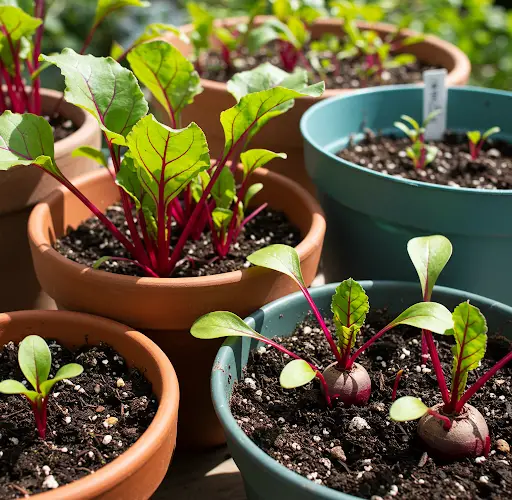
Baby beets are a compact, quick-growing, and nutritious root vegetable that can be easily grown in containers and grow bags. Their sweet, tender roots and flavorful greens make them a dual-purpose crop that’s perfect for small spaces, balconies, or home gardens. Whether you’re a beginner or an experienced gardener, growing baby beets from seed in containers is simple and rewarding.
This guide will walk you through every step—from sowing seeds to harvesting beautiful, tender baby beets.
Why Grow Baby Beets in Containers or Grow Bags?
Beets thrive in containers because they don’t require deep soil and prefer loose, well-drained conditions. Grow bags, especially fabric types, offer excellent drainage and air circulation, which helps prevent root diseases and encourages healthy root development.
Baby beets, harvested when small and tender, mature faster than full-sized varieties and are ideal for growing in tight spaces. Their greens are edible too, adding even more value to your harvest.
What You’ll Need
-
Beet seeds (choose baby or early varieties like ‘Detroit Dark Red’, ‘Early Wonder’, or ‘Babybeat’)
-
Grow bags or containers (at least 8–10 inches deep)
-
Quality potting mix enriched with compost
-
Liquid organic fertilizer or balanced slow-release fertilizer
-
Watering can or hose with gentle spray
-
Sunny spot with at least 6 hours of sun per day
Step 1: Prepare Your Container
Select a grow bag or container that is at least 8–10 inches deep and wide enough to space the beets about 2–3 inches apart. Make sure the container has good drainage holes if using plastic or ceramic pots. Fabric grow bags are especially effective because they promote air pruning of roots and help regulate moisture.
Fill the container with a high-quality potting mix enriched with compost. Avoid using heavy garden soil, which can compact and interfere with root growth.
Step 2: Sow the Seeds
Beet seeds are actually clusters of 2–4 seeds in a single husk, so multiple seedlings may emerge from each one. Soak the seeds in water for a few hours before sowing to speed up germination.
Plant the seeds about ½ inch deep and 2–3 inches apart in rows or grid spacing. Cover lightly with soil and water gently to settle them in.
Place the container in a location that gets full sun. Beets need at least 6 hours of sunlight per day to develop properly.
Step 3: Watering and Germination
Keep the soil consistently moist but not soggy. Water gently and frequently during the germination period, which usually takes 5–10 days. Once seedlings appear, thin them out so that only one healthy plant remains per seed cluster.
Thinning is essential for baby beets to develop round, healthy roots. You can use the thinned seedlings as microgreens in salads or stir-fries.
Step 4: Fertilizing and Maintenance
Beets are light feeders but benefit from some additional nutrition. If you didn’t mix in compost at the beginning, apply a balanced liquid fertilizer every 2–3 weeks. Avoid high-nitrogen fertilizers, which will encourage leaf growth over root development.
Water regularly to keep the soil evenly moist, especially as the roots begin to swell. Inconsistent watering can cause woody roots or uneven growth.
Mulch the surface of the soil with straw, dried leaves, or compost to retain moisture and prevent weeds.
Step 5: Monitor for Pests and Problems
Beets are relatively trouble-free but can occasionally attract pests like leaf miners, aphids, or slugs. Check the underside of leaves regularly and remove any affected foliage. Organic options like neem oil or insecticidal soap can be used if infestations occur.
Yellowing leaves or slow growth may indicate nutrient deficiency or poor drainage. Make sure your containers aren’t waterlogged and consider supplementing with compost tea or seaweed extract if growth is lagging.
Step 6: Harvesting Baby Beets
Baby beets are typically ready for harvest 30–50 days after sowing, depending on the variety. You can begin harvesting when the roots are about 1–2 inches in diameter. The best way to check is to gently brush away the soil around the top of a beet to see its size.
To harvest, grasp the base of the stem and pull gently. If the soil is compact, loosen it first with your hand or a small fork to avoid damaging the roots.
Don’t forget the greens! Beet tops are rich in vitamins and taste great sautéed, steamed, or added to soups.
Final Tips for Success
-
Sow beets every few weeks for a continuous harvest through the growing season.
-
If growing in hot weather, provide light afternoon shade or mulch heavily to keep roots cool.
-
Rotate containers if growing other root crops to reduce the risk of disease buildup.
Growing baby beets from seed in containers or grow bags is a simple, space-saving way to enjoy fresh, homegrown vegetables. With just a little care, you’ll be harvesting sweet, vibrant baby beets in as little as a month—perfect for fresh salads, roasting, or enjoying straight from the pot.


