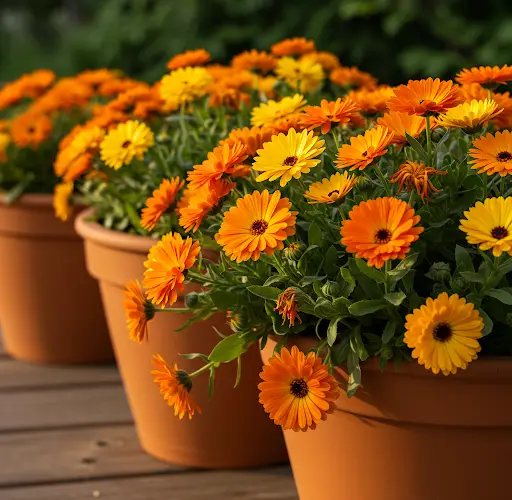
Calendula, commonly known as Pot Marigold, is a cheerful and easy-to-grow flowering plant that adds a splash of golden-orange color to any garden. Not only is it beautiful, but it’s also useful—Calendula flowers are edible, have medicinal properties, and attract beneficial pollinators to your garden. If you have limited space or prefer container gardening, Calendula grows remarkably well in pots. Here’s a detailed guide on how to grow Calendula from seed in pots or containers.
Choosing the Right Container
Calendula plants don’t require deep containers, but they do appreciate good drainage and moderate space for root development. Choose pots that are at least 6 to 8 inches deep and 8 to 12 inches in diameter. Ensure there are drainage holes at the bottom to prevent waterlogging.
Clay or terracotta pots are ideal because they allow for better airflow around the roots, but plastic pots work well too if you monitor watering carefully.
Selecting the Soil
Calendula prefers light, well-draining soil. A standard potting mix enriched with compost or aged manure will work beautifully. The soil should retain some moisture but not stay soggy. You can improve drainage by adding perlite or coarse sand to the mix.
pH-wise, Calendula is not very picky, thriving in slightly acidic to neutral soil (pH 6.0 to 7.0). Avoid heavy, clay-rich soils unless amended well for better drainage.
Sowing Seeds
Calendula seeds are easy to handle and germinate quickly. Here’s how to sow them:
-
Fill your pot with the prepared soil mix, leaving about an inch of space from the top.
-
Sow the seeds about 1/4 inch deep. You can either sow several seeds and thin them later or plant one or two seeds per spot if space is limited.
-
Gently water the soil to moisten it without washing away the seeds.
-
Keep the container in a location that receives indirect sunlight until germination occurs.
Calendula seeds usually sprout within 7 to 10 days. Once the seedlings are about 2 inches tall, thin them to allow at least 6 to 8 inches of space between plants. This spacing helps with airflow and reduces the risk of fungal disease.
Light Requirements
Calendula thrives in full sun, requiring at least 5 to 6 hours of direct sunlight daily. In very hot climates, it appreciates a bit of afternoon shade, especially in summer, to prevent heat stress and prolong flowering.
If you’re growing Calendula indoors or on a shaded balcony, placing the pots near a bright, south-facing window or under grow lights can help ensure healthy growth.
Watering
While Calendula is somewhat drought-tolerant, consistent moisture helps promote lush growth and continuous blooming. Water the plants when the top inch of soil feels dry to the touch.
Avoid overwatering, as soggy conditions can cause root rot and other fungal issues. Ensure the pot drains freely after each watering.
Fertilizing
Calendula doesn’t require heavy feeding. Mix some well-rotted compost or slow-release organic fertilizer into the soil at planting time. During the flowering season, a monthly dose of a balanced liquid fertilizer (like 10-10-10 or compost tea) will support vigorous blooming.
Over-fertilizing, especially with high-nitrogen fertilizers, can lead to lush foliage with fewer flowers.
Pruning and Maintenance
To keep your Calendula plants blooming longer, regularly deadhead spent flowers. This encourages the plant to produce more blooms and prevents it from going to seed too early.
If the plant becomes leggy, you can pinch or trim back the stems to encourage bushier growth.
Calendula is generally pest-resistant, but watch for aphids and whiteflies. If needed, rinse them off with water or use a mild insecticidal soap.
Harvesting and Uses
Calendula petals can be harvested as soon as the flowers are fully open. They can be used fresh in salads, dried for teas, or infused into oils and skincare products.
To dry the petals, spread them out in a single layer in a warm, shaded area until they feel crisp. Store them in an airtight container away from light and moisture.
Seasonal Tips
Calendula prefers cooler weather and thrives in spring and fall. In hot climates, it’s best grown during the cooler months. In temperate regions, you can start sowing seeds indoors a few weeks before the last frost and transplant them once the risk of frost has passed.
It also reseeds easily. If you let a few flowers go to seed, you may find new Calendula plants sprouting up on their own in the next season.


