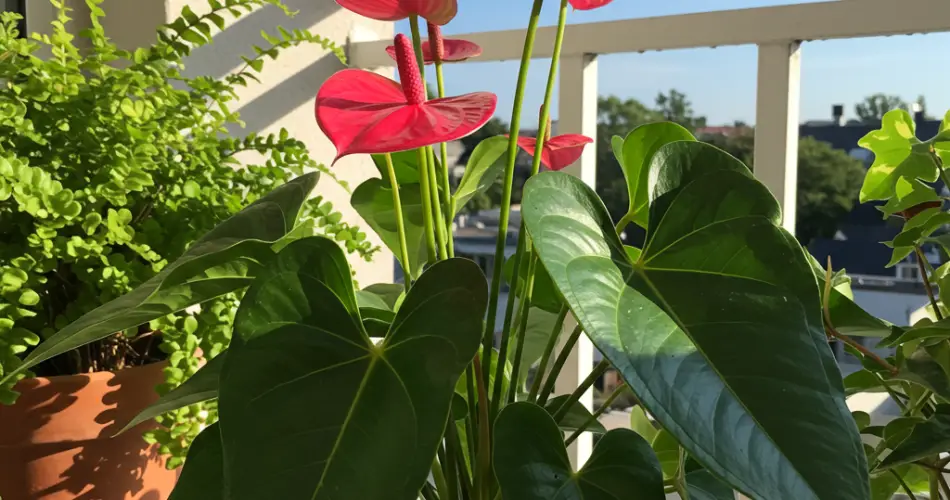
Anthuriums, also known as “flamingo flowers” or “laceleaf,” are prized for their bold, heart-shaped leaves and long-lasting, waxy flowers in vibrant shades of red, pink, white, or purple. Though they’re native to tropical rainforests, they can thrive beautifully on a balcony—even for beginners—with the right care and setup. Whether you live in an apartment or have a small outdoor space, growing anthuriums is simpler than you might think.
Here’s a step-by-step guide to help you grow healthy, blooming anthuriums on your balcony—even with no prior gardening experience.
1. Choose the Right Variety
There are many types of anthuriums, but the most popular for home growing is Anthurium andraeanum, thanks to its bright, showy spathes (what most people think of as the flower). These are well-suited for container growing and adapt well to balcony conditions as long as they are protected from harsh weather.
Look for healthy plants with deep green leaves and no yellowing or brown tips. Local garden centers often carry varieties ideal for container gardening.
2. Select the Right Container
Anthuriums have shallow root systems and don’t require deep pots. However, they do need excellent drainage. Choose a container with:
-
Drainage holes at the bottom.
-
A size that gives the roots space to grow, but not so large that water sits too long.
-
A saucer underneath to catch excess water, which is especially useful on balconies.
For added style and mobility, consider placing the plastic nursery pot into a decorative outer pot with wheels for easy movement.
3. Use the Right Soil
Anthuriums prefer light, well-aerated, and slightly acidic soil. Regular garden soil is too dense and can suffocate the roots. Use a custom mix for best results:
-
One part orchid bark
-
One part peat moss or coco coir
-
One part perlite
This combination mimics their natural rainforest habitat and allows air to reach the roots while holding enough moisture.
4. Light Requirements
Anthuriums love bright, indirect sunlight. On a balcony, this means placing them in a spot with filtered light or near a wall where they receive morning sun and afternoon shade.
Too much direct sun can burn the leaves, causing them to turn yellow or brown. On the other hand, too little light will reduce flowering. If your balcony is shaded, you can supplement with a grow light during the shorter days of the year.
5. Watering Tips
These plants prefer moist but not soggy soil. Allow the top inch of soil to dry out between waterings. In warm weather, this might mean watering every few days, while in cooler months, once a week may be enough.
Use lukewarm water and try to water in the morning to give the plant time to absorb moisture before temperatures drop at night. Avoid letting water collect in the crown of the plant to prevent rot.
A helpful tip: insert your finger into the soil—if it feels dry up to your first knuckle, it’s time to water.
6. Humidity and Temperature
Anthuriums are tropical plants, so they thrive in warm, humid conditions. On most balconies, humidity might be lower than ideal, especially during dry seasons.
To increase humidity:
-
Mist the plant regularly with water.
-
Place a shallow tray filled with pebbles and water beneath the pot.
-
Group the anthurium with other plants to create a microclimate.
Keep the temperature between 60–85°F (16–29°C). Protect the plant from strong winds, sudden temperature changes, or cold drafts.
7. Fertilizing for Better Blooms
Feed your anthurium with a balanced, water-soluble fertilizer every 4–6 weeks during the growing season (spring to early fall). Look for a fertilizer labeled for flowering plants or orchids.
Avoid over-fertilizing, as this can damage the roots and lead to weak or discolored leaves. If your plant is growing lots of leaves but no flowers, switch to a fertilizer higher in phosphorus (the middle number on the label) to encourage blooming.
8. Pruning and Maintenance
Trim off yellow, wilted, or damaged leaves to keep the plant healthy and attractive. Use clean, sharp scissors or pruning shears to prevent disease transmission.
If the roots begin to poke out of the drainage holes or the soil dries out too quickly, it may be time to repot the plant into a slightly larger container with fresh soil.
9. Common Problems and Solutions
-
Brown leaf tips: Often due to dry air or fluoride in tap water. Try using filtered or rainwater and increase humidity.
-
Yellow leaves: Usually from overwatering or too much sun.
-
No flowers: Not enough light or nutrients. Adjust placement and consider a flowering fertilizer.
Final Thoughts
With a bit of care and attention, anthuriums can add a bold splash of color and elegance to any balcony space. These resilient, low-maintenance plants are perfect for both beginners and seasoned plant lovers. By providing the right balance of light, humidity, and watering, you can enjoy vibrant blooms and lush foliage throughout the year—even with no prior gardening experience.


