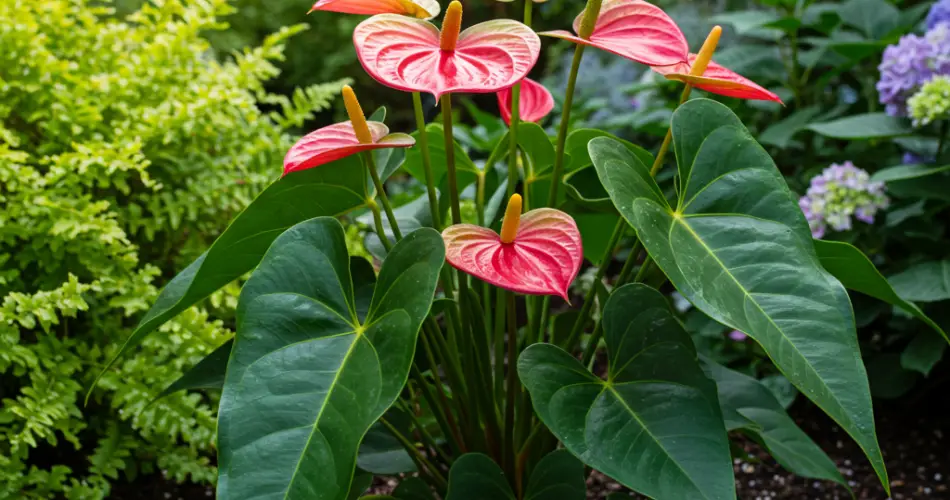
Anthuriums are stunning tropical plants prized for their glossy, heart-shaped leaves and vibrant, long-lasting flowers. Known as “flamingo flowers” or “laceleaf,” these plants add exotic beauty and elegance to any garden. If you think growing Anthuriums is only for expert gardeners, think again! With a little guidance and care, even beginners can successfully cultivate these tropical beauties in their gardens.
This article will walk you through the essential steps to grow Anthurium plants outdoors, covering everything from selecting the right location to watering, feeding, and maintaining your plants.
Why Grow Anthurium in Your Garden?
Anthuriums are popular garden plants because:
-
They produce bright, waxy flowers in shades of red, pink, white, or green that can last for several weeks.
-
Their lush foliage adds tropical charm and vibrant greenery.
-
Anthuriums are relatively low-maintenance once established.
-
They attract pollinators such as hummingbirds and butterflies, enhancing your garden’s ecosystem.
-
Growing Anthuriums outdoors can create a lush, exotic vibe in your garden or patio.
Choosing the Right Location for Your Anthurium
Anthuriums thrive best in warm, humid environments with filtered light.
-
Choose a spot in your garden that receives bright but indirect sunlight. Direct afternoon sun can scorch the leaves.
-
Partial shade or dappled sunlight under trees is ideal.
-
Ensure the area is sheltered from strong winds that can damage delicate flowers and leaves.
-
If you live in a cooler climate, consider planting Anthuriums in a spot that stays warm and protected, or plan to bring them indoors during cold months.
Preparing the Soil
Anthuriums prefer rich, well-draining soil that retains moisture but does not stay soggy.
-
Amend your garden soil with organic matter such as compost, peat moss, or well-rotted manure to improve fertility and drainage.
-
A slightly acidic to neutral pH (between 5.5 and 7.0) suits Anthuriums best.
-
If planting in containers, use a high-quality, loose potting mix designed for tropical plants or orchids.
Planting Your Anthurium
You can start growing Anthuriums in your garden from seedlings, nursery plants, or divisions from established plants.
-
Dig a hole twice as wide as the root ball and just as deep.
-
Place the plant in the hole, spreading out the roots gently.
-
Backfill with amended soil, firming gently around the base.
-
Water thoroughly to settle the soil around the roots.
Space plants about 12 to 18 inches apart to allow room for growth and airflow.
Watering Your Anthurium
Watering is critical to keeping your Anthurium healthy and thriving.
-
Keep the soil consistently moist but not waterlogged.
-
Water deeply when the top inch of soil feels dry to the touch.
-
Avoid overhead watering to prevent fungal diseases on leaves and flowers; instead, water at the soil level.
-
During hot or dry weather, increase watering frequency to compensate for faster soil drying.
Mulching around the base can help retain moisture and regulate soil temperature.
Feeding and Fertilizing
Fertilize your Anthurium to encourage lush growth and vibrant blooms.
-
Use a balanced, slow-release fertilizer formulated for flowering tropical plants.
-
Apply fertilizer every 6 to 8 weeks during the growing season (spring through early fall).
-
Alternatively, liquid fertilizer diluted to half strength can be applied every 2 to 4 weeks.
-
Avoid over-fertilizing, which can burn roots and cause leaf damage.
Caring for Anthurium Leaves and Flowers
-
Remove any dead or yellowing leaves promptly to keep the plant healthy.
-
Trim faded flowers to encourage new blooms.
-
Wipe leaves occasionally with a damp cloth to remove dust and enhance photosynthesis.
-
Anthuriums can grow up to 2 feet tall outdoors, so staking may be needed for support as plants mature.
Dealing with Common Problems
Even novice gardeners can manage typical Anthurium challenges with proper care:
-
Pests: Watch for aphids, mealybugs, spider mites, and scale. Treat infestations early with insecticidal soap or neem oil.
-
Leaf spots or fungal diseases: Avoid water on leaves, ensure good air circulation, and remove infected parts promptly.
-
Yellow leaves: Often a sign of overwatering or poor drainage. Adjust watering habits and check soil conditions.
-
Slow growth: May indicate low light or nutrient deficiency; consider relocating to brighter shade and fertilizing.
Propagating Anthuriums
Once you are comfortable growing Anthuriums, you can multiply your plants through division or stem cuttings.
-
Division: Carefully separate offsets or root clumps when repotting or transplanting.
-
Stem cuttings: Take cuttings with a few leaves and roots, plant in moist soil or sphagnum moss, and keep humid until roots develop.
Propagation lets you expand your garden or share plants with friends.
Seasonal Care and Winter Protection
In regions with cold winters or frost, Anthuriums require extra care.
-
Mulch heavily around the base to protect roots from cold.
-
Cover plants or move container Anthuriums indoors to a warm, bright spot before the first frost.
-
Reduce watering during winter months as plant growth slows.
Final Thoughts
Growing Anthuriums in your garden is a delightful way to bring tropical color and lush foliage to your outdoor space. With minimal experience, you can cultivate these elegant plants by providing the right light, water, soil, and care. Whether you want to brighten a shady corner or create a tropical oasis, Anthuriums are an excellent choice that will reward your efforts with beautiful blooms and glossy leaves.
Start your Anthurium garden today and enjoy the exotic charm these plants bring to your home!