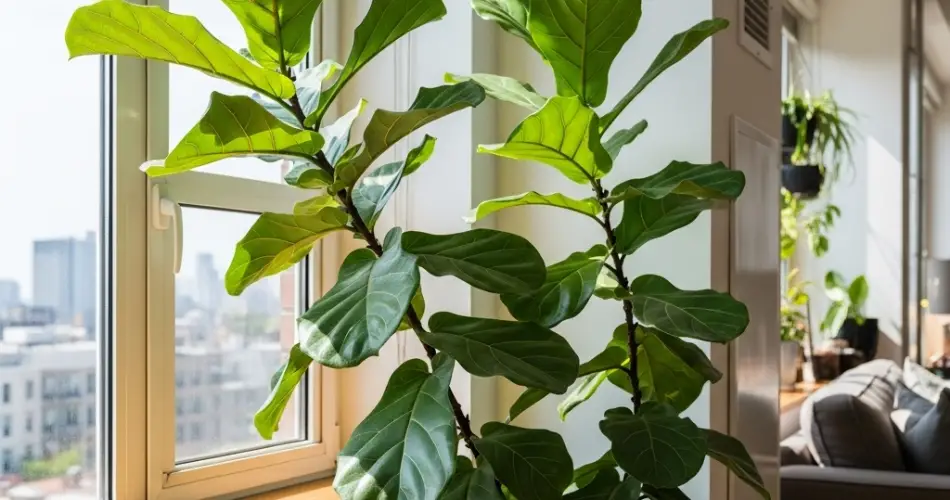
The fiddle leaf fig (Ficus lyrata) is a striking indoor plant known for its broad, violin-shaped leaves and dramatic presence. Although it’s often thought of as a finicky plant, with the right care and placement, it can thrive even in small spaces. If you’re looking to grow one in a container on your sunny windowsill, you’ll be happy to know that it’s entirely possible with a bit of patience and attention.
This guide will walk you through how to successfully cultivate a fiddle leaf fig indoors, from choosing the right container to maintaining its vibrant appearance year-round.
Choose the Right Container
To start, select a container that matches the current size of your fiddle leaf fig’s root ball, with about 2–3 inches of space around the sides. It’s crucial that the container has drainage holes to prevent root rot, one of the most common issues with fiddle leaf figs.
If your plant is still small, begin with a pot around 10–12 inches in diameter. As it grows, you can gradually repot it into larger containers. Always use a saucer or tray underneath to catch excess water and protect your window ledge.
Pick the Perfect Spot
Fiddle leaf figs love bright, indirect sunlight. A sunny east- or south-facing windowsill is ideal. While they can tolerate some direct sunlight, intense afternoon rays can scorch their leaves. If your window gets strong midday sun, consider using a sheer curtain to diffuse the light.
Rotate the plant a quarter turn every one to two weeks so it grows evenly and doesn’t lean toward the light source.
Use the Right Soil
Fiddle leaf figs need well-draining soil that still retains enough moisture to keep the roots hydrated. A good mix is:
-
2 parts high-quality potting soil,
-
1 part perlite or pumice,
-
1 part coconut coir or peat moss.
Avoid garden soil or heavy mixes, which retain too much water and increase the risk of root problems.
Water Wisely
Overwatering is a major threat to fiddle leaf figs, especially when grown in containers. The top inch of soil should dry out between waterings. A good method is to:
-
Stick your finger into the soil about an inch deep.
-
If it feels dry, it’s time to water.
-
Water thoroughly until it drains from the bottom—then empty the saucer.
During winter, reduce watering as the plant enters a slower growth phase.
Feed for Steady Growth
Feed your fiddle leaf fig with a balanced liquid fertilizer (like 10-10-10 or 20-20-20) diluted to half strength every 4–6 weeks during spring and summer. This supports healthy leaf development and keeps the plant vibrant.
Stop fertilizing during fall and winter when growth naturally slows.
Clean and Prune for Health and Shape
Dust tends to collect on the large leaves, which can block light and reduce the plant’s ability to photosynthesize. Wipe each leaf gently with a damp cloth every couple of weeks to keep them clean and shiny.
If your plant becomes leggy or grows unevenly, prune it back slightly to encourage bushier growth. You can cut just above a leaf node to stimulate new branches.
Also, remove any damaged or yellowing leaves to redirect energy toward healthy new growth.
Manage Humidity and Temperature
Fiddle leaf figs prefer a humidity level around 40–60%. If your indoor air is dry, especially during winter, try:
-
Grouping plants together to increase ambient moisture,
-
Using a humidity tray with water and pebbles under the plant,
-
Running a room humidifier nearby.
Keep the temperature between 65–75°F (18–24°C) and avoid cold drafts or sudden temperature changes. Do not place the plant directly next to heaters, air conditioning vents, or open windows during winter.
Troubleshooting Common Issues
Here are some quick fixes for common fiddle leaf fig problems:
-
Brown edges or spots on leaves: Likely caused by inconsistent watering or low humidity.
-
Drooping leaves: Often a sign of either overwatering or underwatering. Check soil moisture and adjust your routine accordingly.
-
Leaf drop: Sudden changes in environment, drafts, or moving the plant too often can cause stress. Try to keep conditions stable.
-
No new growth: The plant may need more light or may benefit from a gentle pruning to stimulate growth.
Repot as the Plant Grows
Fiddle leaf figs are relatively slow growers, but they will eventually need repotting every 1–2 years. Choose a pot just one size larger, and always refresh the soil. Repotting is best done in spring when the plant is entering a new growth cycle.
Final Thoughts
Growing a fiddle leaf fig in a container on your sunny windowsill is not only possible—it can be incredibly rewarding. With the right light, soil, and care, your fig will develop into a lush, sculptural focal point in your home.
By following these simple steps and observing your plant’s needs, you’ll build the confidence and experience to keep your fiddle leaf fig thriving for years to come.


