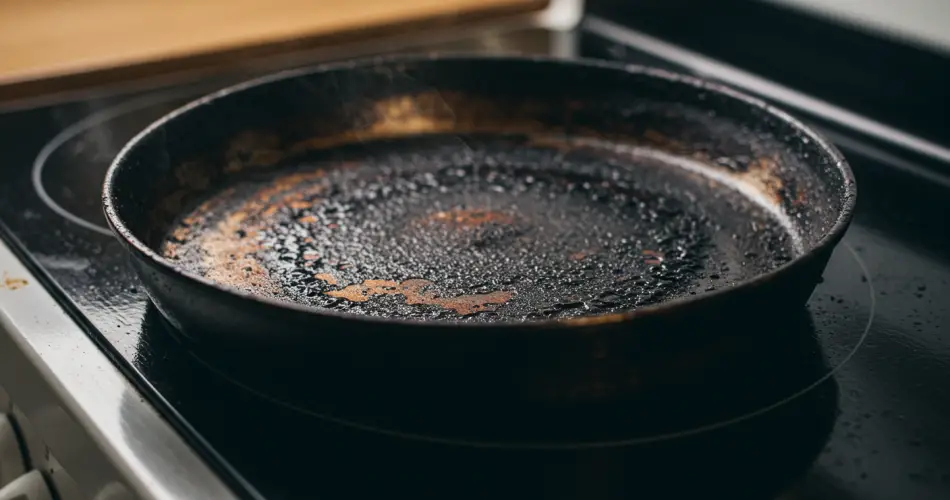
Burnt food stuck to pots and pans is one of the most common kitchen frustrations. Whether it’s a sauce left unattended on the stove for a few extra minutes or a pan not stirred properly, the result is the stubborn black residue that’s difficult to remove. What many people don’t realize is that each type of cookware—non-stick, cast iron, aluminum, ceramic, or stainless steel—requires a specific cleaning method to restore it to its best condition. By knowing the right approach and using a few household ingredients, you can clean burnt pans efficiently and safely.
Non-Stick Pans: The Delicate Dilemma
Non-stick pans are among the most popular, yet ironically, they are also delicate when it comes to burnt residues. The teflon coating prevents food from sticking during cooking, but if residues accumulate, cleaning requires caution. Avoid metal utensils, and use wooden, plastic, or silicone spatulas instead. Aggressive scrubbing with rough sponges can damage the coating, reducing the pan’s lifespan.
Cleaning Method:
-
Pour two glasses of water and two tablespoons of baking soda into the pan.
-
Heat the pan over low heat for at least 15 minutes, stirring gently to help loosen the burnt residue.
-
If necessary, repeat the process until the residue softens completely.
-
For washing, fill the sink with hot water, add a tablespoon of baking soda and a small amount of degreasing dish soap, and immerse the pan for 15 minutes.
-
Use a soft sponge to remove the softened residue, then rinse thoroughly.
This method is gentle yet effective and prevents damage to the non-stick surface.
Cast Iron: Strong but Sensitive
Cast iron pans are renowned for their durability and heat resistance, making them ideal for long-cooked meals. However, they are not immune to burnt food.
Cleaning Method:
-
Sprinkle coarse salt over the bottom of the pan.
-
Scrub firmly with a soft sponge to remove burnt food.
-
Rinse with warm water and dry thoroughly.
-
Apply a thin layer of olive oil with a paper towel to maintain seasoning.
If rust has developed, rub the affected area with a paper towel dipped in lemon juice. Always ensure cast iron cookware is completely dry before storing to prevent rust formation.
Aluminum Pans: Gentle Care Needed
Aluminum may seem durable but is actually prone to scratching and discoloration. Removing burnt residues requires a delicate touch. Avoid harsh chemicals and abrasive scrubbers, and wash by hand rather than in the dishwasher.
Cleaning Methods:
-
Baking Soda Soak: Fill the sink with hot water, add two tablespoons of baking soda, immerse the pan for 15 minutes, then scrub gently with a soft sponge.
-
Milk Boil: Pour two glasses of milk into the pan and heat for 20 minutes. The milk’s natural properties soften burnt residues, which can then be rinsed with warm water and soap.
-
Lemon and White Wine Vinegar: Combine a bit of water with lemon juice and white wine vinegar in the pan, bring to a boil for 15 minutes, then wash as usual.
These methods effectively loosen burnt food without damaging the aluminum surface.
Ceramic Pans: Tough but Not Invincible
Ceramic cookware is heat-resistant, yet burnt residues, particularly along the edges, can be difficult to remove.
Cleaning Method:
-
Fill the sink with hot water and add two tablespoons of baking soda.
-
Immerse the pan for at least 15 minutes.
-
Use a soft sponge to gently scrub away loosened residue.
-
For stubborn areas, sprinkle 2–3 tablespoons of baking soda directly on the burnt spot, leave for an hour, then scrub gently again.
This method prevents scratching while restoring the ceramic’s smooth surface.
Stainless Steel Pans: Simple and Effective
Stainless steel pans are thick, durable, and arguably the easiest to clean when burnt residues are involved. Though dishwasher-safe, hand washing is recommended for stubborn burnt spots.
Cleaning Method:
-
Pour a small amount of white wine vinegar into the pan with water and bring to a boil.
-
Only a couple of tablespoons of vinegar are needed; boiling helps lift burnt residues while avoiding strong chemical smells.
-
Once boiled, allow the pan to cool slightly and wash as usual.
The combination of water and vinegar removes tough residues while also giving the pan a polished shine.
Essential Cleaning Allies: Baking Soda and Vinegar
Despite the varying techniques for different types of cookware, two ingredients are universally useful: baking soda and white wine vinegar. Both are natural, safe, and effective for loosening burnt food without aggressive scrubbing that could damage pans. They also reduce the need for harsh chemical cleaners, making kitchen cleaning safer and more eco-friendly.
For most cookware, soaking, gentle scrubbing, and boiling with baking soda or vinegar will remove residues effectively. Only in extreme cases might commercial chemical cleaners be necessary, but for everyday burnt spots, these natural methods are usually sufficient.
Tips for Maintaining Burnt-Free Cookware
-
Avoid leaving food on high heat unattended to prevent sticking.
-
Always dry cast iron thoroughly and oil it lightly before storage.
-
Use wooden, plastic, or silicone utensils with delicate surfaces.
-
For stubborn burnt residues, patience is key—soaking and gentle scrubbing usually work better than forceful abrasion.
-
Keep a small supply of baking soda and vinegar handy in the kitchen—they are versatile, inexpensive, and effective.
By tailoring your cleaning method to the type of pan and using these simple ingredients, you can restore your cookware to its original condition, extending its lifespan and keeping it safe for cooking. With the right approach, even the most stubborn burnt residues can be removed without damaging your pans.