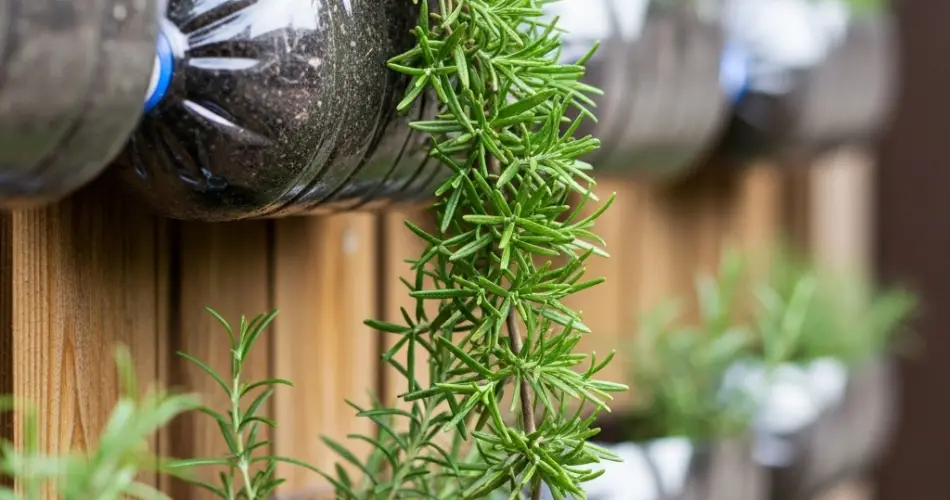
Rosemary is one of the most fragrant and flavorful herbs you can grow at home. Its distinctive aroma adds depth to roasted meats, vegetables, breads, and marinades. Beyond its culinary value, rosemary’s evergreen needles and small blue flowers also make it an attractive ornamental plant. Best of all, it thrives in containers, making it perfect for a vertical garden made from recycled plastic bottles.
Creating a hanging rosemary planter from used bottles is an eco-friendly and space-saving way to grow this Mediterranean herb. This method works well for those with limited gardening space, such as balconies, patios, or sunny kitchen walls. By repurposing bottles, you not only produce fresh herbs for cooking but also contribute to reducing plastic waste.
Why Rosemary Works Well in Hanging Bottle Planters
Rosemary is naturally suited to container gardening because it prefers well-drained soil and doesn’t require frequent watering. Its deep green needles and woody stems make it a hardy plant that can withstand varying weather conditions once established.
In a vertical or hanging setup, rosemary benefits from:
-
Better Air Circulation – Helps prevent mold and mildew.
-
Improved Sun Exposure – Ensures richer flavor and stronger growth.
-
Space Efficiency – Perfect for compact living areas.
Choosing and Preparing Your Bottles
For rosemary, choose sturdy 1.5-liter or 2-liter plastic bottles, as the plant’s root system needs more space than smaller herbs.
Preparation steps:
-
Clean the Bottles – Wash thoroughly with warm soapy water, then rinse to remove all residue.
-
Cut an Opening – Lay the bottle horizontally and cut a rectangular planting window large enough to insert rosemary seedlings.
-
Drainage Holes – Pierce small holes at the bottom to allow excess water to escape.
-
Decoration (Optional) – Paint the exterior or wrap with jute rope to protect roots from sunlight and improve appearance.
Mounting the Hanging Planters
You can hang the bottles individually or in tiers, depending on your space and design preference.
Options include:
-
Rope Hanging Method – Thread sturdy rope through holes at both ends of the bottle and tie securely.
-
Hook or Chain Mounts – Use metal hooks or chains for added stability.
-
Frame or Trellis Mounting – Attach bottles to a wooden or metal frame for an organized look.
Ensure that each planter is positioned where it will receive at least 6–8 hours of sunlight daily. Rosemary thrives in bright, direct light, making south-facing locations ideal.
The Ideal Soil Mix
Rosemary prefers slightly sandy, well-draining soil. For bottle planters, mix equal parts garden soil, compost, and coarse sand or perlite. This will provide nutrients while preventing root rot caused by excess moisture.
Avoid heavy, clay-rich soils that retain too much water, as rosemary’s roots are sensitive to prolonged wetness.
Planting Rosemary: Seeds or Cuttings
While rosemary can be grown from seeds, it’s often easier and faster to start from cuttings or young plants.
-
From Seeds – Sow on the soil surface, press lightly, and keep moist until germination, which may take several weeks.
-
From Cuttings – Take a 10–15 cm healthy stem from an established plant, strip off the lower leaves, and plant it in moist soil until roots develop.
-
From Seedlings – Gently transplant nursery plants into the prepared bottles, ensuring the roots are spread evenly in the soil.
Watering and Sunlight Requirements
Rosemary prefers its soil to dry out slightly between waterings. Check the top 2–3 cm of soil—if it feels dry, water deeply but avoid leaving excess water in the bottle.
This herb loves sunshine. Aim for full sun exposure to enhance flavor and encourage compact, healthy growth.
Feeding and Pruning
Feed rosemary once a month during the growing season with a diluted all-purpose liquid fertilizer or compost tea. Avoid over-fertilizing, as this can produce excessive soft growth with less flavor.
Pruning is essential for maintaining shape and encouraging fresh shoots. Trim back any leggy stems and harvest regularly by cutting just above a leaf node.
Harvesting Rosemary
You can start harvesting when the plant is well established, usually after it reaches 15–20 cm in height. Use sharp scissors to snip sprigs as needed, always leaving enough foliage for continued growth.
For drying, gather sprigs, tie them into small bundles, and hang in a warm, airy space out of direct sunlight. Once dry, store leaves in an airtight container.
Seasonal Care and Maintenance
Rosemary is evergreen in warm climates but may slow down or go dormant in colder months. If you live in an area with frost, consider bringing your hanging planters indoors during winter.
Refresh the soil every year to maintain fertility and check for any pests like spider mites or aphids. Regular cleaning of the bottles will keep the planter looking fresh and functional.
Benefits of a Hanging Rosemary Bottle Garden
-
Saves Space – Perfect for balconies and small patios.
-
Eco-Friendly – Gives new life to plastic bottles.
-
Aesthetic Appeal – Adds greenery and aroma to your home.
-
Easy Access – Fresh herbs at arm’s reach for cooking.
Final Thoughts
A hanging rosemary garden made from recycled plastic bottles is a simple yet rewarding project that combines sustainability with fresh, homegrown flavor. With just a few bottles, some soil, and a sunny spot, you can enjoy aromatic rosemary year-round while reducing waste and adding beauty to your living space.


