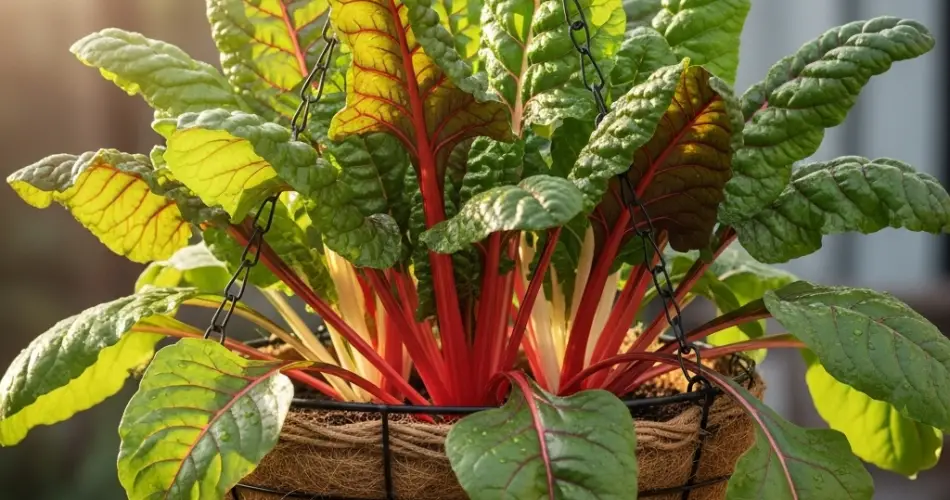
Swiss chard is a colorful and nutrient-rich leafy green that adds both beauty and flavor to meals. Its vibrant stems—ranging from bright red and pink to yellow and orange—combined with lush green leaves, make it a popular choice for home gardens. While traditionally grown in garden beds, Swiss chard also adapts exceptionally well to container gardening. Hanging baskets, in particular, offer a space-saving, decorative, and productive method for growing this versatile green.
Whether you live in an apartment, have a small balcony, or simply want to elevate your garden aesthetics, growing Swiss chard in hanging baskets allows you to enjoy fresh, homegrown greens with minimal space requirements.
Why Choose Hanging Baskets for Swiss Chard
Hanging baskets provide several advantages for Swiss chard cultivation:
-
Space efficiency: Ideal for urban gardeners or homes without traditional garden beds.
-
Visual appeal: Colorful stems and cascading leaves make hanging baskets a striking feature.
-
Pest reduction: Elevating the plants keeps them away from slugs, snails, and many ground-dwelling insects.
-
Good drainage: Hanging baskets prevent water from accumulating around roots, reducing the risk of rot.
These features make hanging baskets a practical and attractive solution for small-space vegetable gardening.
Selecting the Right Basket
Choosing an appropriate basket is essential for successful growth.
-
Size: A basket that is at least 12 inches deep and 12–14 inches wide provides adequate root space.
-
Material: Wire baskets lined with coconut coir, burlap, or moss allow for good drainage and airflow. Plastic baskets can also work if they have sufficient holes.
-
Support: Ensure the hook and chain are sturdy, as wet soil can be heavy.
-
Drainage: Proper drainage holes are critical to prevent waterlogging, which can harm the plant.
A sturdy, well-drained basket creates the optimal environment for Swiss chard to thrive.
Preparing the Basket
Proper preparation is key to a productive hanging chard basket.
-
Lining: Use a liner such as coconut coir, burlap, or landscape fabric to hold soil while allowing water to escape.
-
Drainage layer: Add a thin layer of gravel or small stones at the bottom to further improve drainage.
-
Soil: Use a lightweight potting mix enriched with compost for nutrients. Adding perlite or vermiculite ensures good aeration and prevents compaction.
Well-prepared soil helps Swiss chard establish strong roots and maintain healthy, vibrant leaves.
Planting Swiss Chard
Swiss chard can be grown from seeds or seedlings.
-
Seeds: Sow directly into the basket about ½ inch deep. Space seeds 2–3 inches apart to allow room for growth.
-
Seedlings: Transplant carefully, maintaining the crown at soil level to avoid burying the stem too deeply.
For a continuous harvest, sow new seeds every 2–3 weeks. This ensures a steady supply of fresh leaves throughout the growing season.
Light and Temperature
Swiss chard prefers cool to moderate temperatures, typically thriving between 50–75°F (10–24°C).
-
Light: Provide 4–6 hours of sunlight daily. Morning sun with afternoon shade works best, especially in warmer climates.
-
Hot weather: During hot periods, hang baskets in a shaded area to prevent bolting (premature flowering).
If growing indoors, place baskets near a bright window or supplement with grow lights for consistent growth.
Watering and Care
Proper watering is crucial because hanging baskets tend to dry out faster than ground containers.
-
Frequency: Check the soil daily and water when the top inch feels dry.
-
Depth: Water thoroughly to reach all roots, ensuring consistent soil moisture.
-
Mulching: A thin layer of straw, shredded leaves, or coco husk helps retain moisture and regulate soil temperature.
Consistent care ensures tender, vibrant leaves and reduces stress on the plant.
Fertilizing Swiss Chard
Since nutrients leach quickly from basket soil, regular feeding is recommended.
-
Liquid fertilizer: Apply a balanced fertilizer every 2–3 weeks to support growth.
-
Organic options: Compost tea or diluted fish emulsion provides natural nutrition.
Proper fertilization ensures strong stems, dark green leaves, and prolonged production.
Harvesting Swiss Chard
Swiss chard is fast-growing and can be harvested in 4–6 weeks after planting.
-
Cut-and-come-again: Harvest outer leaves when they are 6–8 inches long, leaving the center to continue producing.
-
Full harvest: For mature plants, cut the entire bunch at the base once leaves have reached full size.
Regular harvesting encourages new growth and maintains a productive basket throughout the season.
Common Challenges
-
Bolting: Hot weather may cause the plant to flower prematurely. Move baskets to cooler locations or shade them during midday heat.
-
Yellowing leaves: Often caused by overwatering or nutrient deficiency; adjust care accordingly.
-
Pests: Aphids or other small insects may appear, but they can be controlled with natural sprays like diluted soapy water or neem oil.
By monitoring these factors, Swiss chard can thrive with minimal issues in hanging baskets.
Final Thoughts
Growing Swiss chard in hanging baskets is an excellent solution for gardeners with limited space, offering a combination of beauty, convenience, and nutrition. Proper basket preparation, consistent care, and regular harvesting make it easy to enjoy fresh, colorful leaves at home.
Hanging baskets allow you to maximize vertical space while bringing vibrant greenery and superfood nutrition directly to your kitchen. With the right approach, Swiss chard can become a staple in your home garden, providing a steady supply of fresh, healthy greens throughout the growing season.


