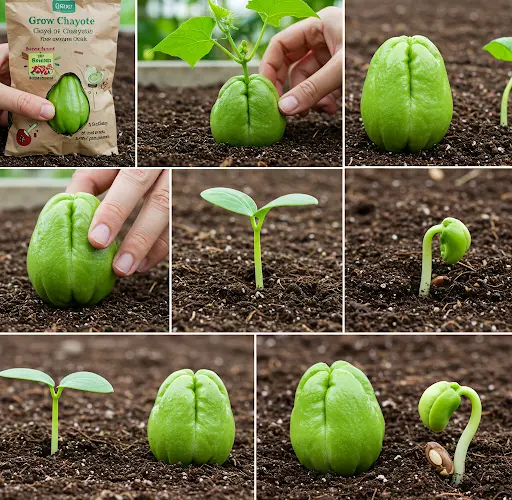
Growing Chayote from Supermarket Fruit: A Guide to an Abundant Harvest
Chayote (Sechium edule), a member of the gourd family, is a versatile and prolific vegetable that is easy to grow, even from a fruit purchased at the supermarket. With the right conditions and care, you can cultivate a thriving chayote plant that yields multiple fruits each season. This guide will take you through the process of growing chayote from store-bought fruit, from sprouting to harvesting, ensuring an abundant yield.
Choosing the Right Chayote Fruit
When selecting a chayote from the supermarket, choose one that is firm and free of blemishes or mold. Ideally, pick a mature fruit, as it is more likely to sprout successfully. Look for a chayote with a slight indentation or small sprout emerging from its pointed end, which indicates that it is ready to grow.
Sprouting the Chayote
Unlike many other vegetables, chayote does not need to be cut open to extract seeds. Instead, the entire fruit serves as the seed. To sprout a chayote:
- Leave it at room temperature – Place the fruit in a warm, well-ventilated area until a shoot emerges from the narrow end. This process may take a few weeks.
- Encourage sprouting indoors – If conditions are too cold, place the chayote in a paper bag or near a sunny window to speed up the sprouting process.
Once the sprout reaches about 6 inches in length and has small leaves, it is ready for planting.
Preparing the Planting Site
Chayote thrives in warm climates and requires a long growing season. To prepare the planting site:
- Choose a sunny location – Chayote plants need at least 6–8 hours of direct sunlight daily.
- Ensure well-draining soil – Loamy, nutrient-rich soil with good drainage is ideal for chayote growth.
- Provide support – Since chayote is a vining plant, it benefits from a trellis, fence, or sturdy support to climb. This keeps the fruit off the ground, reducing the risk of rot and pests.
- Prepare the soil – Enrich the planting area with compost or well-rotted manure to provide nutrients for optimal growth.
Planting the Sprouted Chayote
Once the sprouted fruit is ready and the soil is prepared, plant it following these steps:
- Dig a hole – Make a hole about 4 inches deep, ensuring there is enough space for the fruit to sit at an angle.
- Position the chayote – Place the fruit in the hole with the sprouted end facing upward.
- Cover with soil – Lightly cover the fruit with soil, leaving the sprout exposed.
- Water thoroughly – Keep the soil moist but not waterlogged to encourage root development.
Caring for the Chayote Plant
To ensure healthy growth and a high yield, follow these care tips:
- Water regularly – Chayote needs consistent moisture, especially during dry periods. Water deeply at least twice a week.
- Mulch around the base – Applying mulch helps retain soil moisture, suppress weeds, and regulate temperature.
- Fertilize as needed – Use a balanced fertilizer or compost tea every few weeks to promote vigorous growth.
- Train the vines – Guide the vines to climb the trellis or support structure to prevent overcrowding and enhance air circulation.
- Monitor for pests – Keep an eye out for common pests like aphids and squash bugs. Use natural insect repellents or neem oil if necessary.
Flowering and Pollination
Chayote plants typically begin flowering within a few months of planting. They produce both male and female flowers on the same plant. Bees and other pollinators play a crucial role in fruit production, so encouraging pollinators by planting flowers nearby can improve yield. If pollination is insufficient, you can hand-pollinate by transferring pollen from male to female flowers using a small brush.
Harvesting Chayote
Chayote fruits mature in about 120 to 150 days after planting. To harvest:
- Check for readiness – The fruit is ready when it is firm, about 4–6 inches long, and has a smooth, bright green skin.
- Use pruning shears – Cut the fruit from the vine with a pair of pruning shears or scissors to avoid damaging the plant.
- Store properly – Chayote can be stored in a cool, dry place for several weeks or refrigerated for extended freshness.
Maximizing Your Harvest
Chayote is a prolific producer, and with proper care, one plant can yield dozens of fruits per season. To extend the growing season:
- Regularly prune the vines to encourage continuous flowering and fruiting.
- Harvest young chayotes to prompt the plant to produce more fruit.
- Save sprouted fruits to start new plants and expand your garden.
Conclusion
Growing chayote from supermarket fruit is an easy and rewarding process that can lead to a bountiful harvest. By selecting the right fruit, providing optimal growing conditions, and following proper care techniques, you can enjoy fresh, homegrown chayote for months. With its versatility in the kitchen and high productivity, chayote is a valuable addition to any home garden. Give it a try and enjoy the abundance it has to offer!


