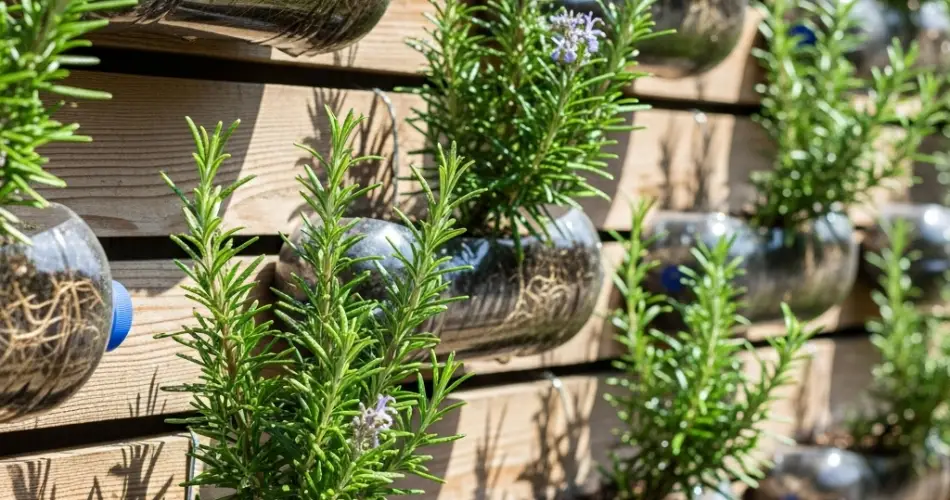
Rosemary is one of the most aromatic and versatile herbs, prized for its culinary and ornamental qualities. Its upright growth habit makes it ideal for vertical gardening, and using recycled bottles is a practical, eco-friendly way to create a wall-mounted herb garden. Whether you are limited on space or simply want a striking green feature on your wall or balcony, a DIY bottle garden allows you to grow rosemary efficiently while adding beauty to your home. This guide covers everything from materials and setup to planting, care, and harvesting.
Selecting and Preparing Bottles
Plastic bottles are perfect for vertical herb gardens. They are lightweight, durable, and easy to modify. For rosemary, choose bottles with a capacity of at least 1.5 liters to provide enough room for roots. Clean the bottles thoroughly, removing all labels and residues. Cut each bottle horizontally to create an open-top planter. To improve drainage and airflow, punch small holes in the sides or bottom of each bottle. Using uniform bottles creates a clean, organized look, but mixing sizes can add visual interest.
Choosing a Wall Location
Rosemary thrives in full sun, so select a wall that receives at least four to six hours of sunlight per day. Outdoor walls are ideal, but indoor walls near south-facing windows or under grow lights can also work. The supporting structure—whether a wooden frame, wire mesh, or hanging grid—should be sturdy enough to hold the weight of multiple filled bottles. Position the bottles with openings facing upward to facilitate planting, watering, and harvesting.
Constructing the Bottle Wall Garden
Attach the bottles securely to your chosen wall using hooks, wire, or string. Arrange them in rows, staggered patterns, or a layout that fits your space and aesthetic preference. Ensure each bottle is firmly anchored to prevent tipping or falling. Staggering the bottles slightly can help maximize airflow and sunlight exposure, promoting healthy growth for each rosemary plant.
Soil and Planting
Rosemary prefers well-draining soil. A light potting mix blended with sand or perlite works best in bottles to prevent waterlogging. Fill each bottle with soil up to about two centimeters from the top. If planting from seeds, sprinkle them lightly on the soil surface and cover with a thin layer of soil. For seedlings or transplants, gently loosen the roots and place the plant in the bottle, filling around the roots with soil and pressing lightly to stabilize. Proper planting ensures the rosemary establishes quickly and grows upright and healthy.
Watering and Care
Rosemary is drought-tolerant and thrives with moderate watering. Water each plant thoroughly, then allow the soil to dry slightly before the next watering. Overwatering can lead to root rot, especially in bottles with limited drainage. Adding a small layer of gravel or broken pottery at the bottom of each bottle improves drainage. For indoor gardens, occasional misting and indirect sunlight help maintain plant health.
Fertilizing and Pruning
Rosemary requires minimal fertilization. A light application of balanced liquid fertilizer every four to six weeks encourages robust growth. Regular pruning and trimming the top portions of stems promote bushier growth and maintain the upright form of the plant. Frequent harvesting not only provides fresh rosemary for cooking but also stimulates new shoots, keeping your bottle garden productive throughout the year.
Pest and Disease Management
Rosemary is generally resilient, but occasional pests such as aphids or spider mites can appear. A gentle water spray or a light application of organic insecticidal soap usually resolves these issues. Proper spacing between bottles ensures good airflow, which reduces the risk of fungal problems. Healthy, well-maintained plants are less prone to pest and disease issues, making vertical bottle gardening low-maintenance and rewarding.
Harvesting Rosemary
Harvest rosemary once plants reach around 15 centimeters in height. Snip the top few centimeters of each stem with scissors, avoiding removal of more than one-third of the plant at a time. Fresh rosemary enhances a variety of dishes, from roasted meats and vegetables to soups, sauces, and breads. Leaves can also be dried or frozen for long-term storage. Regular harvesting encourages continuous growth, ensuring your wall garden remains lush and productive.
Decorative and Functional Benefits
A DIY bottle wall garden provides both practical and aesthetic benefits. The lush, upright foliage softens walls, adds texture, and brings a natural element to indoor or outdoor spaces. Repurposing plastic bottles reduces waste and creates a functional, sustainable herb-growing system. Having fresh rosemary within reach elevates cooking and adds a pleasant fragrance to your home or garden.
Expanding Your Vertical Herb Collection
Once your rosemary wall garden is established, consider adding complementary herbs like thyme, oregano, basil, or sage. These Mediterranean herbs thrive under similar conditions and create a diverse, aromatic vertical garden. Mixing different herbs adds color, texture, and culinary variety, turning your wall into a dynamic, living kitchen garden.
Growing rosemary upright in a DIY bottle wall garden is a practical, space-saving, and sustainable way to enjoy fresh herbs at home. With proper sunlight, soil, and care, your rosemary will flourish, providing flavorful leaves for cooking while transforming a blank wall into a vibrant, green space. This simple vertical gardening technique combines functionality, beauty, and eco-consciousness, making it ideal for small-space gardeners and herb enthusiasts alike.


