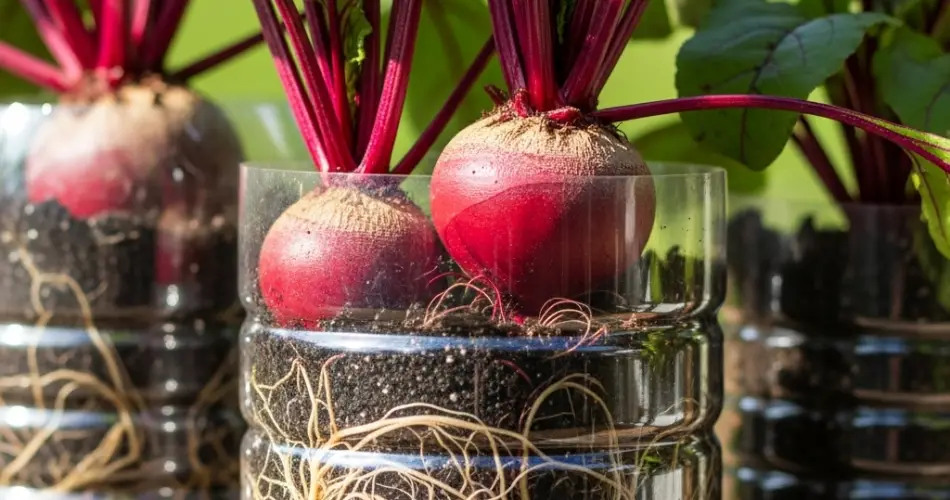
Root vegetables might seem like a challenge to grow without a traditional garden bed, but with a little creativity, even beets can thrive in small, recycled containers. Using plastic bottles as mini-planters is a clever, space-saving method for urban gardeners and anyone with limited outdoor space. Whether you’re growing on a balcony, windowsill, or patio, this method makes it easy to produce healthy, flavorful beets with minimal tools and space.
Why Grow Beets in Bottles?
Beets are nutrient-rich vegetables that don’t need much horizontal space but do require depth for proper root development. Many people think that growing beets and other root crops demands a full garden, but with proper preparation, they can flourish in recycled plastic bottles.
Plastic bottles are easy to find, lightweight, and perfect for vertical or compact setups. By repurposing these containers, you’re not only growing food—you’re reducing plastic waste and making your gardening more sustainable.
Choosing and Preparing Bottles
Start by selecting large plastic bottles—at least 2 liters in size. The deeper the bottle, the better the root development. Transparent bottles allow you to observe root growth, though you may wish to cover the sides later to protect roots from sunlight.
Steps to prepare your bottles:
-
Cut the top section off the bottle, leaving a wide enough opening to sow seeds and water the plant.
-
Poke several holes in the bottom for drainage.
-
Optional: Create vertical slits near the top for air circulation or to insert support sticks if needed.
If you’re short on space, you can hang the bottles on a wall, secure them to a railing, or place them in rows along a ledge.
Creating the Right Soil Mix
Beets prefer well-draining, loose soil. A compacted medium can hinder root formation and result in misshapen vegetables.
Create an ideal potting mix using:
-
50% high-quality potting soil
-
30% compost or well-rotted manure
-
20% perlite or sand for better drainage
Make sure the soil is free from stones or debris that can obstruct root development. Fill the bottle about 2 inches from the top and water thoroughly before sowing seeds.
Sowing Beet Seeds
Beet seeds are actually clusters that can produce multiple seedlings, so thinning is essential later. Sow seeds about half an inch deep and 2 inches apart. You can sow one or two seeds per bottle, depending on the size.
Cover them lightly with soil and gently water. Keep the bottle in a bright area where it can receive at least 4–6 hours of sunlight per day. Beets prefer cool weather, so aim to plant in early spring or fall when temperatures are between 50°F and 75°F (10°C to 24°C).
Watering and Care
Beets need evenly moist soil to develop tender roots. Water whenever the top inch of soil feels dry but avoid waterlogging. Since plastic bottles dry out more quickly, daily monitoring is recommended—especially in warmer conditions.
Keep an eye out for pests like aphids or leaf miners. In most cases, they can be removed by hand or treated with neem oil or insecticidal soap.
When seedlings reach about 2 inches tall, thin them to allow proper spacing—leaving just one healthy plant per bottle ensures a well-formed root.
Fertilizing Tips
Beets don’t need heavy feeding, but a light dose of balanced, organic fertilizer every two weeks can support healthy foliage and root growth. Avoid fertilizers high in nitrogen, as they will encourage leaf growth at the expense of root development.
A compost tea or diluted fish emulsion can also be applied during the growth period for an extra nutrient boost.
Harvesting Beets
Depending on the variety, beets typically mature in 50–70 days. The size of the visible crown at the soil surface will help you judge when to harvest. Most beets are best picked when they’re about the size of a golf ball to a tennis ball.
To harvest, gently loosen the soil around the beet and pull it from the bottle. Rinse off any soil and use the roots fresh, roasted, or pickled. Don’t discard the leafy tops—they’re edible and packed with vitamins, perfect for sautés and salads.
Reusing Bottles and Replanting
Once you harvest your beets, you can reuse the bottles by refreshing the soil. Remove any leftover roots, aerate the mix, and top up with compost. Beets can be replanted in succession every few weeks to keep a steady harvest going throughout the season.
If you want to branch out, this same bottle method works well for radishes, carrots, and even turnips—just make sure the bottle depth matches the vegetable’s root length.
Small-Scale Gardening With Big Results
Growing beets in plastic bottles proves that you don’t need a backyard to cultivate nutritious root vegetables. With a few recycled containers, the right soil, and some patience, you can produce fresh, homegrown beets right from your windowsill or balcony.
This approach is not only efficient and low-cost—it’s also a great step toward sustainable living. Try it out, and enjoy the satisfaction of harvesting delicious root vegetables in even the smallest of spaces.


