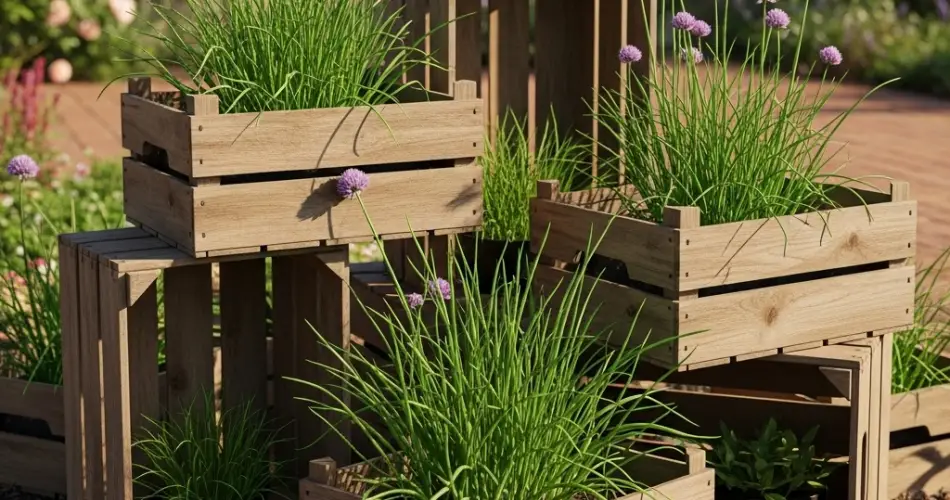
Chives are one of the most versatile and easy-to-grow herbs, offering delicate onion-like flavor to salads, soups, sauces, and garnishes. Unlike many other herbs, chives thrive in containers and small spaces, making them perfect for rustic backyard crate gardens. Using wooden crates to grow chives not only keeps the plants contained but also adds charm and practicality to your garden.
Crate gardening allows gardeners to cultivate fresh, flavorful herbs even in limited spaces. By choosing a simple wooden crate and providing the right care, you can enjoy a continuous harvest of chives for months, right at your fingertips.
Why Grow Chives in Crates
Chives are compact, hardy, and low-maintenance, making them ideal for container gardening. Crates offer several advantages:
-
Containment: Chives have shallow roots, but they can spread if planted directly in the soil. Crates keep them neatly contained.
-
Portability: Move crates to optimize sunlight or protect the plants from harsh weather.
-
Soil Control: You can create the perfect soil blend for healthy growth.
-
Aesthetic Appeal: Rustic wooden crates add a decorative touch to your backyard or patio.
With crate gardening, you can grow chives conveniently and efficiently while maintaining a tidy garden.
Selecting the Right Crate
Choosing the proper crate is essential for healthy chives.
Depth and Size
Chives have a shallow root system, so crates 8–10 inches deep are sufficient. A width of 12–16 inches works well for multiple plants, giving each enough space to grow without crowding.
Material
Use untreated, food-safe wood. Reclaimed fruit crates, wine boxes, or handmade wooden planters work beautifully and add rustic charm to your garden.
Drainage
Drill several holes in the bottom to prevent waterlogging. Line the interior with landscape fabric or burlap to keep soil in place while allowing proper drainage.
Preparing the Soil
Chives thrive in nutrient-rich, well-draining soil. An ideal mix for crate planting includes:
-
2 parts high-quality potting soil
-
1 part compost for nutrients
-
1 part coarse sand or perlite for drainage
This combination ensures moisture retention without risking root rot and provides the nutrients necessary for vibrant growth.
Planting Chives in Crates
Chives can be grown from seeds or nursery plants.
From Seeds
-
Sow seeds about ¼ inch deep and space them 1–2 inches apart.
-
Keep soil consistently moist until germination, usually within 7–14 days.
From Nursery Plants
-
Transplant seedlings into the crate, leaving 2–3 inches between plants.
-
Firm the soil gently around the roots to provide stability.
Staggered Planting
For a steady supply, sow new seeds every few weeks throughout the growing season.
Sunlight, Watering, and Feeding
Sunlight
Chives prefer full sun but tolerate partial shade. Aim for at least 6 hours of sunlight daily to encourage strong growth.
Watering
Keep the soil evenly moist, but avoid waterlogging. Chives prefer consistent moisture, and deep watering helps develop healthy roots.
Fertilizing
Chives are light feeders. A monthly application of balanced liquid fertilizer or occasional compost tea will support lush, green growth.
Maintaining and Pruning Chives
Proper maintenance ensures continuous harvests and healthy plants:
-
Trim leaves regularly by cutting outer stems at the base.
-
Remove any flower stalks if you want to prolong leaf production.
-
Keep the crate tidy by removing dead or yellowed leaves.
Routine pruning encourages bushier growth and prevents chives from becoming overcrowded.
Harvesting Chives
You can begin harvesting once the plants reach 6–8 inches in height:
-
Snip outer leaves as needed, leaving the inner growth intact.
-
Harvest in the morning for the most aromatic flavor.
-
Chives can also be frozen or dried for later use, preserving their delicate taste.
Chive flowers are edible too, adding color and flavor to salads or garnishes.
Styling Your Chive Crate Garden
Chives’ slender green leaves and delicate purple flowers make them an attractive addition to any backyard garden. Enhance your crate garden by:
-
Pairing chives with other herbs like parsley, cilantro, or thyme in adjacent crates.
-
Arranging crates at varying heights for visual interest.
-
Personalizing crates with paint, stencils, or labels for a rustic touch.
A well-organized crate garden is both practical and visually pleasing, making harvesting easier and more enjoyable.
Final Thoughts
Growing chives in rustic wooden crates is an accessible and rewarding project for gardeners of all levels. With proper soil, sunlight, watering, and pruning, your crate can produce a continuous supply of fresh, flavorful chives.
Crate gardening proves that even small backyard spaces can yield abundant herbs. By cultivating chives in this way, you gain a manageable, attractive, and highly productive herb garden that adds flavor to your cooking and charm to your outdoor area.


