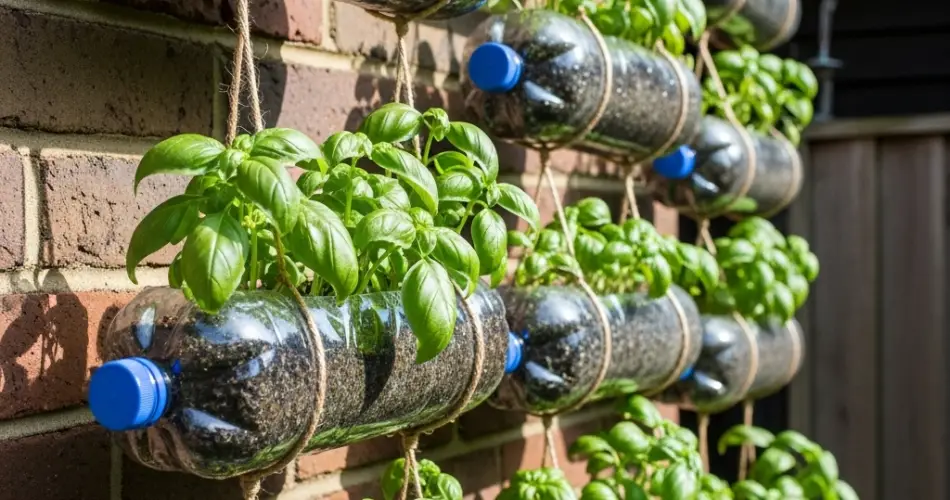
Basil is one of the most versatile and fragrant herbs you can grow at home, and it doesn’t require a sprawling garden to thrive. By using recycled plastic bottles, you can create a vertical wall garden that saves space, reuses materials, and provides you with a constant supply of fresh basil for your kitchen. This setup works beautifully in small yards, on balconies, or even against a sunny indoor wall.
Why a Vertical Bottle Garden Works for Basil
Basil grows best in warm, sunny conditions with good air circulation. Vertical gardens made from bottles take advantage of unused wall space, allowing multiple plants to grow upward rather than outward. This not only maximizes your growing area but also makes tending and harvesting easier since plants are at an accessible height. The bottles act as mini planters, keeping soil contained and reducing the spread of pests.
Choosing and Preparing Bottles
For this project, use sturdy plastic bottles, ideally between 1.5 and 2 liters in size. Clear bottles let you keep an eye on soil moisture, but you can also paint or cover them to reduce algae growth. Wash them thoroughly to remove any residue.
Cut an opening on one side of the bottle large enough for planting and watering—around 10 to 12 cm long. The cap can remain on to hold soil, but drill several small drainage holes at the bottom to prevent waterlogging. If you want a self-watering feature, insert a small wick (made from cotton rope or fabric) through a hole in the cap into a lower water container so the soil stays evenly moist.
Setting Up the Wall Frame
A strong frame or trellis will support your hanging bottles. You can use wooden pallets, wire mesh, or metal grids mounted against a wall. Attach the bottles horizontally using metal wire, cable ties, or sturdy rope. Make sure each bottle is secure enough to hold the weight of moist soil and a growing plant.
Arrange the bottles in rows, leaving at least 15 cm between each to give basil enough space to spread its leaves. Stagger the rows so that plants in lower bottles still receive good sunlight.
Preparing the Soil
Basil needs well-draining soil rich in organic matter. A good mix is equal parts garden soil, compost, and coarse sand or perlite. This combination retains moisture while preventing roots from sitting in water, which can cause rot.
Before filling the bottles, you can place a thin layer of small stones or pebbles at the bottom for extra drainage. Fill each bottle about three-quarters full with your prepared soil mix.
Planting Basil Seeds or Seedlings
Basil can be started directly from seeds or from young plants. If using seeds, plant them about 0.5 cm deep in moist soil. Keep the bottles in a warm, sunny location and water lightly until seeds germinate, usually within 5 to 10 days.
If you prefer faster results, transplant seedlings into the bottles. Gently loosen the root ball and place the plant in the soil, pressing lightly to secure it. Water immediately to help the plant settle.
Watering and Sunlight Needs
Basil loves moisture but dislikes soggy soil. In hot weather, bottles can dry out quickly, so check soil daily. Water when the top layer feels dry to the touch. For even moisture, water slowly so it seeps through the soil rather than running out too quickly.
Position your vertical garden where it will get at least 6 to 8 hours of direct sunlight each day. For indoor setups, place near a sunny window or use grow lights to supplement natural light.
Pruning for Bushy Growth
To keep basil productive and bushy, pinch off the top leaves once the plant is about 15 cm tall. This encourages side branching and more leaf growth. Regular harvesting also keeps the plant from flowering too early. If flowers appear, pinch them off to maintain leaf flavor and extend the plant’s growing season.
When harvesting, take leaves from the top first, but avoid removing more than one-third of the plant at a time. This ensures the plant continues producing new growth.
Pest Prevention and Care
Vertical gardens tend to have fewer pest issues than ground-level beds, but you should still watch for aphids, spider mites, or whiteflies. Check leaves regularly and, if needed, spray with water or apply an organic insecticidal soap. Good airflow between plants helps prevent fungal problems, so avoid overcrowding the bottles.
Benefits of a Basil Bottle Wall Garden
This method is both space-efficient and eco-friendly. You’ll repurpose plastic bottles that might otherwise go to waste, while also creating a lush green wall that produces fresh herbs right at your fingertips. The vertical design makes watering and harvesting simple, and the compact setup is perfect for urban gardeners with limited outdoor space.
By following these steps, you can enjoy fresh, fragrant basil throughout the growing season. With a few recycled bottles, some basic tools, and a sunny wall, you’ll have a thriving vertical herb garden that’s as practical as it is beautiful.


