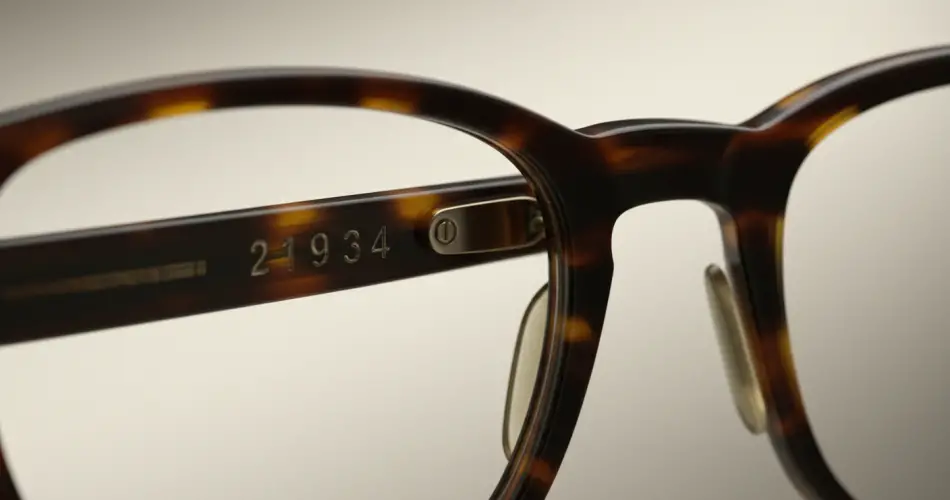
If you wear glasses, you’ve probably noticed small numbers printed or engraved on the inside of the temples (arms) of your frames. At first glance, they may look random or unimportant, but in fact, these numbers hold valuable information. They represent precise measurements of the frame that are essential for both comfort and vision quality.
Understanding what these numbers mean can help you choose the right pair of glasses, ensure your lenses fit correctly, and even guide you if you want to order a new pair online. Let’s break down what these measurements represent and why they matter.
The Three Key Numbers
Most eyeglass frames carry at least three measurements, usually expressed in millimeters (mm). They are typically displayed in a sequence such as 52 ▢ 18 140.
Here’s what each number stands for:
-
Lens Width (Caliber of the Lens) – The first number.
-
Bridge Width – The second number, usually following a square or dash symbol.
-
Temple Length (Arm Length) – The third number.
Let’s look at each one in more detail.
1. Lens Width (Caliber of the Lens)
This is the first number you’ll see. It represents the horizontal width of one lens, measured at its widest point. Typical measurements range from 40 mm to 62 mm.
Why is it important?
-
The lens width determines how much of your field of vision is covered.
-
Wider lenses allow more light in and may improve peripheral vision.
-
Smaller lenses are lighter and can be more stylish for certain face shapes.
For example, a lens width of 52 mm is considered medium-sized and fits many face types, while widths above 58 mm are usually classified as oversized.
2. Bridge Width
The second number tells you the size of the bridge—the part of the frame that sits on your nose and connects the two lenses. This typically ranges from 14 mm to 24 mm.
Why does it matter?
-
The bridge width affects how comfortably the glasses rest on your nose.
-
A bridge that’s too wide will make the glasses slide down constantly.
-
A bridge that’s too narrow may pinch and feel uncomfortable.
The right bridge size ensures your lenses are properly centered over your eyes, which is critical for sharp and comfortable vision.
3. Temple Length (Arm Length)
The third number represents the length of the arms (or temples), measured from the hinge near the lens all the way to the tip behind your ear. Typical lengths range from 120 mm to 150 mm.
Why does it matter?
-
If the temples are too short, the arms will press uncomfortably against your ears.
-
If they’re too long, your glasses may feel loose and slide down.
The correct temple length ensures a secure but comfortable fit, keeping the glasses stable without applying too much pressure.
Additional Measurements You Might See
Beyond the three basic numbers, some frames include additional information. These extra figures help opticians fine-tune your lenses for maximum accuracy and comfort.
-
Pupillary Distance (PD or DIP): This is the distance between the centers of your pupils, measured in millimeters. It ensures the lenses are aligned correctly with your eyes. If the PD is off, your vision can feel distorted or strained.
-
Lens Height: This measures the vertical height of the lenses. It’s especially important for multifocal or progressive lenses, where the prescription needs to be placed at a precise height within the lens.
-
Pantoscopic Angle: This refers to the tilt of the lens in relation to your face. Even a small adjustment in this angle can improve peripheral vision and overall clarity.
-
Nose-to-Temple Distance: This describes the distance between the bridge of your nose and your temples, affecting how the frame rests on your face.
Some frames also include model numbers, color codes, or style references. These don’t affect fit but are useful if you ever want to reorder the same frame.
Why These Numbers Are So Important
Knowing what the numbers on your glasses mean isn’t just trivia—it has practical value.
-
Proper Vision Alignment: Glasses are designed to position lenses in a very specific way. If the frame doesn’t fit, your prescription won’t be aligned properly, leading to blurry vision, headaches, or eye strain.
-
Comfort: Frames that are too wide, narrow, long, or short can cause constant slipping, pinching, or discomfort behind the ears.
-
Style and Proportion: The measurements ensure that the frames suit your face shape. For instance, a larger lens width may complement wide faces, while smaller frames may suit narrower faces.
-
Easy Online Shopping: If you want to buy glasses online, knowing your frame size ensures you can select new frames that fit just like your old pair.
How to Find and Read the Numbers
The numbers are usually located on the inside of the temples (arms) or sometimes on the inside of the bridge. Look for a sequence such as:
52 ▢ 18 140
-
52 = Lens width (mm)
-
18 = Bridge width (mm)
-
140 = Temple length (mm)
If other numbers are present, they may refer to model codes, lens height, or color references.
Final Thoughts
Those tiny numbers inside your eyeglass frames may look insignificant, but they carry crucial information about your frame’s size, fit, and design. They ensure your lenses sit correctly in front of your eyes, provide optimal comfort, and help your glasses complement your face shape.
Next time you’re choosing new frames—whether at the optician’s office or online—pay close attention to these measurements. Understanding them gives you the confidence to select frames that not only look good but also feel comfortable and support your vision health.
A good pair of glasses isn’t just about style; it’s about precision. And those little numbers are the key to making sure everything lines up perfectly.