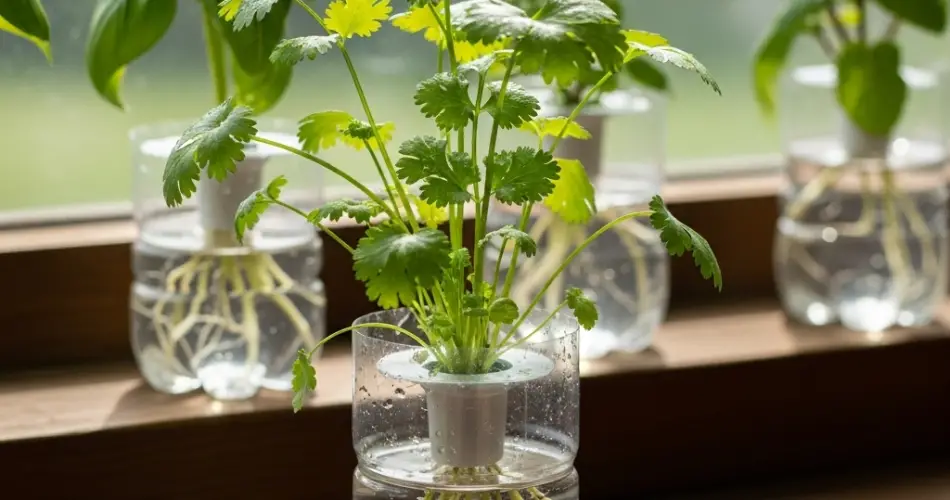
Cilantro, also known as coriander, is a vibrant herb with a distinctive flavor used in a variety of dishes—from salsas and salads to curries and chutneys. It’s fast-growing but short-lived, making it a perfect candidate for continuous growing in small spaces. With a few recycled plastic bottles, some soil, and sunlight, you can cultivate fresh cilantro all year long—even on a balcony, windowsill, or patio.
Bottle gardening is a smart, space-saving solution for urban herb enthusiasts who want to grow their own seasonings without needing a backyard.
Why Grow Cilantro in Bottles?
Cilantro grows quickly and has shallow roots, which means it doesn’t need deep containers. This makes it well-suited for bottle gardening. Plastic bottles are lightweight, easy to hang or place on ledges, and can be repurposed into mini planters instead of ending up in landfills.
Another advantage is that you can stagger your sowing in multiple bottles to ensure a continuous supply. Since cilantro tends to bolt (go to seed) quickly in warm weather, succession planting is key to maintaining harvests.
Choosing and Preparing the Bottles
Use 1.5 to 2-liter plastic bottles. Clean them thoroughly and remove any labels. You can prepare your containers in two ways:
-
Vertical method: Cut off the top third of the bottle and use the bottom as a pot.
-
Horizontal method: Lay the bottle on its side, cut a rectangular window along the top, and keep the cap on with small drainage holes at the bottom.
Be sure to poke multiple holes at the base of the bottle to allow excess water to drain freely—cilantro doesn’t like soggy soil.
If you’re planning to place the bottles near a sunny window or outdoors, you can wrap or paint the bottle to prevent light from reaching the roots and discourage algae formation.
Ideal Soil Mix
Cilantro grows best in loose, well-draining soil that is rich in organic matter. A good soil mix for bottles would include:
-
2 parts potting soil
-
1 part compost or worm castings
-
1 part perlite or coarse sand (for better drainage)
Fill the bottle with this mix, leaving an inch or so from the top to make watering easier.
Sowing Cilantro in Bottles
Cilantro is best grown from seed. Its seeds are actually two seeds fused together—gently crush them between your fingers before planting for better germination. Soaking the seeds in water overnight can also speed up the process.
Sow the seeds about 1/4 inch deep and lightly cover with soil. Water gently and keep the soil consistently moist until the seeds sprout, which usually takes 7–10 days.
Place the bottle planter in a sunny location that gets at least 4 to 6 hours of direct sunlight per day. Cilantro prefers cooler conditions, so morning sun and partial afternoon shade are ideal, especially in warm climates.
Watering and Feeding
Cilantro enjoys evenly moist soil but can suffer if overwatered. Water the plant when the top inch of soil feels dry. Use a spray bottle or small watering can to avoid disturbing young seedlings.
Feeding is minimal—apply a diluted, organic liquid fertilizer once every two weeks to keep the plants healthy. Avoid overfeeding, as it may encourage leaf growth at the expense of flavor.
Managing Growth and Preventing Bolting
Cilantro grows quickly and can bolt (flower and seed) if exposed to too much heat or stress. To delay bolting:
-
Water consistently
-
Provide partial shade in the hottest parts of the day
-
Choose slow-bolt or heat-tolerant varieties
-
Harvest often to encourage new leaf growth
Since cilantro has a short life cycle—usually 3 to 4 weeks from sowing to harvest—it’s best to plant new seeds every 2 weeks. This ensures a rotating crop and keeps your bottle garden productive year-round.
Harvesting Cilantro
Begin harvesting once the plants are about 4–6 inches tall. Use scissors to snip the outer leaves, leaving the central growth untouched. Avoid pulling the whole plant unless you’re planning to replant the bottle entirely.
Regular harvesting will encourage bushier growth and delay flowering. If your plant does bolt, you can let it go to seed—cilantro seeds are coriander, another spice commonly used in cooking.
After the plant finishes seeding, you can either collect the seeds for culinary use or dry and save them for the next planting cycle.
Creative Display Options
Arrange several bottle planters on a vertical stand, hang them from balcony railings, or mount them to a wooden frame for a compact herb wall. Label each container and group them with other herbs like parsley, basil, or mint for a fragrant and edible display.
Once or twice a year, refresh the soil in each bottle and check for root congestion. Since cilantro doesn’t like being transplanted, it’s often easier to start with fresh seeds and soil when needed.
Final Thoughts
Growing cilantro in recycled plastic bottles is an easy, sustainable way to keep this flavorful herb within arm’s reach year-round. With staggered planting, proper sunlight, and a little care, you’ll always have fresh cilantro ready to harvest—whether you’re topping off a taco or seasoning a curry. Bottle gardening transforms small spaces into productive green corners, proving that a thriving herb garden is possible no matter where you live.


