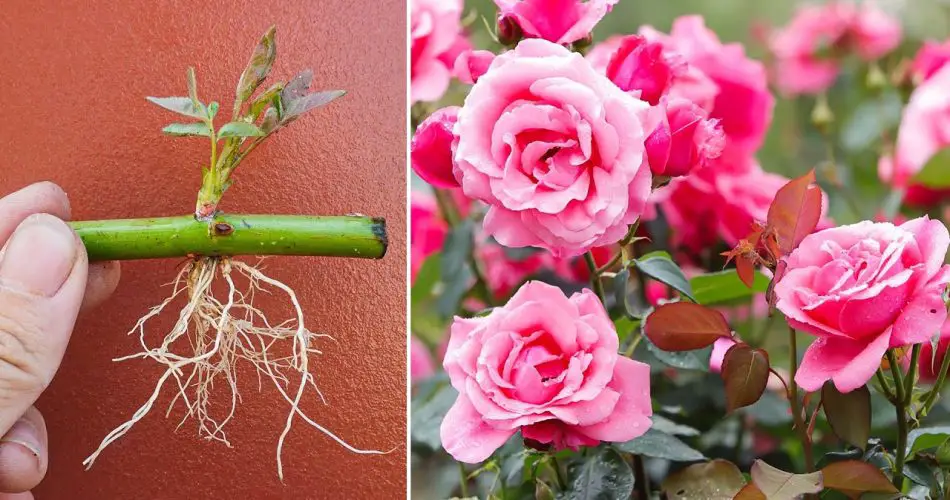
If you’re eager to expand your garden with the timeless beauty of roses, there’s a simple and effective method that involves the magical touch of aloe vera. This easy technique not only requires minimal effort but also increases the likelihood of successful rose plant propagation. Let’s explore the step-by-step guide to effortlessly propagate roses from branches using the soothing properties of aloe vera.
Materials You’ll Need:
- Healthy rose plant
- Sharp pruning shears or scissors
- Aloe vera gel (freshly extracted or store-bought)
- Rooting hormone (optional)
- Potting mix or a blend of perlite and peat moss
- Small pots or containers
- Watering can or spray bottle
Step-by-Step Guide:
1. Choose Healthy Branches: Select branches from your mature rose plant that are robust and free from diseases. Opt for branches that aren’t currently in bloom.
2. Make Clean Cuts: With sharp pruning shears or scissors, make clean, angled cuts on the rose branches. Each cutting should measure around 6 to 8 inches, and be sure to cut just below a node (the point where leaves or stems emerge).
3. Remove Excess Leaves: Trim away extra leaves from the lower part of the cutting, leaving a few at the top. This helps reduce moisture loss and directs the plant’s energy towards root development.
4. Apply Aloe Vera Gel: Dip the cut end of each rose cutting into aloe vera gel. Aloe vera is celebrated for its natural antifungal and antibacterial properties, creating a protective environment for the cuttings to encourage root growth.
5. Optional: Use Rooting Hormone: If available, dip the cut end into rooting hormone after applying aloe vera gel. While optional, this step can boost the success rate of propagation.
6. Prepare Potting Mix: Fill small pots or containers with a well-draining potting mix or a blend of perlite and peat moss. Roses prefer soil that allows for good aeration and drainage.
7. Plant the Cuttings: Make small holes in the potting mix with a stick or your finger. Insert the cut ends of the rose cuttings into the holes, gently pressing the soil around them for stability.
8. Watering: Thoroughly water the cuttings, ensuring the soil is evenly moist. A gentle application using a watering can or spray bottle works well.
9. Provide Indirect Light: Place the pots in a location with bright, indirect light. Avoid direct sunlight initially to prevent stress on the cuttings.
10. Maintain Moisture: Keep the soil consistently moist but not waterlogged. You can cover the pots with a plastic bag or use a plastic dome to create a humid environment and retain moisture.
11. Monitor Growth: Regularly check the cuttings for signs of new growth and root development. Once roots are established, you can transplant the young rose plants into larger containers or directly into your garden.
By incorporating the soothing properties of aloe vera, you’ve embarked on a simple and successful journey to propagate rose plants from branches. Enjoy the enchanting process of watching your beautiful roses flourish and grace your garden effortlessly!