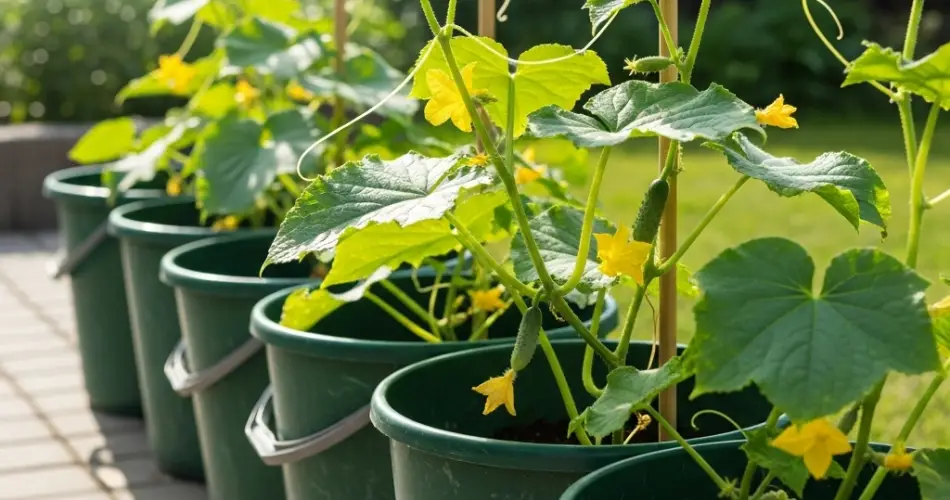
Cucumbers are one of the easiest and most rewarding vegetables to grow at home. Their crisp texture and refreshing flavor make them a favorite for salads, sandwiches, and homemade pickles. While cucumbers are often associated with sprawling garden vines, they actually adapt well to container gardening. With just a few buckets, you can grow healthy cucumber plants even in a small space like a balcony, patio, or terrace.
Why Grow Cucumbers in Buckets?
Using buckets to grow cucumbers offers several advantages. Buckets are affordable, easy to find, and portable, allowing you to place them in the sunniest spots around your home. Since cucumbers need plenty of warmth and light, containers give you the flexibility to move them if sunlight conditions change throughout the day. Buckets also make it easier to control soil quality, drainage, and fertilization compared to growing directly in the ground.
Choosing the Right Bucket
For best results, use buckets that hold at least 5 gallons (about 20 liters) of soil. Cucumbers need deep, roomy containers to allow their roots to spread and grow strong. Make sure the buckets have drainage holes at the bottom. Without good drainage, water can accumulate and cause root rot.
If you live in a very hot climate, consider using light-colored buckets, as dark containers can heat the soil excessively. You can also line the outside with reflective material to keep roots cooler during peak summer.
The Best Cucumber Varieties for Buckets
Not all cucumber types are suitable for container growing. Compact or bush varieties are ideal since they require less space. Some excellent choices include:
-
Bush Pickle – A compact cucumber that’s great for pickling.
-
Patio Snacker – Specifically bred for container gardening.
-
Salad Bush – Produces full-sized slicing cucumbers in smaller spaces.
-
Miniature gherkin or pickling cucumbers – Perfect for small pots and frequent harvesting.
If you prefer long, vining varieties, you’ll need to provide a trellis or support system to guide the vines upward.
Preparing the Soil
Soil is the foundation of healthy cucumber plants. For bucket gardening, avoid using regular garden soil, which can be too heavy and compact. Instead, create a light, nutrient-rich potting mix with excellent drainage. A good mix includes:
-
50% quality potting soil
-
30% compost or aged manure for nutrients
-
10% coconut coir or peat moss to retain moisture
-
10% perlite or coarse sand for better aeration
Adding a slow-release organic fertilizer or a handful of worm castings at planting time will give your cucumbers a strong start.
Planting Cucumbers in Buckets
Cucumbers can be grown from either seeds or seedlings. If planting from seed, sow two to three seeds about one inch deep in each bucket. Once they germinate, thin them to keep only the strongest plant.
If using seedlings, plant one per bucket to avoid overcrowding. Position the seedling in the center of the soil, press gently around the roots, and water well. Place the bucket in a sunny location, as cucumbers need at least six to eight hours of direct sunlight daily.
Supporting Your Plants
Even bush varieties benefit from some support. Placing a small trellis, stake, or tomato cage in the bucket will encourage the plant to grow upward. This saves space, improves air circulation, and keeps cucumbers clean by preventing them from lying on the soil. For vining varieties, a taller trellis or vertical netting works best.
Watering and Fertilizing
Cucumbers need consistent moisture, especially when grown in buckets where soil dries out quickly. Water deeply whenever the top inch of soil feels dry, ensuring the entire root zone is hydrated. Avoid watering the leaves to prevent fungal problems—direct the water at the base of the plant instead.
Because cucumbers are heavy feeders, fertilization is important. Start with a balanced fertilizer during the early growth stage. Once flowers appear, switch to one that is higher in potassium and phosphorus to encourage fruiting. Organic options like compost tea, fish emulsion, or seaweed extract are excellent for maintaining steady growth without overloading the soil with chemicals.
Pollination and Fruit Development
Cucumbers produce both male and female flowers. Bees and other pollinators usually handle pollination, but if you’re growing on a balcony with few insects, you may need to hand-pollinate. Use a small brush or cotton swab to transfer pollen from male flowers to female ones, which are easy to spot by the tiny cucumber shape at their base.
Alternatively, choose parthenocarpic cucumber varieties, which set fruit without pollination. These are especially useful for indoor or urban container gardeners.
Harvesting Cucumbers
Cucumbers grow quickly once fruiting begins. Harvest them while they are firm, green, and at the recommended size for their variety—usually about 4–6 inches for pickling cucumbers and 6–8 inches for slicing types. Frequent harvesting encourages the plant to continue producing more fruit.
Leaving cucumbers on the vine too long can make them bitter and reduce overall yields, so check your plants often. Freshly picked cucumbers are best eaten immediately but can also be stored in the refrigerator for several days.
Final Thoughts
Growing cucumbers in buckets is a simple and rewarding way to enjoy fresh produce at home. With the right bucket size, quality soil, regular watering, and proper support, you can expect a steady harvest throughout the season. Whether you prefer them sliced in salads or transformed into crunchy pickles, bucket-grown cucumbers bring freshness to your table and make gardening easy—even in small spaces.


