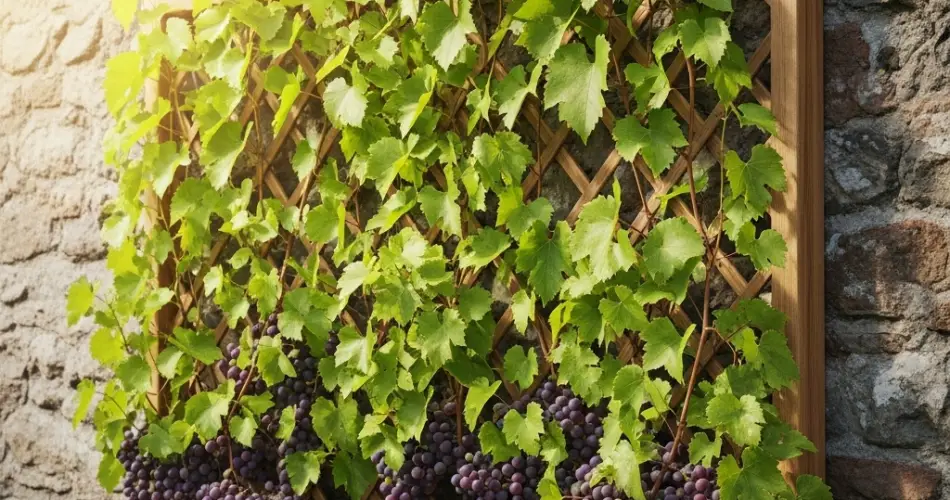
Growing grapes in a small home garden may sound challenging, but with the right support system, it becomes a practical and rewarding project. Grapevines are vigorous climbers that thrive when guided onto structures, and one of the best solutions for limited spaces is a wall trellis. Not only does a wall trellis save ground area, but it also transforms a plain wall into a lush, productive feature filled with greenery and clusters of grapes. The best part? You can build one yourself with simple tools and affordable materials.
Why a Wall Trellis Works Well for Grapes
Grapes are natural climbers that send out tendrils looking for support. Left on the ground, they sprawl uncontrollably, making them prone to rot, pests, and uneven sun exposure. Training them on a wall trellis offers several advantages:
-
Space efficiency: Perfect for compact backyards, courtyards, or balcony gardens.
-
Better fruit quality: Grapes receive improved airflow and sunlight, which encourages healthy ripening.
-
Aesthetic appeal: A wall covered with grapevines creates a natural, decorative green screen.
-
Ease of care: Pruning, spraying, and harvesting are simpler when vines are vertically organized.
With these benefits in mind, let’s explore how you can build a simple wall trellis for grapes at home.
Materials You’ll Need
Creating a wall trellis doesn’t require advanced carpentry skills. Basic tools and sturdy materials will get the job done:
-
Wooden battens or treated lumber (1×2 or 2×2 size works well)
-
Galvanized wire or stainless-steel cable
-
Wall hooks or eye screws
-
Drill and screws
-
Measuring tape and pencil
-
Outdoor wood sealant or paint (optional for durability)
Step-by-Step Guide to Building a DIY Wall Trellis
1. Choose the Right Wall
Select a wall that receives at least six to eight hours of sunlight daily. Grapevines love warmth, and good exposure ensures sweet, well-ripened fruit. Brick, stone, or wooden fences all work as support surfaces.
2. Plan the Trellis Layout
Decide whether you want a vertical, horizontal, or crisscross pattern. Horizontal wires are the most common for grapes, as they allow vines to spread naturally. For a decorative effect, you can also create a diamond or fan-shaped design.
3. Mark Anchor Points
Using a measuring tape, mark points on the wall about 18–24 inches apart vertically. These will be where the wires or battens will attach. Consistent spacing ensures even support for the vines as they grow.
4. Install Hooks or Eye Screws
Drill into the wall at your marked points and secure hooks or eye screws. These will serve as the anchors for your wires or wooden battens. If attaching to brick or concrete, use wall plugs to strengthen the hold.
5. Attach Wires or Battens
Thread galvanized wire through the anchors, pulling them taut to create straight, firm lines. Alternatively, fasten wooden battens directly to the hooks to form a sturdy climbing frame. Both options work; wires provide a minimal look, while wooden slats create a more rustic effect.
6. Seal and Protect the Wood
If using wooden battens, apply an outdoor sealant or weather-resistant paint. This helps prevent rotting, especially since grapevines may live for decades if cared for properly.
7. Plant and Train the Grapevines
Plant grapevines about 6–12 inches away from the wall to allow root expansion and prevent waterlogging against the wall. As shoots emerge, tie them gently to the nearest wire or batten using soft garden ties. Over time, guide the vines to spread evenly across the trellis.
Caring for Grapes on a Wall Trellis
Building the trellis is only the first step—ongoing care ensures a healthy, fruit-bearing plant. Here are some essential tips:
-
Prune annually: Grapes require regular pruning to encourage fruiting wood. Without it, vines become tangled and unproductive.
-
Tie new growth: As shoots grow, continue securing them to the trellis for proper spacing.
-
Water wisely: Grapevines prefer deep but infrequent watering. Avoid overwatering, as it can cause root problems.
-
Fertilize moderately: Use a balanced organic fertilizer in spring to promote healthy growth and fruiting.
-
Monitor for pests: Keep an eye out for aphids, caterpillars, or fungal diseases, especially in humid conditions.
Design Ideas for Small Gardens
Even in compact areas, wall trellises can be customized to fit both practical and decorative purposes:
-
Crisscross design: Adds visual interest and gives vines multiple climbing directions.
-
Framed trellis: Create a framed wooden grid attached to the wall for a neat, structured look.
-
Living wall: Cover an entire side of a garage, fence, or house wall for maximum greenery.
-
Balcony trellis: Attach wires or slats to a balcony wall for small-scale grape growing.
Each design turns a simple space into a productive and attractive garden feature.
Final Thoughts
A DIY wall trellis is one of the most effective and space-saving ways to grow grapes in a small home garden. It combines functionality with beauty, transforming unused walls into productive green spaces. With basic materials, simple construction steps, and regular grapevine care, you can enjoy not only the satisfaction of homegrown fruit but also the charm of a vibrant living wall.
Whether you’re aiming for a decorative feature or a bountiful harvest, a wall trellis offers the perfect solution for small-space grape growing. With a little effort and creativity, your garden wall can soon be overflowing with lush vines and sweet, juicy grapes.


