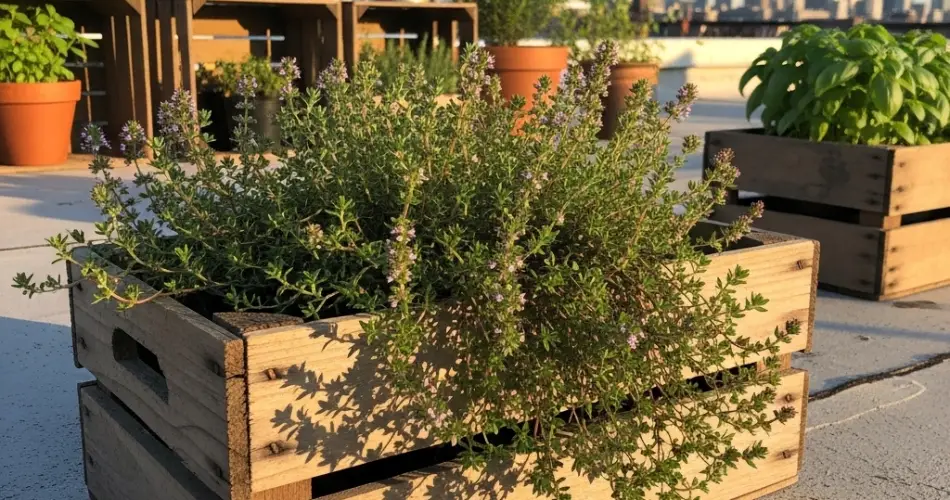
Thyme is one of the most rewarding herbs to grow at home. Its compact size, rich aroma, and culinary versatility make it a favorite for home cooks and gardeners alike. Even if you don’t have a large outdoor space, you can still enjoy fresh thyme year-round by growing it in crate planters on your balcony. This approach not only saves space but also brings a touch of rustic charm to your home.
Why Choose Crate Planters for Thyme
Crate planters are an ideal choice for thyme because they offer excellent drainage, easy portability, and a neat, organized look. Thyme thrives in slightly dry conditions, and crates prevent excess water from pooling around the roots. The ability to move your crate means you can adjust the plant’s position to catch the best sunlight or protect it from bad weather. Plus, a crate herb garden gives your balcony a cozy, natural aesthetic.
Selecting the Right Crate
When choosing a crate for thyme, go for one that’s at least 20–25 cm deep. Wooden fruit crates, vintage wine boxes, or sturdy plastic crates all work well.
Preparation tips:
-
Line the inside with landscape fabric or burlap to hold soil in place while allowing water to drain.
-
Check drainage – if your crate has a solid base, drill small holes to ensure water can escape.
-
Optional mobility – attach caster wheels for easy movement, especially if your balcony receives shifting sunlight.
Choosing Your Thyme Variety
There are many types of thyme, each with its own flavor and appearance. Some popular choices for balcony crates include:
-
Common thyme (Thymus vulgaris) – Classic culinary thyme with a robust aroma.
-
Lemon thyme – Offers a citrusy fragrance that’s perfect for seafood and salads.
-
Creeping thyme – Low-growing and decorative, suitable for both cooking and ornamental purposes.
-
French thyme – Milder in flavor, great for delicate dishes.
Pick a variety that complements your cooking style and the visual effect you want for your balcony garden.
Preparing the Soil
Thyme prefers well-draining soil with moderate fertility. To create the perfect mix for your crate planter:
-
2 parts high-quality potting soil
-
1 part coarse sand or perlite for drainage
-
1 part compost for light feeding
Avoid overly rich soil, as it can encourage excessive leaf growth and weaken the plant’s flavor.
Planting Thyme in Crates
You can start thyme from seeds, cuttings, or seedlings from a nursery.
From seeds: Sprinkle seeds evenly across the soil surface and press them lightly. Keep the soil barely moist until they germinate, which can take 1–2 weeks.
From cuttings: Take 7–10 cm cuttings from a healthy plant, strip the lower leaves, and plant directly into the prepared soil.
From seedlings: Place them 15–20 cm apart to allow room for growth and air circulation.
Sunlight and Placement
Thyme loves full sun and needs at least 6 hours of direct light daily. Position your crate in the brightest spot on your balcony. In very hot climates, providing light afternoon shade can help prevent stress during peak summer heat.
Watering and Feeding
-
Watering: Thyme is drought-tolerant once established. Water when the top 2–3 cm of soil feels dry, and avoid overwatering.
-
Fertilizing: Feed lightly with an organic herb fertilizer once a month during the growing season. Excess feeding can reduce its strong aroma and flavor.
Pruning and Harvesting
Regular pruning helps keep thyme compact and productive. Begin harvesting once the plant is established and has several stems. Cut sprigs just above a leaf node to encourage branching.
For maximum flavor, harvest in the morning when essential oils are most concentrated. If you plan to dry thyme, cut stems just before flowering. Hang the bundles in a warm, dry, and well-ventilated space, then strip the leaves into an airtight jar once fully dry.
Seasonal Care and Maintenance
-
Overwintering: In colder climates, move the crate indoors near a sunny window during frost periods.
-
Pest watch: Thyme is naturally pest-resistant but check for occasional aphids or spider mites.
-
Long-term health: Every 2–3 years, divide the plant to prevent it from becoming woody and to encourage fresh growth.
Ways to Use Fresh Thyme
Fresh thyme enhances countless dishes, from roasted meats and vegetables to soups and bread. It also works well in marinades, salad dressings, and infused oils. Lemon thyme adds a fresh twist to seafood, while common thyme complements hearty stews.
Final Thoughts
Growing thyme in a balcony crate planter is a practical and stylish way to bring fresh herbs into your cooking routine. With its minimal maintenance needs and year-round harvest potential, thyme is perfect for busy gardeners and culinary enthusiasts alike. A simple crate filled with aromatic thyme can transform even the smallest balcony into a productive and beautiful herb garden, ensuring you always have this fragrant favorite within arm’s reach.


