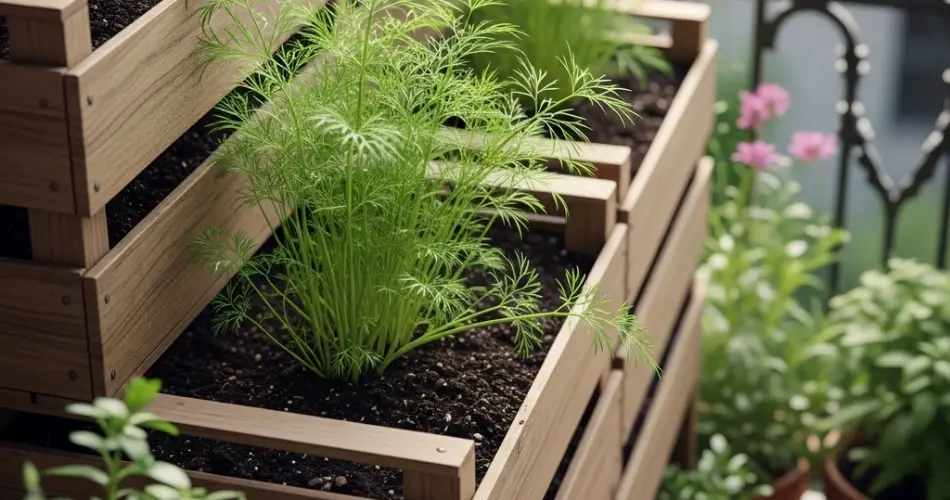
Dill is a flavorful and aromatic herb that brings freshness to dishes and beauty to gardens. With its feathery green leaves and delicate yellow flowers, dill is as attractive as it is useful. Even if you’re short on space, you can grow dill easily using wooden crates on your balcony. Crate gardening is a practical and stylish method, especially for urban gardeners looking to maximize small areas.
Here’s how you can turn a simple wooden crate into a thriving mini-garden of dill right outside your door.
Why Grow Dill in Crates?
Dill has a relatively shallow root system and grows well in containers, making it a perfect candidate for crate gardening. Crates offer excellent portability, good drainage, and can fit neatly into balcony corners or ledges. Plus, they add a rustic charm to any setup while giving you control over soil quality and watering.
Dill also grows quickly and can be harvested multiple times during the growing season, making it a productive choice for small-space gardening.
Choosing the Right Crate
Select a sturdy wooden crate that’s free of chemicals and untreated. A crate that’s at least 8–10 inches deep and 12–18 inches wide is ideal for dill. This size allows for proper root development and can accommodate several dill plants.
To prepare your crate:
-
Add drainage holes if none exist. You can drill a few at the bottom to ensure excess water drains easily.
-
Line the crate with landscape fabric, burlap, or a mesh liner. This will keep the soil in while still allowing drainage.
-
Fill with soil that’s light, well-draining, and rich in organic matter. A good mix includes potting soil, compost, and a bit of perlite or sand to improve drainage.
Planting Dill
Dill can be grown from seeds or transplants, though direct seeding is often preferred since dill doesn’t transplant well.
-
Sowing seeds: Sprinkle seeds directly onto the soil surface and lightly cover with about ¼ inch of soil. Keep the soil moist until germination, which usually takes 7–14 days.
-
Spacing: If planting multiple dill plants, space them about 8–12 inches apart within the crate to ensure proper airflow and reduce competition.
Dill thrives in full sun, so position your crate where it will receive at least 6 hours of sunlight daily. A south-facing or east-facing balcony is usually ideal.
Watering and Feeding
Dill prefers slightly moist but not soggy soil. Water when the top inch of soil feels dry, and be cautious not to overwater, as this can lead to root rot.
Dill doesn’t need heavy feeding. A light dose of balanced organic fertilizer or compost mixed into the soil at planting time is usually sufficient. Too much fertilizer can lead to more foliage but less flavor, so moderation is key.
Caring for Your Dill
Dill grows quickly and may reach up to 2–3 feet tall, depending on the variety. As it grows, it may require light staking to prevent it from toppling over in windy conditions—especially in balcony settings where airflow can be strong.
Keep your crate garden tidy by removing weeds and dead or yellowing leaves. This helps improve airflow and keeps your dill healthy.
Harvesting Dill
You can start harvesting dill leaves once the plant reaches about 8 inches in height. Use scissors to snip off leaves from the outer stems, leaving the inner ones to continue growing. Regular harvesting encourages bushier growth and delays flowering.
If your goal is to harvest dill seeds, allow some of the flower heads to mature and dry. Once the seed heads turn brown, cut them off and place them in a paper bag to dry further. The seeds can be used in cooking or for replanting.
Preventing Pests and Problems
Dill is relatively pest-resistant, but it can occasionally attract aphids or caterpillars. These can be removed manually or treated with a gentle spray of soapy water. Avoid using harsh chemical pesticides, especially on herbs you plan to eat.
Powdery mildew may occur in humid conditions or if airflow is poor. To prevent this, avoid overcrowding your crate and always water at the base of the plant rather than overhead.
End-of-Season Tips
Dill is an annual, so it will complete its life cycle in one season. If you allow a few plants to flower and go to seed, they may self-seed in the crate for next season’s growth. You can also collect seeds to store and replant.
At the end of the growing season, empty and refresh the soil in your crate before planting a new batch of herbs or vegetables.
Growing dill in crates is a smart, space-saving strategy for balcony gardeners who want to enjoy fresh herbs without needing a yard. With minimal care, you’ll have a constant supply of flavorful greens for your kitchen and a fragrant, feathery addition to your outdoor space.


