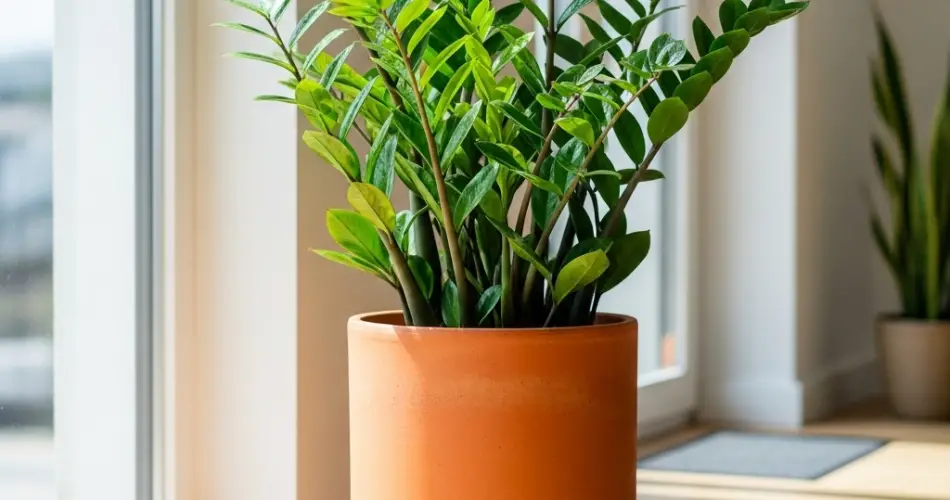
The ZZ plant (Zamioculcas zamiifolia) is a favorite among plant lovers for its resilience, elegant glossy leaves, and ability to thrive in a wide range of conditions. Native to eastern Africa, it tolerates low light, irregular watering, and less-than-ideal environments—making it an ideal choice for busy individuals or beginner gardeners.
While this plant is famously low-maintenance, the choice of container plays a big role in its health and appearance. A well-chosen pot not only supports the plant’s growth but also enhances its decorative value in your home. From terracotta to ceramic, the right container can help your ZZ plant stay healthy and beautiful.
1. Choosing the Right Size
The container size directly affects the ZZ plant’s health. A pot that’s too small will restrict root growth, leading to stunted leaves and slowed development. A pot that’s too large can hold excess moisture, increasing the risk of root rot.
Best approach: Select a pot that’s about 1–2 inches wider in diameter than the current root ball. This provides enough space for gradual growth without encouraging soggy soil. Remember, ZZ plants grow slowly, so they won’t need frequent repotting.
2. Prioritizing Drainage
No matter how decorative your container is, it must have proper drainage holes. The ZZ plant’s tuberous rhizomes store water, which means excess moisture in the soil can be dangerous. Without drainage, the roots can quickly rot.
If you fall in love with a pot that doesn’t have holes, use it as a cachepot—place the plant in a smaller nursery pot inside and remove it when watering. This way, excess water can drain before you return it to the decorative container.
3. Materials That Work Best
Different container materials influence how quickly soil dries out. Your choice should match your plant care habits and indoor environment.
-
Terracotta: Highly breathable, it absorbs moisture from the soil and helps prevent overwatering. Perfect for beginners or those who water often.
-
Ceramic (glazed): Retains moisture longer than terracotta and comes in various colors and patterns. Great for brightening up a room but requires careful watering.
-
Plastic: Lightweight and affordable, plastic pots hold moisture well but may encourage overwatering if not monitored.
Each material offers a different aesthetic, so you can match it to your home decor while keeping your ZZ plant comfortable.
4. Using the Right Soil Mix
Container choice goes hand in hand with the right soil. ZZ plants prefer light, well-draining soil to avoid root rot. A succulent or cactus mix works well, or you can make your own by combining:
-
2 parts general potting soil
-
1 part perlite
-
1 part coarse sand or orchid bark
This mix promotes drainage while retaining just enough moisture for the plant’s needs.
5. Positioning the Decorative Pot
Where you place your decorative container matters for both aesthetics and plant health. ZZ plants can adapt to low light, but they thrive in bright, indirect light. A spot near an east- or north-facing window is ideal.
If you place your plant in a darker corner for style, rotate it occasionally to encourage even growth. For decorative purposes, you can also pair the container with a plant stand to elevate it, making it more of a focal point in the room.
6. Watering with Care
No matter how beautiful the pot, the ZZ plant’s watering needs remain the same. It’s better to underwater than overwater. Wait until the top 2–3 inches of soil are completely dry before watering.
When watering, ensure that excess water drains freely. Never let your ZZ plant sit in water, as this can quickly damage its rhizomes. In decorative containers without drainage, extra caution is required—measure the water carefully and water less often.
7. Cleaning and Maintaining the Look
Dust can dull the ZZ plant’s shiny leaves and reduce its ability to absorb light. Wipe the leaves gently with a soft, damp cloth every few weeks to restore their natural sheen.
If your decorative container gets water spots or dirt, clean it regularly to keep the display fresh and attractive.
8. Repotting Without Losing the Style
Over time, even the hardiest ZZ plant will outgrow its pot. When that happens, choose a new container that complements your home’s style while providing enough space for the roots to expand. Aim to repot every 2–3 years or when you notice roots pushing against the pot or emerging from the drainage holes.
You can even reuse your favorite decorative container by placing the newly potted plant inside it as a cachepot.
Final Thoughts
The ZZ plant’s beauty lies in both its natural elegance and its adaptability. By pairing it with the right decorative container, you can showcase this hardy plant while ensuring it remains healthy. Whether you choose earthy terracotta, colorful glazed ceramic, or sleek plastic, the key is to balance style with the plant’s practical needs—adequate drainage, the right size, and a breathable environment.
With thoughtful container selection and a bit of basic care, your ZZ plant will not only survive but thrive, becoming a lasting part of your home’s décor for years to come.


