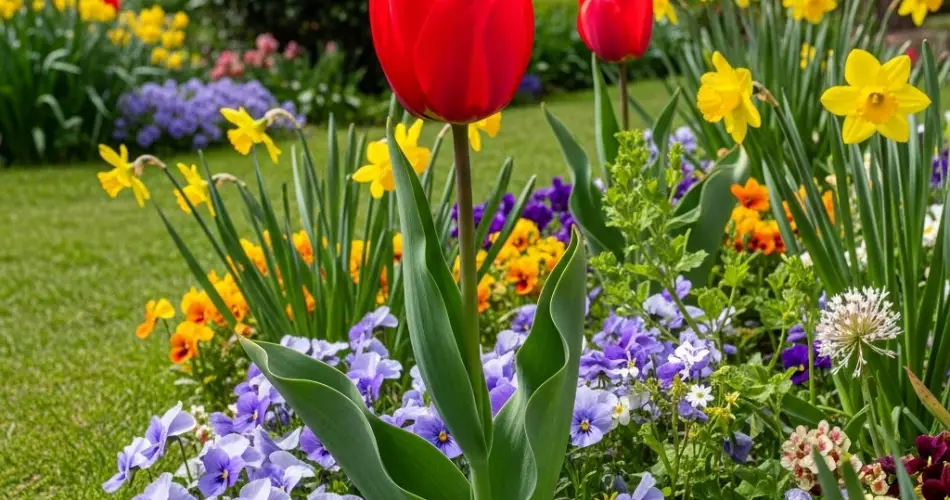
Tulips are a springtime favorite, known for their bold colors and elegant shape. They brighten up garden beds, borders, and containers with a burst of vibrant beauty. However, tulips shine even more when paired with the right companion plants. The right combinations can not only enhance your garden’s aesthetics but also improve soil health, deter pests, and extend seasonal interest in your flower beds.
Companion planting isn’t just for vegetables—it plays an important role in ornamental gardening too. By selecting suitable plants to grow alongside tulips, you can create a harmonious garden with overlapping bloom times, interesting foliage contrasts, and healthier plants overall.
Here’s a list of the best companion plants to grow with tulips and why they work so well together.
1. Daffodils
One of the most classic tulip companions, daffodils bloom around the same time in early to mid-spring. Their bright yellow, white, or orange flowers contrast beautifully with tulip colors. Both grow from bulbs and have similar care requirements, making them easy to pair in the same bed.
Why they work:
-
Complementary bloom time
-
Similar height and growth habit
-
Daffodils are known to deter rodents, helping protect tulip bulbs from being eaten
Tip: Plant daffodils slightly deeper to ensure staggered emergence and longer-lasting blooms.
2. Grape Hyacinths (Muscari)
Grape hyacinths produce clusters of tiny, blue or purple bell-shaped flowers that carpet the ground beneath taller tulips. Their low height and early bloom make them perfect for underplanting.
Why they work:
-
Contrast in color and size adds depth to beds
-
Early blooming ensures your garden has color before tulips fully emerge
-
Both bulbs can be planted in the fall for simultaneous flowering
Tip: Plant grape hyacinths in clusters for the best visual impact.
3. Forget-Me-Nots (Myosotis)
These sweet, dainty blue flowers are another charming underplanting choice. Forget-me-nots bloom in early spring, creating a dreamy, woodland-like effect around taller tulips.
Why they work:
-
Their small, delicate blooms create a soft contrast to bold tulip petals
-
They self-seed easily and return year after year
-
Help suppress weeds by covering bare soil
Tip: Choose perennial varieties in cooler climates to enjoy repeated bloom cycles.
4. Pansies and Violas
These cold-hardy annuals are often used in container arrangements or borders. With a wide range of colors and long bloom periods, pansies and violas make cheerful tulip companions.
Why they work:
-
Can be planted above tulip bulbs in fall and provide early color
-
Tolerant of spring frosts
-
Compact size allows tulips to stand tall above them
Tip: Use contrasting colors to highlight tulip hues—yellow pansies with purple tulips, for example.
5. Wallflowers (Erysimum)
Wallflowers are fragrant, low-growing biennials or perennials that bloom in early to late spring. Their warm tones—yellows, oranges, and rusts—pair beautifully with tulips in similar or contrasting shades.
Why they work:
-
Extended blooming overlaps well with tulip season
-
Add a pleasant fragrance to the garden
-
Tolerant of poor soil and low maintenance
Tip: Choose perennial varieties for recurring blooms or reseed annual types each year.
6. Hostas
Though hostas emerge slightly after tulips, they serve as an excellent way to hide dying tulip foliage later in the season. Their large, textured leaves create a lush backdrop.
Why they work:
-
Offer foliage interest after tulip blooms fade
-
Shade-loving, perfect for gardens where tulips enjoy partial sun
-
Help fill in space in mixed borders
Tip: Use hostas in woodland gardens with tulips planted near the front of the bed.
7. Heuchera (Coral Bells)
Heucheras are prized for their colorful foliage that ranges from lime green to deep burgundy. While their flowers are small, their leaves create a beautiful contrast with tulip blooms.
Why they work:
-
Evergreen or semi-evergreen foliage for year-round interest
-
Low-growing habit complements tall tulips
-
Adds texture and color to mixed planting beds
Tip: Choose foliage that complements the tulip colors you plant—deep red leaves look stunning with white or yellow tulips.
8. Alliums
Alliums bloom slightly later than tulips, making them ideal for bridging the gap between spring and early summer flowers. Their globe-shaped blooms provide striking structure in the garden.
Why they work:
-
Add height and architectural interest
-
Attract pollinators
-
Help deter pests like aphids and rodents
Tip: Plant allium bulbs at the same time as tulips in fall for best results.
Final Thoughts
Companion planting with tulips is more than just aesthetics—it’s a way to create balance, support healthy growth, and keep your garden blooming from early spring onward. Whether you prefer soft pastels or bold contrasts, there’s a perfect pairing to enhance your tulip display. By mixing bulbs, perennials, and annuals, you’ll enjoy a layered and ever-changing landscape that delights the eye all season long.


