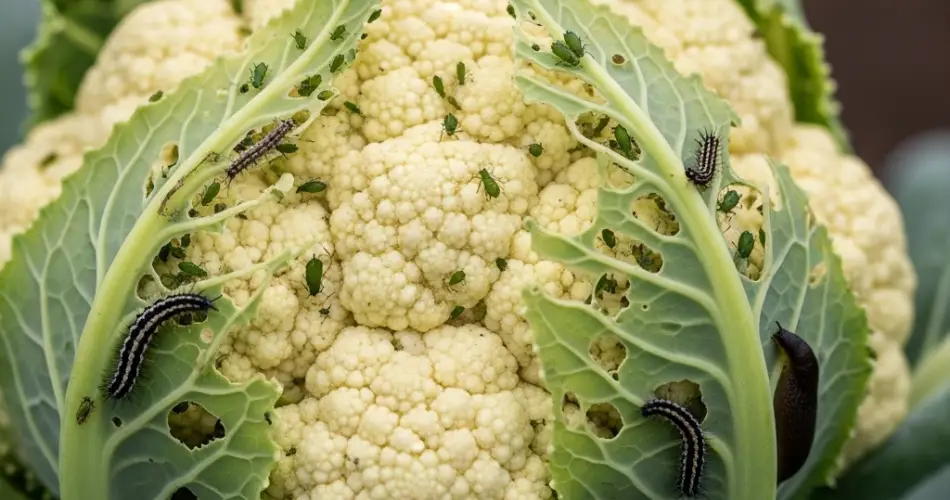
Cauliflower is a popular cool-season vegetable known for its crisp texture and mild flavor. However, like many plants in the brassica family, it’s vulnerable to a variety of pests that can damage leaves, stunt growth, and ruin the developing heads. To grow healthy, productive cauliflower, it’s essential to identify the most common pests early and take appropriate control measures. This article outlines the primary insect threats to cauliflower and offers effective, natural strategies for managing them.
1. Cabbage Worms
Description:
Cabbage worms, including the imported cabbageworm, cabbage looper, and diamondback moth larvae, are green caterpillars that feed aggressively on cauliflower leaves and heads. Their damage appears as irregular holes in foliage and frass (insect droppings) around the plant.
Control Methods:
-
Handpicking: Check the undersides of leaves and remove any caterpillars you find.
-
BT (Bacillus thuringiensis): A naturally occurring bacteria that targets caterpillars without harming beneficial insects. Apply as a foliar spray.
-
Row Covers: Install floating row covers over young plants to prevent adult moths and butterflies from laying eggs.
-
Beneficial Insects: Encourage natural predators like parasitic wasps, ladybugs, and lacewings by planting herbs and flowers such as dill, cilantro, and alyssum nearby.
2. Aphids
Description:
Aphids are tiny, soft-bodied insects that suck sap from plant tissues, often forming large colonies on the undersides of leaves. Common symptoms include curled or yellowing leaves, stunted growth, and sticky honeydew residue that can lead to sooty mold.
Control Methods:
-
Water Spray: A strong blast of water can dislodge aphids from the plant.
-
Insecticidal Soap: Apply a natural insecticidal soap directly to affected areas. Repeat every few days as needed.
-
Neem Oil: This organic oil disrupts the aphid life cycle and is safe for use on edible crops.
-
Companion Plants: Grow nasturtiums or marigolds nearby to attract aphids away from cauliflower.
3. Cabbage Root Maggots
Description:
These are the larvae of a small fly that lays eggs near the base of the plant. The maggots burrow into the roots, causing plants to wilt, yellow, and eventually die. Root maggot damage is most severe in cool, wet soil early in the growing season.
Control Methods:
-
Crop Rotation: Avoid planting brassicas in the same spot each year to disrupt the maggots’ life cycle.
-
Row Covers: Place covers over the soil immediately after transplanting to prevent adult flies from laying eggs.
-
Sand Barrier: Apply a ring of dry sand around the base of each plant to deter egg-laying.
-
Beneficial Nematodes: Introduce microscopic nematodes into the soil to parasitize and kill root maggots.
4. Flea Beetles
Description:
Flea beetles are tiny, black or bronze jumping insects that chew small holes in cauliflower leaves. While mature plants can often tolerate minor damage, seedlings may be severely stunted or killed.
Control Methods:
-
Sticky Traps: Place yellow sticky traps near plants to catch flea beetles.
-
Neem Oil or Pyrethrin Spray: Use these natural insecticides to reduce populations without harming beneficial insects.
-
Mulch and Row Covers: Use a thick organic mulch and floating row covers to protect young plants from beetles.
-
Trap Crops: Plant radishes nearby to lure flea beetles away from cauliflower.
5. Slugs and Snails
Description:
These pests are particularly active in damp, shady areas and feed at night. They chew large, ragged holes in leaves and may also damage cauliflower heads. Slime trails are a telltale sign of their presence.
Control Methods:
-
Beer Traps: Bury shallow containers filled with beer at soil level to lure and drown slugs.
-
Copper Tape: Place copper tape around garden beds or pots to deter slugs and snails.
-
Hand Removal: Inspect plants early in the morning or at dusk and remove slugs by hand.
-
Diatomaceous Earth: Sprinkle around the base of plants to create a sharp, drying barrier that slugs avoid.
6. Cutworms
Description:
Cutworms are night-feeding caterpillars that chew through seedling stems at soil level, causing young plants to collapse and die. These pests are especially troublesome during the early stages of growth.
Control Methods:
-
Collars: Wrap paper or cardboard collars around seedlings to prevent cutworms from accessing stems.
-
Tilling Soil: Turn the soil before planting to expose and kill overwintering larvae.
-
Night Patrols: Check plants at night with a flashlight and remove any caterpillars found.
Prevention Tips for Healthy Cauliflower
-
Rotate Crops: Avoid planting cauliflower in the same spot more than once every three years.
-
Maintain Plant Health: Healthy plants are more resistant to pest damage. Keep the soil fertile and well-drained, and water regularly.
-
Remove Plant Debris: Clean up after harvest to eliminate hiding spots and overwintering areas for pests.
-
Encourage Biodiversity: Mix flowers, herbs, and other vegetables into your garden to attract beneficial insects and discourage pest buildup.
Conclusion
Growing cauliflower can be highly rewarding, but pests can quickly become a problem if left unchecked. By identifying pests early and using a mix of natural control methods—such as physical barriers, beneficial insects, and organic sprays—you can protect your crop and enjoy a healthy, productive harvest. A proactive approach, along with good garden hygiene and crop rotation, will go a long way in keeping cauliflower pests at bay.


