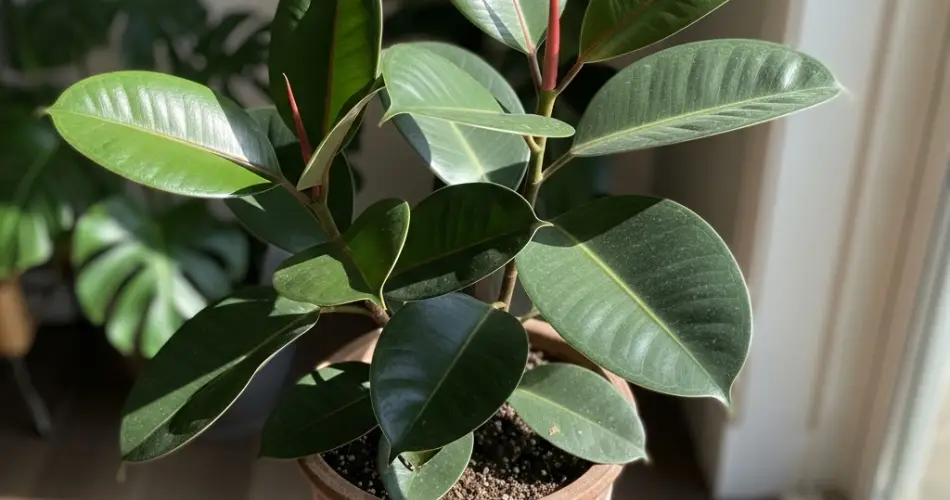
Rubber plants (Ficus elastica) are a favorite among houseplant enthusiasts thanks to their bold, glossy leaves and impressive ability to grow into striking indoor trees. Native to Southeast Asia, these plants naturally thrive in warm, humid environments with ample sunlight filtering through taller trees. When grown indoors, however, many plant owners wonder whether rubber plants can adapt to spaces with less light.
The short answer is that rubber plants can survive in low light, but they will not grow as vigorously or look as vibrant as when kept in brighter conditions. To help you decide if a rubber plant will work in your home or office, let’s explore how these plants respond to different light levels, what “low light” really means, and how to care for them in dimmer spaces.
Natural Light Preferences of Rubber Plants
In the wild, rubber plants grow beneath the canopy of taller trees, which means they are accustomed to dappled but strong indirect light. Indoors, they thrive best when placed near a bright window where they receive filtered sunlight. An east-facing window is ideal, providing gentle morning light, while a south- or west-facing window can also work if the plant is positioned a few feet back or shielded by a curtain.
These conditions mimic the plant’s natural habitat, giving it the energy needed to produce large, glossy leaves and maintain steady growth.
What Counts as Low Light?
Many people assume that any space without direct sun counts as low light, but in houseplant care, the term has a more specific meaning. Low light generally refers to:
-
Areas several feet away from a window.
-
Rooms with small or north-facing windows that allow limited natural light.
-
Spots where you can see and read comfortably during the day, but the space feels dim compared to brighter rooms.
Completely dark corners or windowless rooms are not suitable for rubber plants unless you provide artificial lighting.
How Rubber Plants React to Low Light
While rubber plants are relatively adaptable, prolonged low-light conditions can lead to noticeable changes in their growth and appearance:
-
Slower growth: The plant may stop producing new leaves as frequently.
-
Smaller leaves: New growth tends to be undersized compared to those grown in brighter light.
-
Leggy stems: The plant may stretch or lean toward the nearest light source, resulting in a less balanced shape.
-
Leaf drop: Older leaves may yellow and fall as the plant conserves energy.
Although these signs don’t always mean the plant is dying, they do indicate that it isn’t receiving enough light to thrive.
Tips for Growing Rubber Plants in Low Light
If your space doesn’t offer abundant sunlight, you can still enjoy a healthy rubber plant by making a few adjustments:
-
Supplement with grow lights
A full-spectrum LED grow light placed above or beside the plant can mimic natural sunlight. Aim for 8–10 hours of supplemental light daily. -
Choose the brightest available spot
Even if you don’t have large windows, placing your rubber plant near a north-facing or partially shaded window is better than keeping it in a dark corner. -
Rotate the plant regularly
Turning the pot every few weeks ensures all sides receive light evenly and prevents leaning. -
Be mindful of watering
In low light, the plant uses water more slowly, increasing the risk of overwatering. Always check that the top inch or two of soil has dried before watering again. -
Keep leaves clean
Dust on the broad leaves can block available light. Wipe them with a damp cloth every couple of weeks to maximize photosynthesis.
When Low Light Isn’t Enough
If your home or office is especially dim and you cannot provide artificial lighting, a rubber plant may not be the best fit. Instead, consider more shade-tolerant plants such as snake plants, ZZ plants, or pothos. These species adapt better to low-light conditions and require less supplemental care.
Final Thoughts
Rubber plants are adaptable and can survive in low-light environments for a period, but they reach their full potential in bright, indirect light. In dim spaces, growth may slow, leaves may shrink, and the plant may lean toward the nearest light source. By supplementing with grow lights, adjusting watering habits, and choosing the brightest available spot, you can still enjoy a thriving rubber plant indoors.
If you want a dramatic, leafy indoor tree, providing the right lighting conditions is key. With a little attention to its needs, your rubber plant can remain a stunning and resilient addition to your indoor garden.


