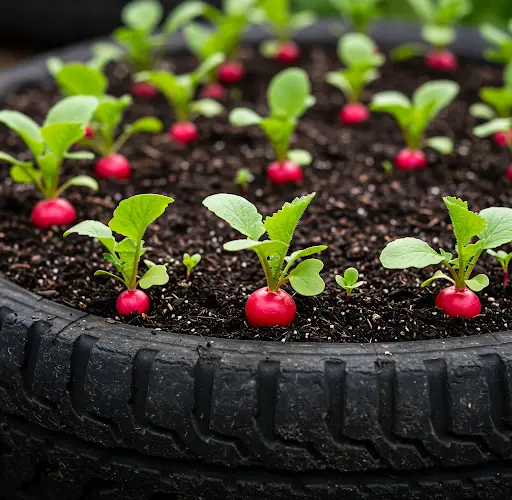
Brilliant Idea: Recycling Tires to Grow Radish for More Tubers | Growing Radish from Seeds
Growing radishes at home is an exciting and rewarding gardening project, especially when using recycled materials. One of the most innovative ways to grow radishes is by repurposing old tires. This method not only provides an ideal growing environment but also promotes sustainable gardening by reducing waste. Whether you have limited space or a large backyard, growing radishes in tires is a fantastic way to maximize your harvest. In this guide, we’ll explore step-by-step how to grow radishes using old tires and ensure a successful yield of delicious, crunchy tubers.
Why Grow Radishes in Recycled Tires?
- Sustainable Gardening: Repurposing old tires reduces waste and helps the environment.
- Cost-Effective: No need to buy expensive planters when you can use discarded tires.
- Space-Saving: Stack tires to create vertical planters, making them perfect for small gardens or balconies.
- Excellent Drainage: Tires retain heat, promoting faster growth, while their structure allows proper water drainage.
- Portable and Durable: Tires are easy to move, durable, and can be used for multiple planting seasons.
Choosing the Right Radish Variety
Radishes come in various types, and selecting the right variety depends on your preferences and climate conditions. Some popular radish varieties include:
- Cherry Belle: A classic small red radish with a crisp texture.
- French Breakfast: An elongated radish with red skin and a white tip.
- Daikon: A larger, white radish commonly used in Asian cuisine.
- Easter Egg: A colorful mix of red, purple, pink, and white radishes.
- Black Spanish: A unique variety with dark skin and spicy flavor.
Step-by-Step Guide to Growing Radishes in Tires
Step 1: Preparing the Tires
- Choose Your Tires: Select old tires that are still in good condition. Avoid tires with excessive damage or chemicals.
- Clean the Tires: Wash them thoroughly to remove any dirt, grease, or residue.
- Position the Tires: Place the tires in a sunny location where radishes can receive at least 6 hours of direct sunlight daily.
- Stacking (Optional): If you want deeper soil for larger radish varieties, stack two or more tires on top of each other.
Step 2: Preparing the Soil
- Choose the Right Soil: Radishes grow best in loose, well-draining, nutrient-rich soil. Use a mix of compost, garden soil, and sand.
- Fill the Tires: Pour the soil mixture into the tire, leaving about an inch of space from the top.
- Level the Surface: Lightly pat down the soil to create an even surface for planting.
Step 3: Planting Radish Seeds
- Sow the Seeds: Make shallow holes (½ inch deep) in the soil, spacing them about 1 inch apart.
- Cover Lightly: Gently cover the seeds with a thin layer of soil.
- Water Gently: Use a watering can or spray bottle to moisten the soil without overwatering.
- Mark the Planting Date: Radishes grow quickly, so keeping track of their growth cycle is helpful.
Step 4: Caring for Your Radish Plants
- Watering: Keep the soil consistently moist but not waterlogged. Water regularly, especially in dry weather.
- Thinning: Once the seedlings sprout (after 5-7 days), thin them out by removing weaker ones, leaving 2-3 inches of space between plants.
- Weeding: Keep the growing area weed-free to prevent competition for nutrients.
- Fertilization: Radishes don’t require heavy feeding, but adding compost or a balanced fertilizer can enhance growth.
- Mulching: Add a thin layer of mulch around the plants to retain moisture and suppress weeds.
Step 5: Harvesting Radishes
- Check Maturity Time: Most radishes are ready to harvest within 20-30 days.
- Gently Pull Them Out: When the radish shoulders emerge from the soil, gently pull them out by the leaves.
- Wash and Store: Rinse the radishes thoroughly and store them in the refrigerator for fresh consumption.
- Replant for Continuous Harvest: Radishes grow quickly, so replant seeds every two weeks for a continuous supply.
Common Problems and Solutions
| Problem | Cause | Solution |
|---|---|---|
| Small or no tubers | Overcrowding or poor soil | Thin seedlings and improve soil quality |
| Spicy taste | Lack of water or heat stress | Keep soil consistently moist and provide shade during hot days |
| Cracked radishes | Uneven watering | Water consistently to prevent cracks |
| Pests (aphids, caterpillars) | Insects attacking leaves | Use neem oil or organic insecticide |
| Yellowing leaves | Nutrient deficiency | Add compost or balanced fertilizer |
Additional Tips for Success
- Rotate Crops: Avoid planting radishes in the same tire year after year to prevent soil depletion and disease buildup.
- Use Companion Planting: Grow radishes alongside lettuce, carrots, and herbs to maximize space and deter pests.
- Experiment with Different Varieties: Try growing different radish types for a colorful and diverse harvest.
- Recycle More Tires: Use multiple tires to grow other vegetables like lettuce, spinach, or potatoes.
Conclusion
Recycling tires to grow radishes is an eco-friendly, cost-effective, and efficient gardening method that maximizes space while promoting sustainability. Whether you’re a beginner or an experienced gardener, this approach allows you to cultivate fresh radishes with minimal effort. By following these simple steps, you can enjoy a bountiful harvest of nutritious, homegrown radishes while contributing to a greener environment. Try this innovative gardening idea today and experience the benefits of sustainable urban farming!


