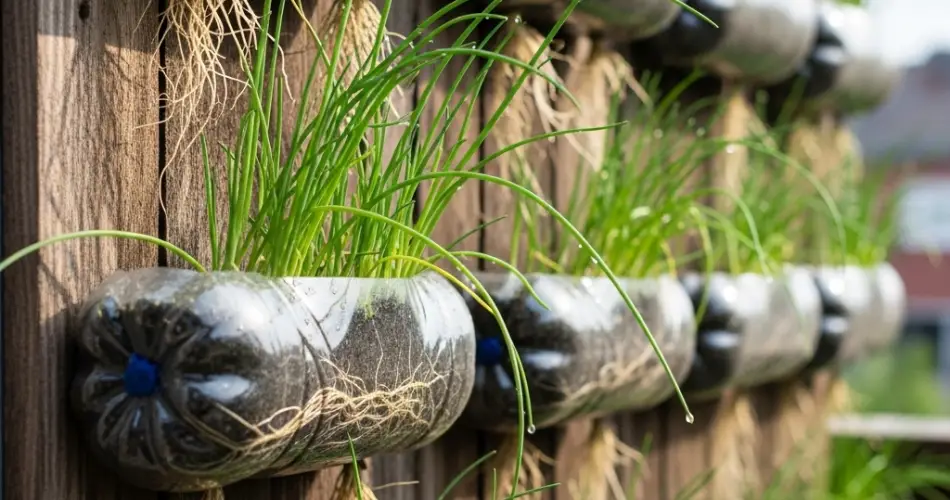
Chives are one of the easiest and most rewarding herbs to grow, providing a mild onion-like flavor that enhances a variety of dishes, from salads and soups to sauces and omelets. For gardeners with limited space, creating a vertical herb garden using plastic bottles is a smart, sustainable solution. This approach maximizes space, repurposes materials, and ensures a steady supply of fresh chives year-round. Here’s a complete guide to setting up and maintaining a thriving bottle wall garden for chives.
Selecting Bottles for Your Vertical Garden
Plastic bottles are ideal for vertical gardening because they are lightweight, durable, and easy to modify. For chives, bottles with a minimum capacity of 1.5 liters provide sufficient space for the roots to grow. Clean the bottles thoroughly, removing labels and any residue. Cut each bottle horizontally to create an open-top planter. Adding small holes in the bottom or sides ensures proper drainage, preventing waterlogging and root rot. Using bottles of uniform size produces a neat and organized appearance, while mixing bottle sizes can add a creative visual effect.
Choosing a Wall and Location
Chives grow best in full sun or partial shade, requiring at least four to six hours of sunlight per day. Outdoor walls are ideal, but indoor walls near bright windows or under grow lights can also work effectively. Choose a sturdy wall or balcony area that is protected from strong winds and extreme temperatures. The supporting structure—such as a wooden frame, wire mesh, or hanging grid—must be strong enough to hold multiple bottles filled with soil and plants. Proper placement ensures healthy growth and easy access for planting and harvesting.
Constructing the Bottle Wall Garden
Secure the bottles to your chosen wall using hooks, wire, or string. Arrange them in rows or staggered patterns depending on your space and design preference. Staggered arrangements improve airflow and allow sunlight to reach all plants evenly. Ensure that each bottle is firmly anchored to prevent tipping or falling, especially in outdoor environments. A vertical arrangement maximizes space efficiency and creates an attractive, living wall for your herbs.
Soil and Planting Chives
Chives prefer well-draining soil rich in organic matter. A light potting mix blended with perlite or sand is ideal for vertical bottle gardens, helping to prevent waterlogging. Fill each bottle with soil up to approximately two centimeters from the top. For seeds, sprinkle them evenly on the surface and lightly cover them with soil. For seedlings, gently loosen the roots before planting and fill in around them with soil, pressing lightly to stabilize the plant. Proper planting ensures fast establishment and healthy growth, even in a compact vertical setup.
Watering and Maintenance
Chives thrive with moderate, consistent watering. Water each bottle thoroughly, allowing the soil to dry slightly between watering sessions. Overwatering can lead to root rot, particularly in bottles with limited drainage. Adding a thin layer of gravel or small stones at the bottom of each bottle enhances drainage and prevents excess moisture accumulation. For indoor gardens, occasional misting and monitoring light exposure ensure plants remain healthy and productive.
Fertilization and Encouraging Growth
Chives require minimal fertilization. Applying a balanced, water-soluble fertilizer every four to six weeks supports healthy growth. Regular trimming of the leaves encourages bushier plants and prevents them from becoming leggy. Frequent harvesting not only provides fresh leaves for cooking but also stimulates new shoots, keeping your vertical bottle garden productive year-round. Maintaining adequate spacing between bottles allows for airflow and reduces competition for nutrients and sunlight.
Pest and Disease Management
Chives are generally hardy, but occasional pests such as aphids or thrips may appear. A gentle spray of water or an organic insecticidal soap typically resolves these issues. Proper spacing between bottles and adequate airflow helps reduce the risk of fungal diseases. Healthy, well-maintained chive plants are more resilient and productive in vertical gardens.
Harvesting Chives
You can begin harvesting chives once the leaves reach around 15 centimeters in height. Use scissors to cut the outer leaves, leaving the inner growth intact to encourage continuous production. Fresh chives can be used immediately in cooking or stored in the refrigerator for short-term use. Regular harvesting ensures continuous growth and keeps your vertical garden lush and full.
Decorative and Practical Benefits
A vertical bottle garden for chives is both practical and aesthetically pleasing. The bright green foliage adds texture, softens walls, and introduces a natural, fragrant element to indoor or outdoor spaces. Reusing plastic bottles reduces waste while creating a functional, eco-friendly herb-growing system. Having fresh chives at hand enhances culinary creativity and the satisfaction of homegrown produce.
Expanding Your Vertical Herb Collection
Once your chive wall garden is thriving, you can add other compatible herbs such as parsley, cilantro, basil, or thyme. These herbs grow well in similar conditions and create a diverse, aromatic vertical garden. Combining herbs adds color, texture, and variety while providing a steady supply of fresh flavors. Vertical gardening maximizes limited space, making it ideal for balconies, patios, or indoor gardens.
Growing chives in a bottle wall garden is a simple, sustainable, and rewarding way to cultivate fresh herbs. With proper sunlight, soil, and care, your chives will flourish, providing flavorful leaves while transforming any wall into a vibrant, green feature. This DIY vertical garden method combines beauty, practicality, and sustainability, making it perfect for small-space gardeners and herb enthusiasts alike.


