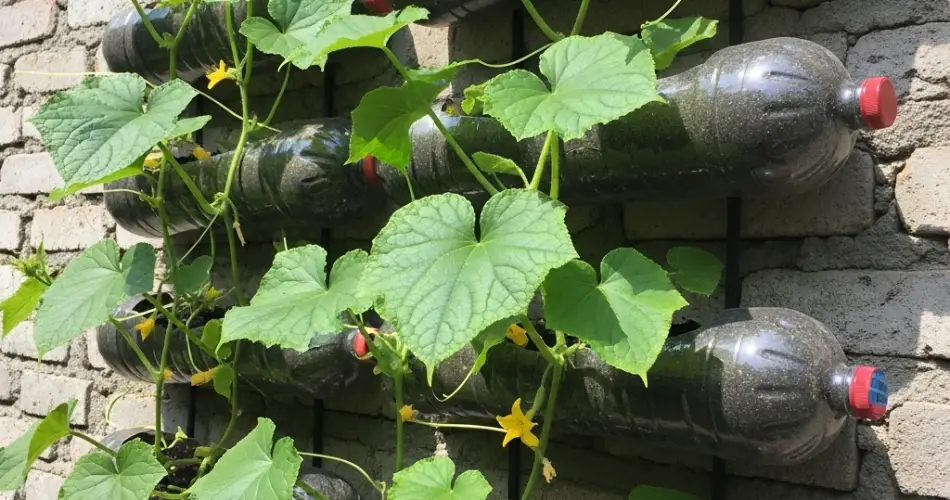
Cucumbers are a warm-season favorite in many home gardens, valued for their crisp texture and refreshing taste. While traditionally grown along the ground or on large trellises, cucumbers can also be cultivated vertically in plastic bottle planters. This innovative approach is ideal for gardeners with limited space, as it transforms unused vertical surfaces into productive, green walls. Not only is this method space-efficient, but it’s also an eco-friendly way to reuse plastic bottles while producing fresh, healthy food right at home.
Benefits of Growing Cucumbers Vertically
Growing cucumbers vertically offers several key advantages. First, it helps prevent fruits from coming into contact with the soil, reducing the risk of rot, insect damage, and uneven shapes. The upright growth habit also improves air circulation, which can lower the chance of fungal diseases such as powdery mildew. Additionally, vertical cucumber walls make harvesting easier and more comfortable—no bending or digging required.
Another benefit is the aesthetic value. A vertical garden filled with cascading cucumber vines creates a lush, living feature for balconies, patios, or fences, turning otherwise empty walls into functional, productive spaces.
Choosing and Preparing Plastic Bottles
For this project, sturdy bottles are essential. Two-liter soda bottles are a popular choice because they provide ample space for root growth while remaining lightweight and easy to handle. Start by washing the bottles thoroughly to remove any residues. Remove the labels and cut a wide rectangular opening on the side of each bottle, which will serve as the planting area.
Next, make several small drainage holes at the bottom to prevent water from pooling and causing root rot. You may keep the cap on to hold the soil, but if your design stacks bottles vertically, drill a small hole in the cap so excess water can trickle down to the bottles below.
Building the Vertical Structure
Your cucumber bottle planters need a stable structure for support. This could be a simple wooden frame, metal mesh, or a sturdy fence. Arrange the bottles horizontally with the cut opening facing upward. Secure them using strong wire, cable ties, or screws. Leave enough space between bottles to allow the plants to grow freely without overcrowding.
For a mobile or balcony-friendly option, construct a freestanding frame using PVC pipes or wooden boards. Arrange the bottles in a staggered pattern for a balanced, decorative effect.
Selecting the Right Cucumber Varieties
Compact or bush cucumber varieties are the best choice for bottle planters, as they have shorter vines and require less space. Popular options include:
-
Bush Champion – High yields and space-efficient.
-
Spacemaster – Specifically bred for small gardens.
-
Patio Snacker – Early producing with great flavor.
-
Miniature White – Distinctive appearance and mild taste.
If you have a tall trellis above your bottle wall, you can also choose vining types and train them upward for even higher yields.
Planting in Bottle Planters
Fill each bottle with a light, well-draining potting mix enriched with compost. Avoid dense garden soil, which can compact and hinder root growth. Plant two cucumber seeds about 2 cm deep in each bottle. Once they sprout and reach a few inches in height, thin to the strongest seedling.
If you want a head start on the growing season, transplant seedlings that have been started indoors. This method reduces the risk of early pest damage and speeds up harvest time.
Supporting the Vines
As your cucumbers grow, they will need guidance. Attach strings, netting, or a trellis above the bottle wall to give the vines something to climb. Secure the stems gently with soft garden ties to prevent breakage. Keeping the vines supported ensures better fruit shape, cleaner harvests, and healthier plants.
Watering and Feeding
Plastic bottle planters dry out faster than in-ground gardens, so consistent watering is essential. Water deeply until you see excess moisture draining from the bottom holes. In hot weather, daily watering may be necessary.
Feed your cucumbers every two weeks with a diluted liquid fertilizer, especially once they begin flowering. A balanced fertilizer or one higher in potassium will encourage more blossoms and fruit production.
Pest and Disease Prevention
While vertical growing helps reduce pest problems, it’s still important to monitor your plants. Watch for signs of aphids, cucumber beetles, and spider mites. Remove affected leaves promptly and, if needed, use neem oil or insecticidal soap to control infestations.
For fungal issues like powdery mildew, ensure proper spacing between plants for good airflow, and avoid wetting the leaves when watering.
Harvesting Your Cucumbers
Cucumbers are typically ready to harvest 50–70 days after planting, depending on the variety. Pick them when they are firm, smooth, and the appropriate size for the type you’ve grown. Regular harvesting encourages the plant to produce more fruits. Overripe cucumbers can slow down further production, so check your plants frequently.
Final Thoughts
Bottle-based vertical gardening is a clever way to grow cucumbers in even the smallest spaces. By reusing plastic bottles, you create an environmentally friendly garden that’s both beautiful and functional. With the right variety, consistent care, and a sturdy structure, you can enjoy a season-long supply of crisp, fresh cucumbers straight from your own vertical wall.


