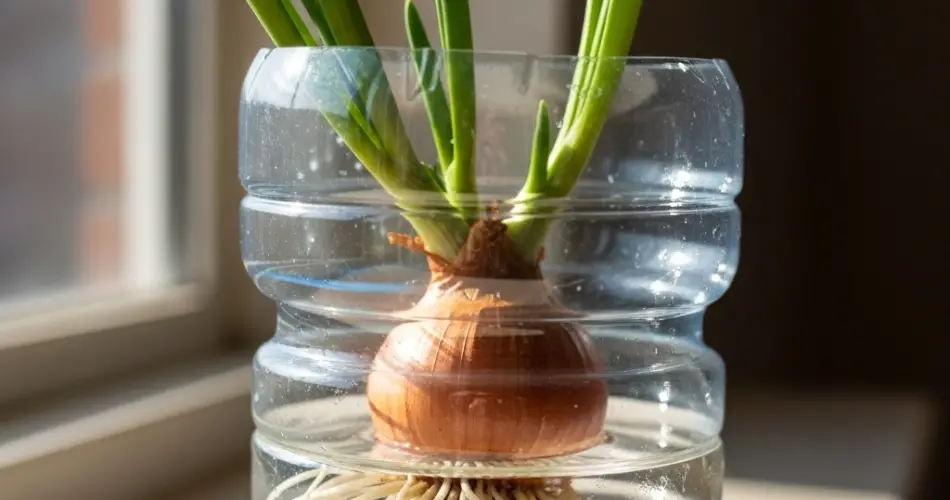
Regrowing onions from leftover bulbs is one of the easiest and most satisfying gardening projects you can do at home. With the help of recycled bottles, you can turn kitchen scraps into a steady supply of fresh green onion shoots. This method requires minimal space, works indoors or outdoors, and is perfect for anyone who wants to grow food without the need for a traditional garden bed.
Why Grow Onions in Bottles?
Using bottles as planters is not only eco-friendly but also practical. They help you recycle plastic waste while providing a clean, controlled environment for onion growth. Bottle gardens are compact, making them ideal for windowsills, balconies, or kitchen counters.
The method works because onions don’t need deep soil to regrow their greens. As long as the bulb stays moist at the roots, it will send up fresh shoots again and again. This means you can harvest multiple times from the same bulb before it wears out, giving you more food from what might have otherwise been thrown away.
What You’ll Need
-
Plastic bottles (1–2 liters, clear or lightly tinted)
-
Leftover onion bulbs (from your kitchen or store-bought)
-
Water or potting soil
-
Sharp scissors or a craft knife
-
Optional: Liquid fertilizer for extra growth boost
Step-by-Step Guide to Bottle Onion Gardening
1. Choose the Right Bulbs
Select healthy, firm onions without mold or soft spots. You can use onions that have started to sprout in your kitchen. Even just the root end of an onion will regrow if handled correctly.
2. Prepare the Bottle
Cut the bottle into two sections:
-
For water growing: Cut about one-third from the top and invert it to create a funnel that fits inside the bottom section.
-
For soil growing: Cut near the middle, and use the bottom half as your planter.
Make sure to wash the bottle thoroughly before use.
3. Set Up for Growth
-
Water Method: Place the bulb with its root side down in the inverted top section. Add water to the lower part so that only the roots (or the base of the bulb) touch the water, not the entire bulb, to prevent rot.
-
Soil Method: Fill the bottom section of the bottle with 8–10 cm of potting soil. Plant the bulb with the roots buried and the top exposed.
4. Find the Right Spot
Onions grow best in bright, indirect sunlight. A sunny windowsill or balcony is ideal. If you’re indoors in a dim space, you can use a small LED grow light to help the shoots develop strong and green.
5. Maintain Moisture
-
For water growing: Check the water level daily, topping it up as needed. Replace the water every 4–5 days to keep it fresh.
-
For soil growing: Keep the soil lightly moist but not soggy. Overwatering can cause root rot.
6. Feed Your Onions
After a week, you can add a small amount of diluted liquid fertilizer to speed up growth. For water-grown onions, mix the fertilizer into the water at the recommended dilution. For soil-grown onions, feed them during regular watering once every two weeks.
Harvesting Your Onion Greens
In as little as 7–10 days, you’ll see fresh green shoots appearing. Once they reach about 15–20 cm in height, you can harvest them. Use scissors to snip the greens about 2–3 cm above the bulb. They will regrow multiple times before the bulb runs out of stored energy.
To maintain a constant supply, start new bulbs in other bottles every few weeks. This way, while one batch is regrowing, another is ready for harvest.
Extra Tips for Success
-
Rotate the bottles every couple of days so shoots grow evenly toward the light.
-
Avoid placing the bottles in areas with excessive heat, which can cause water to evaporate too quickly or stress the plants.
-
If you notice a foul smell in the water method, rinse the roots thoroughly and replace the water immediately.
-
Try growing several bulbs at once in different bottles to increase your yield.
Why This Works So Well
Onion bulbs store energy in their layers, allowing them to sprout new shoots without much additional input. The bottle method keeps their roots consistently hydrated while preventing disease by controlling moisture levels.
By using recycled bottles, you also reduce waste while creating a practical and attractive indoor garden. This method is low-maintenance, low-cost, and perfect for beginners or busy home cooks who want fresh greens without constant trips to the store.
With a few leftover bulbs and some creativity, you can enjoy homegrown onion greens year-round. Bottle gardens not only provide a fresh and sustainable food source but also add a touch of green to your living space. All it takes is a simple setup, a little sunlight, and a bit of care to turn your kitchen scraps into thriving plants.


