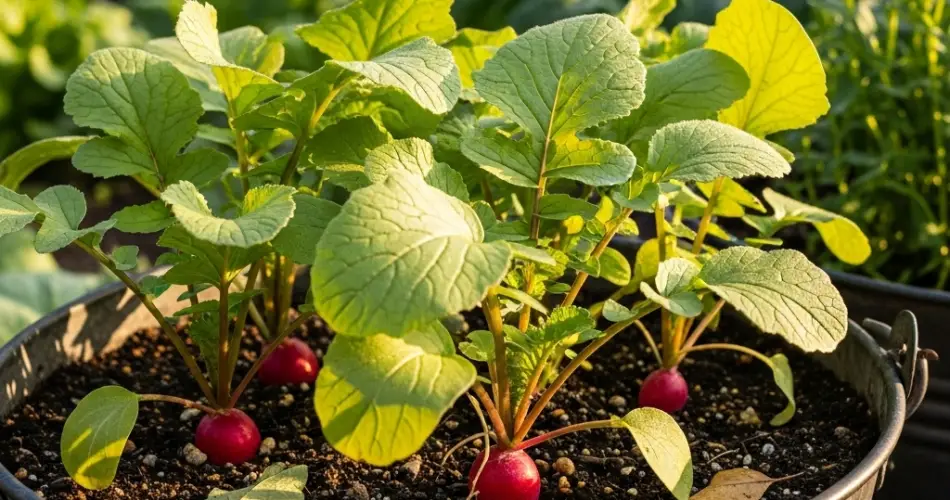
Radishes are one of the fastest-growing vegetables, making them an excellent choice for beginner gardeners and those eager to see quick results. Their crisp texture and peppery flavor add freshness to salads, sandwiches, and side dishes. Best of all, radishes thrive in small spaces, and with bucket gardening, you can cultivate them easily on a balcony, patio, or even by a sunny window.
This guide will walk you through everything you need to know to grow radishes in buckets successfully, from choosing containers to harvesting your first crop.
Why Grow Radishes in Buckets?
Planting radishes in buckets offers several advantages, particularly for urban gardeners:
-
Space efficiency: You don’t need a traditional garden bed; just a small container is enough.
-
Quick results: Most radish varieties mature in just 25–40 days.
-
Low maintenance: Radishes require little care compared to many other vegetables.
-
Mobility: Buckets can be moved around to maximize sunlight or protect crops from harsh weather.
-
Fewer pests: Elevating plants off the ground helps prevent soil-borne pests and diseases.
Because they grow quickly, radishes are perfect for those looking to boost confidence in container gardening.
Choosing the Right Bucket
The right container makes a big difference in radish growth.
-
Size: Select a bucket at least 10–12 inches deep. Radishes form underground roots, so depth is more important than width.
-
Material: Plastic buckets are lightweight and retain moisture well, while clay or ceramic options provide better breathability.
-
Drainage: Drill several holes in the bottom of the bucket to ensure excess water escapes. Poor drainage can cause root rot.
-
Quantity: Depending on bucket size, you can plant multiple radishes at once. A standard 5-gallon bucket can comfortably grow about 8–10 radishes.
Soil Preparation
Radishes prefer light, well-draining soil. Compact or heavy soil may prevent root development, leading to misshapen or stunted radishes.
-
Soil mix: Use a loose potting mix with added compost for nutrients. A blend of garden soil, sand, and organic compost works well.
-
pH level: Aim for slightly acidic to neutral soil (pH 6.0–7.0).
-
Enrichment: Add a handful of organic fertilizer or well-rotted manure before planting to support healthy root development.
Selecting Radish Varieties
Some radish varieties are better suited for bucket gardening than others.
-
Cherry Belle: A classic small, round red radish ready in just 22–25 days.
-
French Breakfast: Elongated and mild-flavored, perfect for small containers.
-
Easter Egg Radishes: Colorful varieties that add a visual treat.
-
Daikon Radish: These need deeper buckets, around 14–16 inches, but are still manageable in containers.
Choose varieties based on available bucket depth and your taste preferences.
Planting Radishes in Buckets
-
Fill the bucket with prepared soil, leaving about 2 inches from the top.
-
Sow seeds directly into the soil; radishes don’t transplant well.
-
Plant seeds about ½ inch deep and 1 inch apart.
-
Cover with soil and gently water.
-
Keep the bucket in a sunny spot, ensuring at least 6 hours of direct sunlight daily.
Because radishes germinate quickly (within 3–7 days), you’ll see sprouts in no time.
Watering and Care
Consistent moisture is essential for healthy radish roots.
-
Watering: Keep soil evenly moist but not waterlogged. Irregular watering can cause radishes to split or become too spicy.
-
Thinning: Once seedlings are 2 inches tall, thin them to 2–3 inches apart to give roots room to grow.
-
Fertilizing: Radishes grow quickly and don’t need much fertilizer. Too much nitrogen will produce leafy tops at the expense of roots. A balanced or phosphorus-rich fertilizer works best.
-
Mulching: Adding a light layer of mulch helps retain moisture and keeps soil cool, which radishes prefer.
Common Problems and Solutions
-
Pests: Flea beetles and aphids may attack young leaves. Neem oil spray or insecticidal soap can help control them.
-
Bolting: Hot weather may cause radishes to flower instead of forming roots. Keep buckets in partial shade during very hot days.
-
Poor root formation: This often results from overcrowding or excessive nitrogen. Ensure proper spacing and avoid over-fertilizing.
Harvesting Radishes
Radishes grow fast, so it’s important to harvest them on time.
-
Timing: Harvest when roots reach about 1 inch in diameter. Leaving them too long may result in woody, bitter radishes.
-
Method: Gently loosen the soil and pull radishes out by their tops.
-
Succession planting: To enjoy a continuous supply, sow new seeds every 2–3 weeks.
Because of their short growing cycle, radishes are perfect for keeping your bucket garden productive year-round.
Conclusion
Growing radishes in buckets is simple, rewarding, and ideal for beginners. With minimal space and effort, you can enjoy fresh, homegrown radishes in just a few weeks. By choosing the right bucket, preparing the soil properly, and providing consistent care, you’ll be rewarded with crisp, flavorful radishes that are ready to harvest in no time.
Whether you live in a city apartment or a small home with limited garden space, bucket radish planting proves that fresh food is always within reach. Start with a few seeds today, and you’ll be harvesting your first radishes before you know it.


