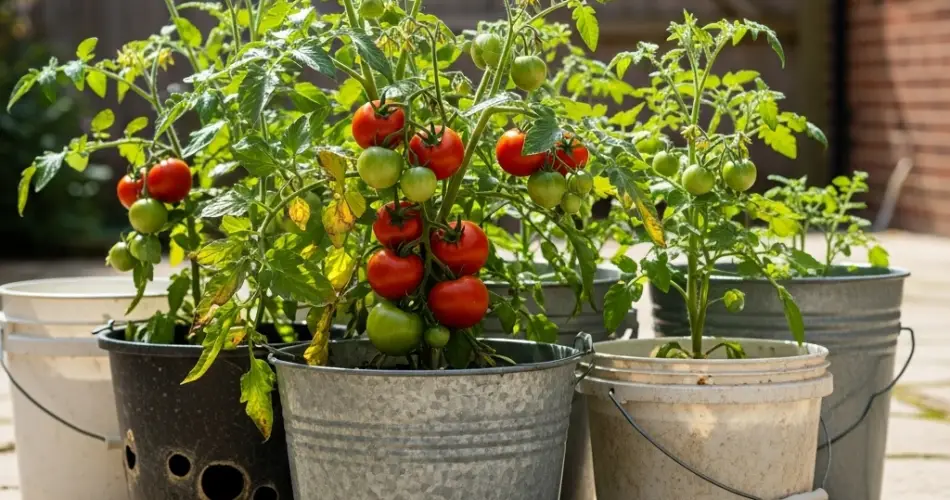
Growing fresh tomatoes doesn’t require a sprawling backyard or a large garden plot. With just a few buckets, some quality soil, and a sunny balcony or terrace, you can enjoy a steady harvest of juicy, homegrown tomatoes right outside your door. This method is perfect for urban gardeners, apartment dwellers, or anyone with limited space who still wants the flavor and satisfaction of fresh-picked produce.
Why Grow Tomatoes in Buckets?
Tomatoes are among the most rewarding plants for container gardening because they adapt well to confined spaces, provided they have the right care. Buckets make excellent planters for tomatoes because they are affordable, widely available, and large enough to support the root system of these vigorous plants. A standard 5-gallon bucket gives the plant ample space for root development, ensuring strong growth and abundant fruiting.
This setup is also portable. If your balcony receives uneven sunlight during the day, you can shift the buckets to follow the sun. Moreover, bucket gardening makes maintenance easier since weeds are minimal and watering can be better controlled.
Choosing the Right Tomato Variety
When growing tomatoes in buckets, not every variety performs equally well. Determinate (bush-type) tomatoes are often the best choice since they grow to a manageable size and produce fruit over a short, concentrated period. Some popular compact varieties for containers include ‘Patio Princess,’ ‘Bush Early Girl,’ and ‘Tiny Tim.’
If you prefer indeterminate varieties, which continue growing and producing throughout the season, you can still grow them in buckets, but you’ll need sturdy supports like stakes, trellises, or cages. Varieties such as ‘Sungold,’ ‘Sweet 100,’ and ‘Roma’ can thrive with proper support and pruning.
Preparing Your Buckets
Before planting, prepare your buckets to create the ideal growing environment:
-
Drainage – Drill several holes in the bottom of each bucket to allow excess water to escape. Without proper drainage, tomato roots may rot.
-
Lining – Place a layer of gravel, broken clay pieces, or coarse material at the bottom to improve drainage.
-
Soil Mix – Use a high-quality potting mix rather than garden soil, which may compact and hinder root growth. A good mix contains peat or coco coir for moisture retention, perlite or vermiculite for aeration, and compost for nutrients.
-
Fertilization Base – Mix in some slow-release organic fertilizer or compost at the start to give your tomato plants a steady nutrient supply.
Planting Tomatoes in Buckets
Fill the bucket about two-thirds full with soil. Place the tomato seedling deep into the bucket, burying part of the stem. Tomatoes can grow roots along their stems, and planting them deeply encourages a stronger root system. After planting, fill the rest of the bucket with soil and water thoroughly.
For best results, plant one tomato per bucket. Crowding multiple plants in a single container can stunt growth and reduce yields.
Caring for Tomatoes in Buckets
-
Sunlight – Tomatoes need at least six to eight hours of direct sunlight each day. Position your buckets where they will receive maximum light exposure.
-
Watering – Container-grown tomatoes dry out faster than those planted in the ground. Water consistently, keeping the soil evenly moist but not waterlogged. During hot weather, daily watering may be necessary. Adding mulch on top of the soil helps retain moisture.
-
Fertilization – Supplement the initial soil nutrients with liquid fertilizer every two weeks. A balanced tomato fertilizer rich in phosphorus and potassium encourages healthy flowering and fruiting.
-
Support – Even bush varieties benefit from some support to keep branches from snapping under the weight of fruit. Use cages, stakes, or trellises inserted into the bucket early in the growing season.
-
Pruning – For indeterminate varieties, prune suckers (side shoots) that develop between the main stem and branches. This directs energy toward fruit production rather than excess foliage.
Dealing with Common Issues
-
Blossom End Rot – Often caused by inconsistent watering or calcium deficiency. Maintain even soil moisture and consider adding calcium-rich amendments.
-
Pests – Watch for aphids, whiteflies, or tomato hornworms. Remove pests by hand, spray with neem oil, or encourage beneficial insects like ladybugs.
-
Fungal Diseases – Ensure good air circulation by spacing buckets apart and avoid wetting leaves when watering.
Harvesting Your Tomatoes
Tomatoes are ready for harvest when they turn fully red (or yellow, orange, or purple depending on the variety) and are slightly soft to the touch. Harvest regularly to encourage continuous production. Gently twist or cut the fruit from the vine to avoid damaging the plant.
Benefits of Balcony Tomato Buckets
-
Space Efficiency – Perfect for balconies, patios, or rooftops.
-
Cost-Effective – Buckets are inexpensive and often repurposed from household use.
-
Fresh Produce at Home – Nothing beats the flavor of tomatoes ripened on the vine.
-
Control Over Growing Conditions – You can monitor soil quality, moisture, and fertilizer application more closely than in a garden bed.
Final Thoughts
Growing tomatoes in buckets is a simple, practical, and rewarding way to enjoy fresh produce even in limited spaces. With proper preparation, care, and attention, a few bucket-grown tomato plants can provide a generous harvest throughout the season. Whether you’re an experienced gardener or just starting, this method proves that delicious, homegrown tomatoes are within everyone’s reach—no matter how small your garden space may be.


