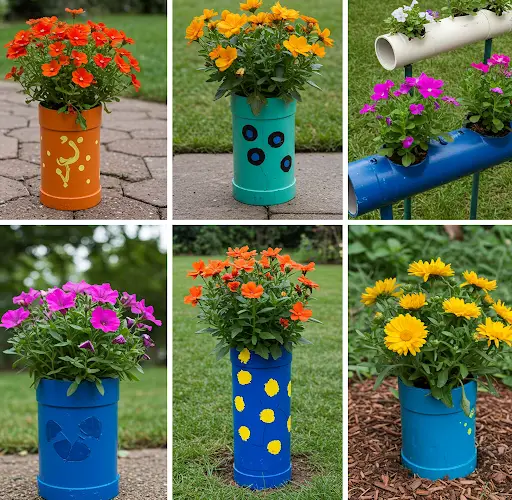
Amazing Idea: Recycling PVC Pipes into Beautiful Flower Pots
Recycling materials for gardening is not only environmentally friendly but also a great way to add a creative touch to your home and garden. One of the most innovative and cost-effective ways to create unique planters is by repurposing PVC pipes into beautiful flower pots. PVC pipes are durable, lightweight, and versatile, making them an excellent alternative to traditional plant pots. Whether you have a small balcony, a backyard, or an indoor garden, PVC pipe planters can be customized to fit any space and style. In this guide, we’ll walk you through the steps to transform PVC pipes into eye-catching flower pots while promoting sustainability.
Why Choose PVC Pipes for Planters?
- Affordable and Readily Available: PVC pipes are inexpensive and can often be found as leftover materials from plumbing or construction projects.
- Durable and Weather-Resistant: Unlike clay or ceramic pots, PVC planters withstand harsh weather conditions without cracking.
- Customizable Shapes and Sizes: You can cut and design PVC pipes in various sizes, making them ideal for different plants.
- Space-Saving: Vertical and hanging PVC planters are perfect for maximizing small spaces.
- Eco-Friendly Gardening: Repurposing old pipes helps reduce plastic waste and promotes recycling.
Step-by-Step Guide to Making PVC Pipe Flower Pots
Step 1: Gathering Materials
To start your DIY PVC planter project, you’ll need:
- PVC Pipes (any diameter, depending on your preferred pot size)
- Saw or PVC Cutter (for cutting the pipes)
- Drill with a Drill Bit (for drainage holes)
- Sandpaper (for smoothing edges)
- Acrylic or Spray Paint (for decoration)
- Soil and Plants
- Adhesive or Screws (for assembling if needed)
- Decorative Accessories (optional, such as stickers, stencils, or rope)
Step 2: Cutting the PVC Pipes
- Determine the Size: Measure and mark the length of the pipe according to your desired pot height.
- Cut the Pipes: Use a saw or PVC cutter to cut the pipe into sections. You can create different sizes for a varied look.
- Smooth the Edges: Use sandpaper to remove rough edges and ensure a clean finish.
Step 3: Creating Drainage Holes
- Drill Holes at the Bottom: Using a drill, make 3-5 holes at the bottom of each pipe section to allow proper drainage.
- Optional Side Holes: If you plan to make a vertical garden, drill side holes to insert plants for a layered look.
Step 4: Decorating the PVC Planters
- Paint the Pipes: Use waterproof acrylic or spray paint in vibrant colors or neutral tones to match your garden’s aesthetic.
- Add Patterns or Designs: Use stencils, stickers, or hand-painted designs to personalize your planters.
- Allow to Dry: Let the paint dry completely before adding soil and plants.
Step 5: Planting Flowers and Greenery
- Choose Suitable Plants: Select flowers, herbs, or succulents that suit the planter’s size and location (sun or shade).
- Fill with Soil: Use nutrient-rich potting soil for optimal plant growth.
- Plant Your Flowers: Gently place the plants inside the PVC planter and press the soil around them.
- Water Lightly: Keep the soil moist but avoid overwatering.
Creative PVC Planter Ideas
1. Hanging PVC Pipe Planters
- Drill holes on each side and attach ropes or chains for hanging on balconies, fences, or walls.
- Ideal for trailing plants like pothos, ivy, or petunias.
2. Vertical PVC Pipe Garden
- Stack multiple pipes vertically and insert plants into side holes for a tiered effect.
- Great for herbs, strawberries, and small flowers.
3. PVC Pipe Wall Planters
- Attach pipes horizontally to a wooden board or wall to create a unique wall-mounted planter.
- Perfect for indoor and outdoor decorative plant displays.
4. Mini PVC Pipe Planters for Succulents
- Use smaller-diameter PVC pipes to create mini succulent planters for desks or tabletops.
- Decorate with pebbles for an elegant touch.
5. PVC Pipe Tower Planters
- Stack different-sized pipes into a tower shape, with plants growing out of each section.
- An eye-catching centerpiece for gardens or patios.
Caring for Your PVC Planters
- Water Properly: Ensure plants receive enough moisture but avoid waterlogging.
- Place in Ideal Lighting: Position the planters in areas that suit the plant’s sunlight needs.
- Clean Regularly: Wipe PVC planters occasionally to prevent dust buildup and algae growth.
- Check for Cracks or Wear: Over time, ensure the pipes remain intact and repaint when necessary.
Sustainable Benefits of PVC Pipe Planters
- Reduces Plastic Waste: Instead of discarding old PVC pipes, repurpose them into functional garden decor.
- Encourages Upcycling: Transform construction scraps into practical and beautiful planters.
- Promotes Green Living: Using recycled materials supports eco-friendly gardening practices.
Conclusion
Recycling PVC pipes into beautiful flower pots is an innovative, budget-friendly, and sustainable way to enhance your garden. Whether you create hanging, vertical, or mini planters, this DIY project offers endless customization options while promoting upcycling. With just a few simple steps, you can turn discarded pipes into stylish and functional plant containers that bring greenery into any space. Try this creative gardening idea and enjoy the benefits of eco-friendly, space-saving, and unique PVC pipe planters!


