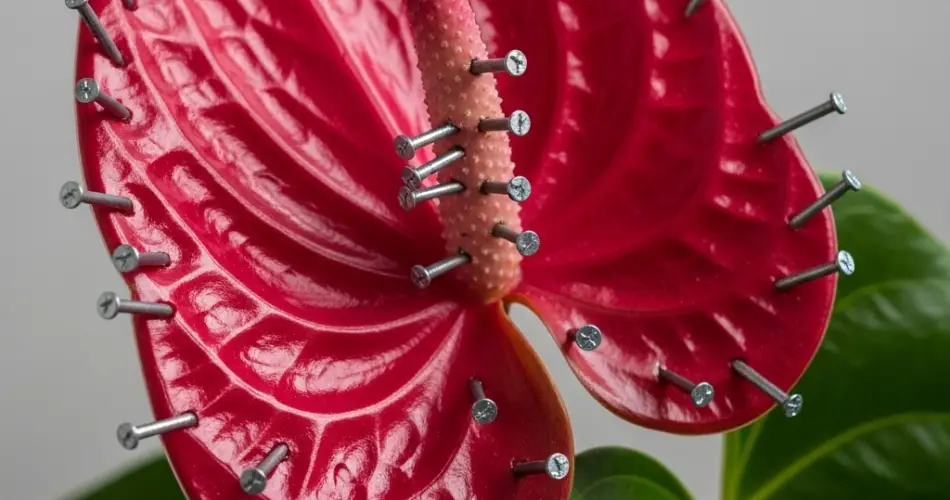
Anthuriums are admired worldwide for their shiny, heart-shaped leaves and vibrant, long-lasting flowers. Known commonly as flamingo flowers or laceleaf, these tropical beauties add a splash of color and elegance to any indoor or garden setting. While Anthuriums are relatively easy to care for, many growers find it challenging to encourage them to produce an abundance of flowers consistently.
Surprisingly, a simple, low-cost method involving just a few nails placed near the plant every month can dramatically boost flowering — triggering what can only be described as a flower explosion. This natural technique has gained attention for its ability to enhance blooming not only in Anthuriums but also in many other flowering plants.
This article will explore why this happens, how nails contribute to flower production, and how you can apply this straightforward method safely and effectively.
Why Do Nails Help Anthuriums Bloom?
At first glance, the idea of placing nails near your plants to improve flowering might seem unusual. However, the underlying science reveals an intriguing relationship between iron, plant health, and bloom production.
Most nails, especially common steel nails, contain iron, a crucial micronutrient for plants. Iron plays several essential roles:
-
Chlorophyll Production: Iron is vital for synthesizing chlorophyll, the green pigment responsible for photosynthesis. Healthy leaves with abundant chlorophyll mean stronger, more vigorous plants.
-
Enzyme Functions: Iron is a key component of many plant enzymes that regulate energy production and metabolic processes.
-
Flower Development: Adequate iron availability supports the hormonal balance necessary for flower bud initiation and growth.
In soil or potting media, iron may sometimes be deficient or locked up in forms that plants cannot easily absorb. Adding iron through nails gradually releases it into the soil, where it becomes accessible to roots.
How Does This Technique Work?
When a few nails are placed in the soil near your Anthurium once a month, they slowly rust and release iron ions into the soil moisture. This process acts as a natural slow-release fertilizer, providing a steady supply of iron over time.
The extra iron helps the plant:
-
Increase chlorophyll levels for richer green foliage
-
Strengthen photosynthesis, boosting overall energy production
-
Enhance root development, allowing better nutrient uptake
-
Stimulate flower bud formation and extend blooming periods
The result is a visibly healthier Anthurium with more vibrant leaves and an explosion of beautiful flowers.
How to Use Nails to Encourage Flowering
Applying this method is incredibly simple and requires minimal effort or expense.
What You’ll Need:
-
A few common steel nails (3 to 5 per plant, depending on pot size)
-
Your usual potting soil or growing medium
-
A small hammer or tool to gently insert nails into the soil (optional)
Step-by-Step Guide:
-
Select Your Nails: Use plain steel nails, avoiding coated or galvanized types as coatings may contain harmful chemicals.
-
Insert Nails Near the Plant Base: Place the nails upright or slightly angled into the soil, about 1–2 inches (2.5–5 cm) away from the plant stem. Avoid injuring roots.
-
Spacing: For small pots, 3 nails are sufficient; larger pots may require up to 5 nails.
-
Frequency: Replace or add fresh nails once every month to maintain a steady iron supply.
-
Water Normally: Continue your regular watering routine. The nails will release iron gradually as the soil moisture facilitates rust formation.
Additional Tips for Anthurium Care to Maximize Blooming
While the nail method provides essential iron, Anthuriums thrive best with balanced overall care. Consider these tips to complement the iron boost:
-
Light: Provide bright, indirect light. Direct sunlight can scorch leaves, while too little light reduces flowering.
-
Water: Keep soil consistently moist but well-draining. Overwatering can lead to root rot, and underwatering causes stress.
-
Humidity: Anthuriums enjoy humid environments (60–80%). Mist leaves or use humidity trays if your home is dry.
-
Fertilizing: Use a balanced, diluted fertilizer monthly during the growing season to provide macro- and micronutrients.
-
Soil: Use a loose, well-aerated potting mix that drains well, such as one designed for orchids or aroid plants.
What to Expect After Using the Nail Technique
Once you start adding nails to your Anthurium’s soil, expect gradual but noticeable improvements over the next few weeks:
-
Leaves regain a deeper, glossy green color
-
New leaves grow healthier and stronger
-
Flower buds begin to form more quickly and in greater numbers
-
Blooming periods extend, with flowers lasting longer and appearing more frequently
Many plant growers have reported significant increases in flowering, describing the difference as a “flower explosion” compared to previous years without this treatment.
Are There Any Risks?
This method is generally safe, but it’s important to observe a few precautions:
-
Avoid using too many nails, which can lead to excessive iron buildup and soil acidity.
-
Do not use galvanized or coated nails as these might release harmful substances into the soil.
-
Monitor soil moisture to prevent rust from damaging delicate roots.
-
Remove old nails if you notice any negative effects or if you stop seeing positive results.
Conclusion
If you’re looking for a natural, inexpensive, and effective way to boost your Anthurium’s flowering, placing a few steel nails in the soil each month could be your solution. This simple trick delivers vital iron slowly and steadily, fueling vibrant leaf growth and abundant flower production.
Alongside good overall care—proper light, watering, humidity, and nutrition—the nail method can transform your Anthurium into a stunning, bloom-filled focal point in your home or garden.
Try this easy technique and watch your Anthurium burst into a spectacular floral display like never before.


