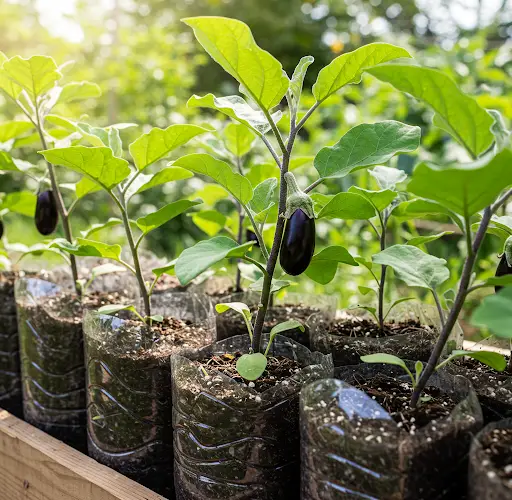
Grow Eggplants Without a Garden: Harvest in Abundance Using Plastic Bottles
Growing your own food is one of the most satisfying experiences, but what if you don’t have a garden? The good news is that you can easily grow eggplants in plastic bottles, making use of limited space on your balcony, terrace, or even indoors near a sunny window. With the right techniques, you can enjoy abundant eggplant harvests while recycling plastic waste. In this guide, we’ll show you how to successfully grow eggplants using just a few plastic bottles and minimal care.
1. Why Grow Eggplants in Plastic Bottles?
Many gardeners think eggplants need large gardens, but they actually thrive in containers. Using plastic bottles as pots has several advantages:
✅ Saves Space – Perfect for small apartments, balconies, or terraces. ✅ Recycles Waste – Gives plastic bottles a second life instead of adding to pollution. ✅ Low Maintenance – Requires minimal watering and soil management. ✅ Portable – Can be moved around to get the best sunlight. ✅ Pest Control – Easier to manage pests compared to traditional gardens.
By using this method, you can harvest fresh, organic eggplants straight from your home without needing a backyard!
2. Choosing the Right Eggplant Variety
Not all eggplants grow well in containers. For plastic bottle gardening, opt for compact, dwarf, or bush varieties such as:
🍆 Black Beauty – Medium-sized, classic deep purple eggplants. 🍆 Little Finger – Small, tender, and fast-growing variety. 🍆 Thai Purple – Produces long, thin eggplants in clusters. 🍆 Patio Baby – A mini variety that thrives in small spaces.
These varieties are high-yielding and adapt well to limited soil volume, making them ideal for container gardening.
3. Preparing Plastic Bottles for Planting
Materials Needed:
✅ Large plastic bottles (2-5 liters recommended) ✅ Sharp knife or scissors ✅ Well-draining potting soil ✅ Organic compost or fertilizer ✅ Eggplant seeds or seedlings ✅ A small hand trowel or spoon ✅ Watering can
Steps to Prepare the Bottle:
1️⃣ Cut the bottle: Using scissors or a sharp knife, cut the top portion off the bottle, leaving about 6-8 inches of depth for root growth. 2️⃣ Make drainage holes: Poke small holes at the bottom to allow excess water to escape and prevent root rot. 3️⃣ Add soil mix: Fill the bottle with a well-draining mix of potting soil, compost, and sand for aeration. 4️⃣ Moisten the soil: Before planting, lightly water the soil to ensure good moisture retention.
4. Planting Eggplants in Plastic Bottles
Option 1: Growing from Seeds
🌱 Sow 2-3 seeds per bottle, about ½ inch deep. 🌱 Keep the soil moist but not soggy until germination occurs (5-10 days). 🌱 Once seedlings have 2-3 leaves, thin them out, leaving the strongest plant.
Option 2: Transplanting Seedlings
🌿 If using nursery-grown seedlings, plant one per bottle. 🌿 Dig a small hole in the soil and gently place the seedling in. 🌿 Firmly press the soil around the roots and water lightly.
5. Caring for Eggplants in Plastic Bottles
Watering
💧 Eggplants need consistent moisture, but avoid overwatering. 💧 Check the soil daily and water when the top inch feels dry. 💧 Avoid watering the leaves to prevent fungal diseases.
Sunlight Requirements
☀️ Place your eggplants in full sunlight (6-8 hours per day). ☀️ If growing indoors, position them near a south-facing window or use grow lights.
Fertilizing
🌱 Apply organic compost or balanced liquid fertilizer every 2 weeks. 🌱 Once flowering starts, switch to a potassium-rich fertilizer to encourage fruiting.
Pruning & Support
✂️ Trim lower leaves to improve airflow and prevent disease. ✂️ Stake taller varieties with a small bamboo stick for support.
6. Pollination & Flowering
Eggplants self-pollinate, but for better yields:
🐝 Hand Pollination: Gently shake the flowers to spread pollen. 🐝 Encourage Pollinators: If growing outdoors, attract bees by planting basil or marigolds nearby.
Once flowers appear, you’re on your way to a bountiful harvest!
7. Harvesting Eggplants
🍆 Eggplants are ready for harvest in 60-80 days after planting. 🍆 Look for firm, glossy skin and cut with scissors rather than pulling. 🍆 The more you harvest, the more the plant produces!
8. Common Problems & Solutions
🐛 Pests (Aphids, Spider Mites, Flea Beetles) → Spray with neem oil or soap water. 🍂 Yellow Leaves → Overwatering or nutrient deficiency; adjust watering and fertilization. 🍆 Small or Misshapen Fruit → Lack of sunlight or poor pollination; reposition plants for better light.
9. Benefits of Growing Eggplants in Plastic Bottles
✅ Eco-friendly – Reduces plastic waste while producing food. ✅ Space-saving – Ideal for urban gardening. ✅ Cost-effective – No need to buy expensive pots or planters. ✅ Fresh & Organic – Chemical-free and healthier than store-bought. ✅ Continuous Harvest – Keeps producing with proper care.
10. Conclusion: Start Growing Eggplants Today!
With just a few plastic bottles and some basic care, you can enjoy fresh, homegrown eggplants all year round—even without a garden! This method is perfect for beginners and urban gardeners looking for an easy, sustainable way to grow food at home.
So why not start today? 🌱🍆 Happy Gardening!


