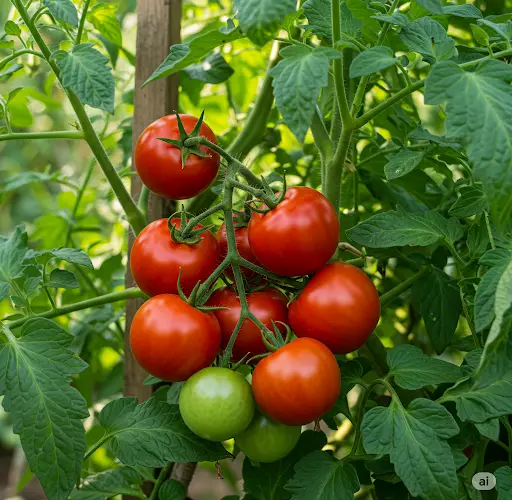
Tomatoes are a favorite in many home gardens, but sometimes their leaves start to twist, curl, or roll, causing concern for gardeners. While twisted tomato leaves may look alarming, they don’t always signal a serious problem. Understanding the common causes of leaf curling and how to address them will help you keep your plants healthy and productive.
Here’s a breakdown of the most frequent reasons why tomato leaves twist—and quick, effective solutions to get your plants back on track.
1. Environmental Stress (Leaf Roll)
One of the most common causes of twisted or curled tomato leaves is a condition known as physiological leaf roll, which is often a reaction to environmental stress.
Symptoms: Lower leaves roll upward or inward but remain green and healthy.
Causes:
-
Excessive pruning
-
Heatwaves or sudden temperature swings
-
Inconsistent watering
-
Overly wet soil
Solution: Leaf roll is usually harmless and doesn’t affect fruit development. To reduce stress:
-
Water consistently and deeply, especially during hot weather.
-
Avoid over-pruning the lower foliage.
-
Use mulch to maintain even soil moisture and temperature.
2. Herbicide Drift or Residue
Tomatoes are extremely sensitive to herbicides. Even a small amount of chemical drift from nearby spraying or contaminated compost can cause twisted, deformed leaves.
Symptoms: New growth appears twisted, distorted, and sometimes thickened. Older leaves may remain unaffected.
Causes:
-
Wind-blown herbicides from nearby lawns or fields
-
Use of grass clippings or manure that contain herbicide residues
-
Contaminated compost or straw
Solution: If you suspect herbicide exposure:
-
Stop using any suspect materials.
-
Rinse the plant with clean water.
-
Improve soil health by adding compost and organic matter to help the plant recover.
Prevention is key: never use compost, straw, or mulch unless you’re sure it’s free from herbicide residues.
3. Viral Infections
Some viruses, like Tomato Yellow Leaf Curl Virus (TYLCV), can cause leaf twisting along with other symptoms such as yellowing, stunted growth, and poor fruit development.
Symptoms: Twisting of new leaves, stunted plant size, yellowing, and lack of flowers or fruit.
Causes: Spread by whiteflies or infected transplants.
Solution: Unfortunately, viral infections have no cure. If your tomato plant shows signs of viral disease:
-
Remove and destroy the infected plant to prevent spreading.
-
Control whiteflies using yellow sticky traps or insecticidal soap.
-
Choose virus-resistant tomato varieties when planting.
4. Insect Damage
Some pests, such as aphids, whiteflies, and thrips, feed on the sap of young tomato leaves and stems, causing deformation and twisting.
Symptoms: Curling or twisting of young leaves, sticky residue (honeydew), or visible insects on the plant.
Solution:
-
Spray the plant with insecticidal soap or neem oil.
-
Encourage beneficial insects like ladybugs and lacewings.
-
Regularly inspect the undersides of leaves where pests tend to hide.
5. Nutrient Imbalance
Too much fertilizer, especially nitrogen, can cause tomato plants to grow too quickly, leading to weak, curled foliage. On the other hand, a lack of essential nutrients like calcium or magnesium may also affect leaf health.
Symptoms:
-
Curling accompanied by lush, dark green growth (too much nitrogen)
-
Deformed leaves with yellowing or spotting (nutrient deficiency)
Solution:
-
Avoid over-fertilizing. Use a balanced tomato fertilizer according to package directions.
-
Test your soil to check for nutrient levels and pH.
-
Use compost or organic amendments to improve nutrient availability.
6. Transplant Shock
Newly planted tomatoes may exhibit temporary leaf twisting as they adjust to their new environment, particularly if they were transplanted in strong sun, wind, or heat.
Symptoms: Twisting or curling of upper leaves shortly after planting, without other signs of disease or pests.
Solution:
-
Give plants a few days to recover.
-
Water consistently and provide partial shade during the hottest part of the day for the first week.
-
Avoid disturbing the roots when transplanting.
Final Thoughts
Twisting or curling tomato leaves can stem from a variety of causes—some harmless, others more serious. The key to effective treatment is accurate diagnosis. Examine your plants closely for signs of pests, environmental stress, or nutrient issues. With the right care and timely adjustments, most tomato plants will bounce back and continue to produce delicious fruit throughout the season.


