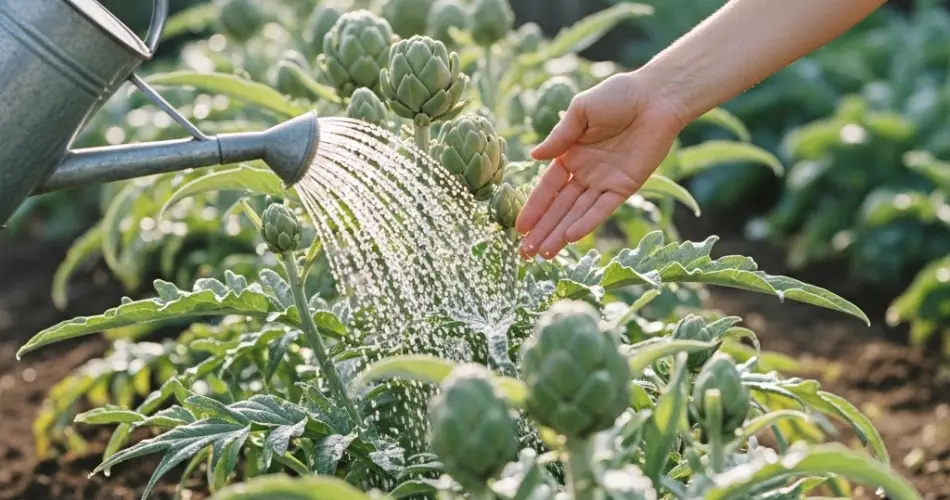
Artichokes are strikingly beautiful plants with impressive yields when cared for properly. Native to the Mediterranean, these perennials thrive in sunny locations with fertile, well-draining soil. While sunlight and nutrients are essential, water and mulch play an equally critical role in ensuring vigorous, healthy artichoke growth. Getting the balance right will help you grow strong plants that produce large, tender flower buds.
This guide focuses on effective watering and mulching practices to keep your artichokes flourishing throughout the growing season.
Understanding Artichoke Water Needs
Artichokes have deep root systems that require consistent soil moisture, especially during their active growth periods in spring and early summer. However, they are also sensitive to overwatering and poor drainage, which can cause root rot or crown diseases.
How Much Water Do Artichokes Need?
On average, artichokes require 1 to 1.5 inches of water per week, depending on temperature, soil type, and whether they are in raised beds or in-ground. In hot, dry climates, they may need more frequent watering, especially during bud formation.
-
Young Plants: Require more frequent, shallow watering as roots are still developing.
-
Established Plants: Benefit from deep, less frequent watering that encourages roots to grow downward.
The key is to keep the soil consistently moist but never soggy.
Best Time of Day to Water
Water artichokes early in the morning. This allows foliage to dry during the day, reducing the risk of fungal diseases. Avoid evening watering, especially in humid climates, as it can lead to prolonged dampness and promote mildew or rot.
If watering by hand, use a watering wand to apply water directly to the base of the plant. This avoids wetting the leaves and helps reduce water waste.
How to Water Artichokes Effectively
-
Check the Soil Moisture
Stick your finger about 2 inches into the soil. If it feels dry at that depth, it’s time to water. If it’s still moist, wait another day or two. -
Water Deeply and Slowly
Deep watering helps the roots grow deeper, making the plant more drought-resistant. Use a slow, steady stream of water for at least 10–15 minutes per plant or utilize a drip irrigation system. -
Avoid Overhead Sprinklers
Overhead watering can encourage leaf diseases and wastes water through evaporation. Focus on delivering water directly to the root zone. -
Monitor During Bud Formation
As the plant begins to form buds, increase watering slightly to support the energy-intensive process. Inconsistent watering during this time can result in smaller buds or woody textures.
Mulching for Moisture Retention and Plant Health
Mulching is a powerful tool for artichoke growers. It helps retain moisture, suppress weeds, regulate soil temperature, and prevent erosion. Mulch also adds organic matter to the soil as it breaks down, improving overall fertility.
Best Mulch Materials for Artichokes
-
Straw or Hay: Light and effective at keeping soil cool and moist.
-
Compost: Adds nutrients while acting as mulch.
-
Shredded Leaves: Readily available and decomposes over time to enrich the soil.
-
Grass Clippings: Use in thin layers to prevent matting.
-
Wood Chips or Bark Mulch: Long-lasting but may tie up nitrogen as they decompose—best used in combination with compost.
How to Apply Mulch
-
Wait Until Soil Has Warmed
In early spring, allow the soil to warm up before applying a thick layer of mulch. Cold, wet mulch too early in the season can slow plant growth. -
Apply a 2–3 Inch Layer
Spread mulch evenly around the base of each plant, covering the root zone. Leave a few inches of space around the crown to prevent rot. -
Refresh Mulch as Needed
As the mulch breaks down over the season, add more to maintain the ideal depth. This helps keep the soil cool in hot weather and reduces the need for frequent watering. -
Use Mulch Year-Round
In colder climates, mulch also provides winter protection for perennial artichokes. In fall, increase the mulch depth to insulate the crown from freezing temperatures.
Signs of Improper Watering or Mulching
Too Little Water:
-
Wilting leaves, especially in midday
-
Dry, cracked soil
-
Small or misshapen buds
Too Much Water:
-
Yellowing or drooping leaves
-
Soft or mushy crown
-
Fungal issues or rot
Improper Mulching:
-
Crown rot from mulch piled too close to the base
-
Slugs hiding in damp mulch layers
-
Soil compaction from wet, matted mulch
Observing your plants regularly helps you make quick adjustments before problems escalate.
Conclusion
Healthy artichoke growth depends heavily on consistent watering and proper mulching practices. These two factors help maintain ideal soil moisture, reduce plant stress, and support large, tender bud development. By watering deeply and strategically and applying the right kind of mulch at the right time, you can create the perfect growing environment for artichokes to thrive season after season. With careful attention and a little planning, your artichokes will reward you with vigorous growth and a generous harvest.


