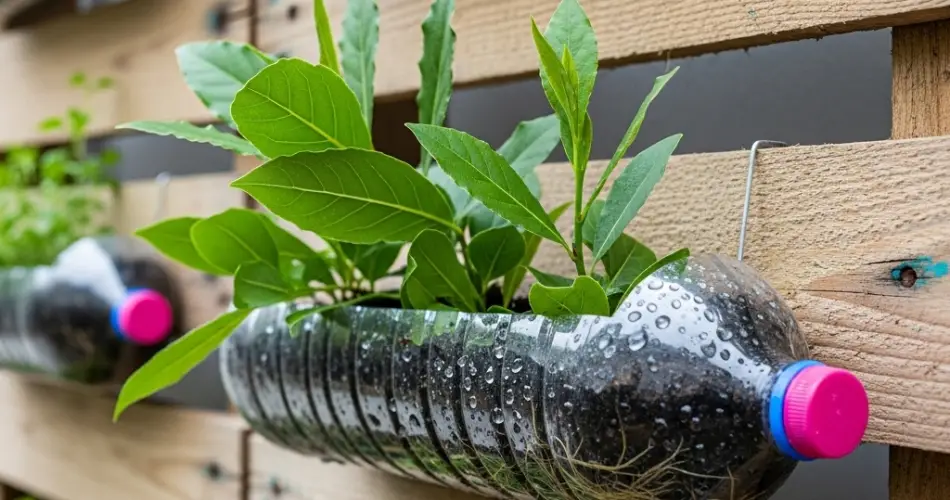
Bay laurel (Laurus nobilis) is a fragrant, evergreen herb widely used in cooking for its aromatic leaves. From soups and stews to sauces and marinades, bay leaves add depth of flavor to a variety of dishes. Growing bay in a wall-mounted container garden using recycled plastic bottles offers a space-saving, sustainable, and decorative solution for home gardeners.
A vertical bay leaf garden makes fresh leaves easily accessible while transforming unused walls into a productive and visually appealing green space. This method is ideal for kitchens, patios, balconies, or any area with limited floor space.
Choosing Bottles and Preparing the Wall
Plastic bottles of 1–2 liters work best for a vertical herb garden. Wash the bottles thoroughly to remove any residues. Cut an opening on the side or top of each bottle wide enough to plant the bay and allow for watering and easy harvesting.
To secure the bottles, use hooks, screws, or attach them to a wooden or metal frame fastened to the wall. Ensure the structure can support the weight of the soil and water. Arranging the bottles in a staggered or grid pattern maximizes sunlight exposure for all plants.
Preparing Soil and Bottles
Bay laurel thrives in well-draining, fertile soil. Use a high-quality potting mix enriched with compost or organic fertilizer. Avoid compacted garden soil, which can restrict root growth in containers.
Place a small layer of stones or gravel at the bottom of each bottle to enhance drainage. Fill the remaining space with potting mix, leaving enough room for roots to grow comfortably. Well-prepared soil ensures healthy foliage and strong aromatic leaves.
Planting Bay Laurel
Bay laurel can be grown from seeds, cuttings, or small nursery plants:
-
From nursery plants: Place the root ball slightly below the rim of the bottle, fill around it with soil, and firm gently. Water immediately to help the plant establish.
-
From cuttings: Take semi-hardwood cuttings in late spring or early summer, dip them in rooting hormone, and plant in a well-draining potting mix. Keep the soil moist until roots form.
Ensure plants have enough space for air circulation to prevent disease and support healthy growth.
Watering and Humidity
Bay laurel prefers evenly moist soil but does not tolerate waterlogged conditions. Water when the top 2–3 cm of soil feels dry. Hanging bottle planters may dry out faster than ground pots, so monitor them regularly, especially in warm weather.
Occasional misting can maintain humidity and promote lush foliage. Avoid wetting the leaves excessively, which may encourage fungal growth.
Sunlight Requirements
Bay thrives in full sun but can tolerate partial shade. Position your vertical garden in a location that receives at least 6 hours of direct sunlight each day. South- or west-facing walls are ideal.
If natural sunlight is limited, supplement with a grow light to maintain strong, healthy leaves. Adequate sunlight promotes deep green foliage and the characteristic aromatic flavor of bay leaves.
Fertilizing Your Bay Leaf Wall Garden
Container-grown bay benefits from regular feeding since nutrients in small soil volumes deplete quickly. Apply a balanced liquid fertilizer every 3–4 weeks, or incorporate a slow-release organic fertilizer into the soil at planting.
Organic fertilizers, such as compost tea or seaweed extract, support strong foliage and enhance aromatic qualities. Avoid excessive nitrogen, which can produce soft leaves at the expense of structural growth.
Pruning and Harvesting
Pruning encourages bushier growth and helps maintain a manageable size for a wall garden. Remove any yellow, damaged, or dead leaves to improve air circulation.
Leaves can be harvested as needed for cooking. Pick mature leaves from the outer branches, leaving inner leaves intact to encourage ongoing growth. Fresh leaves provide the strongest aroma, while harvested leaves can be dried for later use.
Tips for a Thriving Bay Leaf Wall Garden
-
Rotate bottles occasionally to ensure even sunlight exposure.
-
Regularly check the stability of the wall setup to prevent accidents.
-
Monitor for pests, such as aphids or scale insects, and manage them using natural methods.
-
Mulch the soil lightly to conserve moisture and reduce temperature fluctuations.
Final Thoughts
Growing bay leaves in plastic bottle wall planters is a sustainable, space-saving way to cultivate fresh, aromatic herbs. This vertical gardening method repurposes plastic waste while providing a steady supply of flavorful leaves for culinary use.
With proper soil preparation, consistent watering, adequate sunlight, and routine pruning, your wall-mounted bay leaf garden will thrive, adding both beauty and utility to your home. This approach transforms a simple wall into a productive, fragrant, and decorative herb garden, perfect for any kitchen or backyard space.


