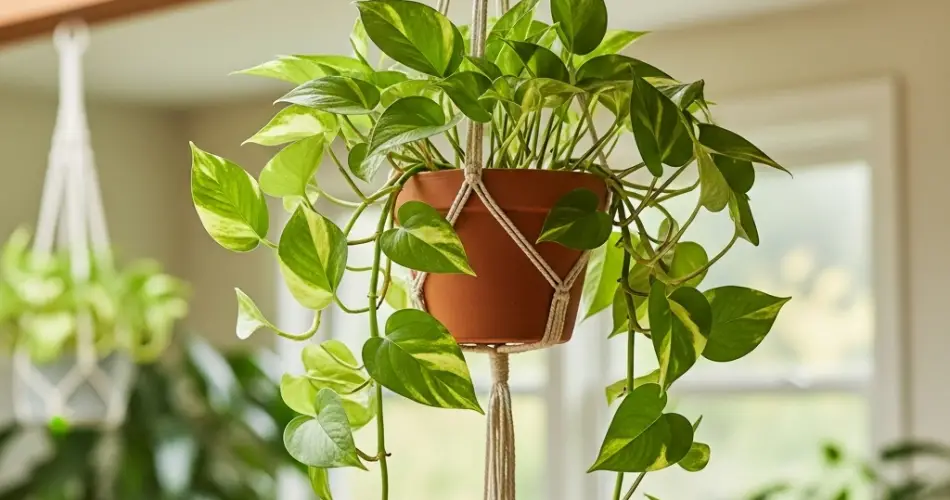
Pothos (Epipremnum aureum) is one of the most popular indoor plants—and for good reason. With its heart-shaped leaves, cascading vines, and stunning variegation, this plant brings life and color to any space. It’s also incredibly easy to grow in containers, making it ideal for anyone from beginners to seasoned indoor gardeners.
Whether your pothos is trailing from a high shelf, climbing a wall, or hanging in a basket, container gardening is the key to maintaining its lush, vibrant appearance.
Why Pothos Thrives in Containers
Pothos is a natural climber and thrives when its vines are allowed to trail or climb. When grown in containers, it adapts easily to various indoor setups. You can place a potted pothos on a bookshelf, mount it in a wall planter, or hang it from the ceiling for a cascading effect. The plant’s flexible nature makes it a perfect candidate for decorative container gardening.
Its resilience also adds to its charm. Pothos can tolerate low light, irregular watering, and inconsistent care, making it a go-to plant for offices, dorm rooms, and homes alike.
Choosing the Right Container
Container choice is crucial to your pothos plant’s health. Always select a pot with drainage holes to prevent root rot. Pothos prefers its soil to dry out between waterings, and without drainage, excess moisture can quickly become a problem.
When it comes to size, start with a pot that is 1–2 inches wider than the plant’s root ball. Pothos doesn’t mind being slightly root-bound, but if the roots start circling the inside of the pot or poking out of the drainage holes, it’s time to size up.
Pots made of terracotta, ceramic, or plastic all work well. For wall-mounted planters or hanging baskets, lightweight materials are best to avoid excess strain on hooks or mounts.
The Ideal Potting Mix
Pothos grows best in well-aerated, well-draining soil. A standard indoor potting mix will usually do the job, but adding a bit of perlite or orchid bark improves drainage and air circulation around the roots.
Here’s a simple DIY mix:
-
2 parts indoor potting soil
-
1 part perlite or coarse sand
-
1 part orchid bark or coco coir
This combination ensures that the soil retains enough moisture to support growth while preventing sogginess.
Planting and Repotting Tips
When planting or repotting your pothos:
-
Fill the bottom of the new container with fresh soil mix.
-
Gently remove the plant from its current pot, taking care not to damage the roots.
-
Place it in the new container so the top of the root ball is just below the rim.
-
Fill in the sides with soil, firming gently.
-
Water thoroughly and allow excess water to drain completely.
Repot every 1–2 years or when the plant becomes root-bound. Repotting not only gives the roots more room but also refreshes the soil, encouraging new growth.
Light and Placement
Pothos thrives in bright, indirect light but can also tolerate low-light conditions. Near a window with filtered sunlight is ideal, but avoid direct sun, which can scorch the leaves.
One of the most appealing features of pothos is its versatility in placement. Let it spill from a high shelf, wrap it around a moss pole, or train the vines along a wall using adhesive hooks or trellises. You can also hang it in baskets to create a lush, downward cascade.
In low-light areas, growth may slow, and leaf variegation may fade slightly—but the plant will usually stay healthy.
Watering and Feeding
Water your pothos when the top inch or two of soil feels dry. Stick your finger into the soil to check. Water thoroughly, allowing the excess to drain from the bottom of the pot. Never let the plant sit in water.
In warm months, watering once every 1–2 weeks is usually enough. In cooler months, reduce watering frequency.
Fertilize every 4–6 weeks during spring and summer using a diluted, balanced liquid houseplant fertilizer. In fall and winter, feeding can be paused or done less often.
Pruning and Maintenance
Pruning helps keep your pothos full and bushy. Trim leggy vines back just above a leaf node to encourage branching. You can also propagate the cuttings easily by placing them in water until they grow roots, then potting them up to create new plants.
Remove any yellowing or damaged leaves as needed. Cleaning the leaves with a damp cloth every few weeks also keeps the plant looking fresh and improves its ability to photosynthesize.
Conclusion
Pothos is a vibrant, low-maintenance plant that’s perfect for container gardening. With the right pot, soil, and care routine, it can grow beautifully in any indoor space—from shelves to walls and everything in between. Whether you’re aiming for a dramatic hanging display or a tidy tabletop arrangement, pothos will reward you with lush foliage, easy propagation, and endless decorating possibilities.


