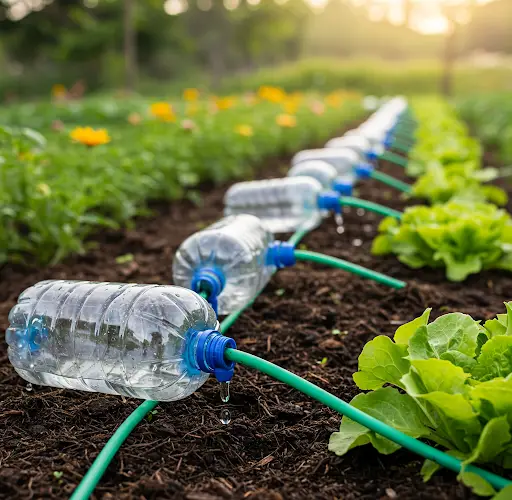
Watering plants efficiently is a critical part of gardening, but traditional methods can waste a lot of water. One of the best ways to ensure that your plants receive the right amount of moisture without wasting water is through drip irrigation. Drip irrigation delivers water directly to the roots of plants, allowing them to absorb moisture more efficiently. If you’re looking for an easy, inexpensive, and eco-friendly way to set up a drip irrigation system, using plastic bottles is the perfect solution. This simple method uses recycled plastic bottles to create a water-saving system that works great for gardens, containers, and even indoor plants.
In this article, we’ll walk you through a simple and quick DIY project to set up a plastic bottle drip water irrigation system.
Why Use Drip Irrigation?
Before we dive into the steps, let’s understand why drip irrigation is so effective:
-
Water Conservation:
Traditional watering methods often result in evaporation and runoff. Drip irrigation targets the root zone of plants, reducing water wastage and making sure water is absorbed directly by the plant. -
Efficient Watering:
Drip irrigation delivers water slowly, ensuring that plants receive a consistent amount of moisture. This is particularly important for plants like vegetables and herbs that thrive with regular, steady watering. -
Prevents Disease:
Since the water is directed to the roots and doesn’t wet the leaves, it helps prevent fungal diseases and other problems that thrive in damp foliage. -
Cost-Effective:
This DIY project uses plastic bottles that you likely already have lying around, making it an inexpensive way to implement an irrigation system in your garden.
Materials You Will Need
To create a simple plastic bottle drip irrigation system, you’ll need the following materials:
-
1 or more plastic bottles (preferably 1 to 2 liters)
-
A small pin, needle, or nail (for creating holes)
-
A sharp knife or scissors
-
Tape or rubber bands
-
A small tube (optional, for directing the water)
-
A bucket or container to hold water
-
A gardening stake or something to support the bottles
-
A drill (optional, for creating a hole in the bottle cap)
Step-by-Step Instructions
1. Prepare the Plastic Bottles
First, clean the plastic bottles thoroughly to remove any labels or residue. You’ll need one or more plastic bottles, depending on how many plants you want to water.
-
Create Holes in the Bottle for Drip Flow:
Using a pin, needle, or nail, carefully create small holes in the bottom half of the bottle. These holes will allow water to slowly drip out. The number and size of the holes will determine the flow rate. If you want a slower drip, make smaller holes. For a faster flow, you can make slightly larger holes. -
Cut a Small Hole at the Bottle’s Neck (Optional):
If you’re using a tube to direct the water, you’ll need to make a hole in the neck of the bottle. This allows the tube to fit snugly into the bottle, which will direct the water to the base of your plant.
2. Set Up the Water Reservoir
Now, you need to create a water reservoir where the water will come from.
-
Fill the Bottle with Water:
Fill the first bottle (the one with holes) with water, and secure the cap tightly. Depending on the size of your container, you might need multiple bottles to ensure enough water for your plants. -
Position the Bottle for Watering:
Place the bottle upside down near the base of your plants. If you want to use multiple bottles, arrange them along your plants, depending on their needs. Elevate the bottle slightly, either by placing it on a small stand or securing it with a stake, to ensure water flows downward through the holes.
3. Direct the Water to the Plant’s Roots
Once you have your water reservoir set up, it’s time to direct the water where it’s needed.
-
Position the Bottle Near the Plant:
Place the bottle near the plant, ensuring that the water will drip directly into the soil around the plant’s roots. If you’re using multiple bottles, position them so that each plant has a steady flow of water. -
Use a Tube for Precision (Optional):
If you’re using a tube, insert the tube into the hole you made in the bottle’s neck. Direct the other end of the tube to the root area of the plant. This helps to ensure that water reaches the roots and doesn’t spill out onto the surface.
4. Test the System
Once your bottle is set up, it’s time to test it to ensure the drip irrigation system works as expected.
-
Check the Drip Rate:
Fill the bottle with water and observe the flow of water from the holes. If the water is flowing too fast, try making smaller holes. If it’s too slow, make the holes slightly larger. -
Ensure Even Watering:
Make sure that water is reaching the base of the plant. If needed, adjust the angle or height of the bottle to direct the water more effectively.
5. Maintain the System
Once the drip irrigation system is in place, it requires minimal maintenance.
-
Monitor the Water Level:
Keep an eye on the water level in the bottles and refill them when necessary. You’ll need to check the system periodically to ensure that the bottles are still securely in place. -
Clean the System:
Over time, the holes may get clogged with dirt or algae. Clean the bottles and the holes occasionally to keep the water flowing smoothly. -
Adjust the System for New Plants:
If you add new plants or need to adjust watering, it’s easy to modify your setup by adding more bottles or adjusting the hole size.
Conclusion
Creating a simple and easy plastic bottle drip irrigation system is a great way to water your plants efficiently while reusing plastic bottles. Not only does it save water, but it also promotes healthier plant growth by delivering water directly to the roots. This DIY system is low-cost, easy to make, and adaptable to a variety of garden setups.
Whether you’re growing herbs on a balcony, vegetables in your backyard, or indoor plants, this drip irrigation system will help you keep your plants hydrated and healthy with minimal effort. So gather your plastic bottles and get started—your plants will thank you for it!


