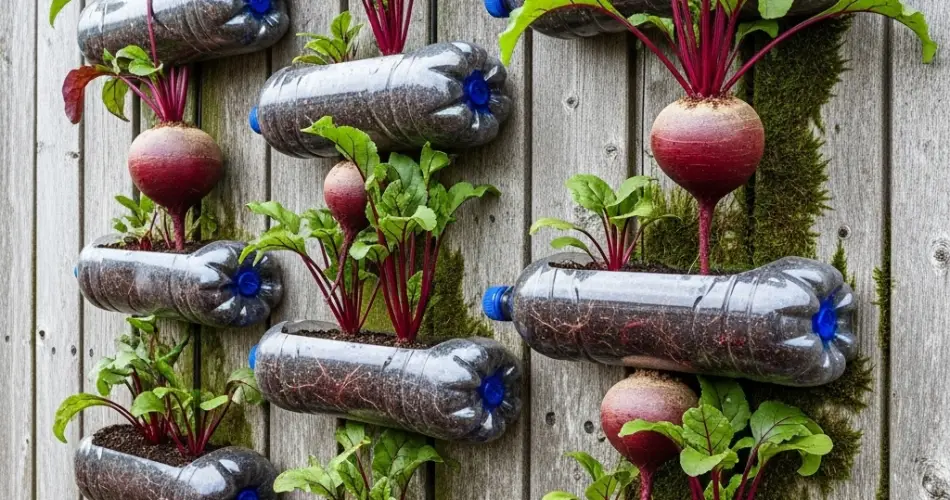
Growing vegetables vertically is a practical solution for gardeners with limited ground space. One of the easiest and most creative ways to do this is by using recycled plastic bottles to create a wall-mounted beet garden. Beets are not only nutritious but also relatively simple to grow, and this method allows you to make the most of small areas such as balconies, patios, or even indoor walls with good sunlight.
This approach turns empty bottles into planting pockets, giving you a space-saving, cost-effective, and sustainable gardening setup. Whether you’re a beginner or a seasoned gardener looking for innovative ideas, this method can bring you fresh beets right from your wall.
Materials You’ll Need
-
2-liter plastic bottles (cleaned and labels removed)
-
Sharp scissors or a utility knife
-
Potting mix rich in organic matter
-
Beet seeds or seedlings
-
A wall, fence, or sturdy vertical frame
-
Strong hooks, nails, or a wire grid for mounting
-
Watering can or spray bottle
Step 1: Preparing the Bottles
Start by cutting an oval or rectangular opening in the side of each bottle. This will serve as the planting pocket where your beets will grow. Keep the bottle cap in place but poke a few small holes in it for drainage. This helps excess water escape, preventing root rot.
If you plan to hang the bottles, make two small holes near the top (on opposite sides) to thread a strong wire or cord through. Alternatively, you can screw or hook the bottles directly onto a wooden board or fence.
Step 2: Creating the Planting Medium
Beets thrive in loose, well-draining soil rich in compost. Mix standard potting soil with some sand for improved drainage and add organic compost for nutrients. Fill each bottle up to the opening, leaving about 2–3 cm of space from the top to avoid spilling during watering.
Step 3: Sowing the Seeds
For beets, sow 2–3 seeds per bottle pocket to ensure successful germination. Push the seeds about 1–2 cm deep into the soil and lightly cover them. Water gently so the seeds are not displaced. If using seedlings, dig a small hole, place the plant carefully, and cover the roots with soil.
Step 4: Mounting Your Bottle Pockets
Choose a sunny wall or vertical surface that receives at least 6 hours of sunlight daily. Attach your prepared bottles to the wall using nails, hooks, or by tying them securely to a wire mesh frame. Make sure the bottles are stable and evenly spaced to allow each plant adequate light and airflow.
You can arrange them in straight rows or stagger them for visual appeal and better light distribution.
Step 5: Watering and Care
Water regularly to keep the soil moist but not waterlogged. Because beets in bottles can dry out faster than ground-planted ones, check moisture daily—especially in warm weather. Using a spray bottle for gentle watering helps avoid soil displacement and keeps leaves hydrated.
Once the seedlings have sprouted, thin them to one strong plant per bottle to ensure each beet has enough space to develop properly. The thinned seedlings can be used as microgreens in salads.
Step 6: Feeding Your Plants
Every 2–3 weeks, apply a diluted liquid fertilizer rich in potassium and phosphorus to encourage healthy root development. Avoid excessive nitrogen, which promotes leafy growth over root formation. Organic compost tea or seaweed extract are excellent natural options.
Step 7: Harvesting
Beets are generally ready for harvest in 8–10 weeks, depending on the variety. You can pick them when they’re about 4–5 cm in diameter for tender, sweet roots. Simply loosen the soil in the bottle, grasp the base of the leaves, and pull gently.
Remember, beet greens are edible too—harvest a few young leaves occasionally for fresh salads without harming the root.
Advantages of This Method
-
Space-saving – Perfect for small spaces, balconies, and urban gardens.
-
Low-cost – Makes use of recycled bottles and basic materials.
-
Aesthetic appeal – Adds greenery and charm to plain walls.
-
Sustainability – Promotes recycling and reduces waste.
Final Tips
-
Rotate your bottles every week if sunlight is uneven.
-
Avoid overcrowding; beets need room for roots to expand.
-
Protect young plants from heavy rain or strong wind by placing them under a partial cover if outdoors.
By turning plastic bottles into vertical beet planters, you not only grow healthy vegetables at home but also contribute to reducing plastic waste. It’s a rewarding, sustainable, and creative gardening solution that’s as functional as it is beautiful.


