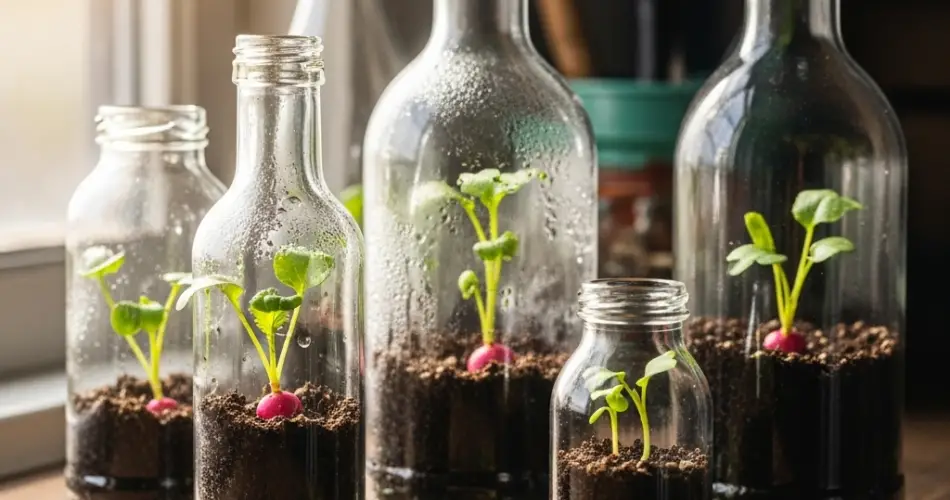
Radishes are among the quickest and easiest root vegetables to grow, making them an excellent choice for beginner gardeners and a favorite for those who love fast results. In as little as three to four weeks, you can harvest crisp, peppery roots. However, like all cool-season crops, radishes germinate best under stable conditions. Early in the season, fluctuating temperatures and unpredictable weather can slow germination or stress young seedlings. An effective solution is to repurpose plastic bottles as mini greenhouses. These bottle covers create a warm, moist microclimate that encourages successful germination and protects delicate radish sprouts in their early days.
Why Radishes Benefit from Bottle Greenhouses
Radishes germinate in soil temperatures as low as 5°C (41°F), but they perform best when the soil is slightly warmer and consistently moist. Bottle greenhouses help maintain these conditions by trapping heat and conserving moisture. They also shield seedlings from sudden cold snaps, heavy rain, and garden pests. For small gardens, patios, or balcony containers, this method makes it easier to grow radishes almost year-round.
Preparing the Soil
Radishes grow best in loose, well-drained soil free of rocks and clumps that might restrict root growth. Choose a sunny spot with at least six hours of direct light daily. Work compost into the soil to improve fertility, but avoid adding too much nitrogen, as this encourages leafy tops instead of root development. Smooth the soil surface and create shallow rows about 1 cm (½ inch) deep, spacing them 10 to 15 cm (4–6 inches) apart.
Making Bottle Greenhouses
To create your mini greenhouses, use clear plastic bottles such as water or soda bottles. Wash them thoroughly and remove any labels to maximize sunlight exposure. With scissors or a sharp knife, cut off the base of each bottle. The top portion with the cap will serve as your greenhouse dome.
-
Ventilation: Keep the caps on during cool nights to conserve heat, but loosen or remove them during the day to prevent overheating and allow airflow.
-
Anchoring: When placing bottles over the soil, press the cut edge slightly into the ground so they remain stable even in windy conditions.
If you are planting in containers or raised beds, these bottle domes work just as effectively.
Sowing Radish Seeds
Sow radish seeds about 2.5 cm (1 inch) apart in the prepared rows, then cover them lightly with soil. Water gently to moisten the seedbed without washing away the seeds. Immediately after sowing, place a bottle dome over the row or cluster of seeds. Each dome can cover a small patch, or you can use several bottles along a longer row.
Caring for Germinating Radishes
Inside the bottle greenhouse, condensation will collect and drip back into the soil, reducing the need for frequent watering. Still, check soil moisture regularly and water when the top layer begins to dry. Radishes germinate quickly, often within 4–7 days, and seedlings will appear strong and upright under their protective domes.
On warm days, remove or loosen the caps to improve ventilation and prevent fungal diseases such as damping-off. This airflow ensures the seedlings adapt gradually to outdoor conditions while still benefiting from protection.
Removing the Bottles
Once radish seedlings are established, usually within 10–14 days, you can begin hardening them off. Remove the bottles for a few hours during the day, then replace them at night. After two or three days of adjustment, the bottles can be removed completely. By this stage, the seedlings are resilient enough to grow without their protective cover.
Thinning for Best Results
When seedlings reach about 5 cm (2 inches) tall, thin them so they stand 5–7 cm (2–3 inches) apart. Proper spacing allows each plant to form plump, round roots instead of long, spindly ones. The thinnings are edible and can be added to salads as spicy microgreens.
Continued Care
Keep the radish bed consistently moist, as uneven watering can cause roots to crack or turn woody. Radishes grow quickly, so check regularly for mature roots. Most varieties are ready to harvest within three to five weeks. Pull them as soon as they reach edible size—delaying harvest can lead to pithy or overly spicy roots.
Advantages of Bottle Greenhouses
-
Extended growing season: Protects seedlings during early spring or late fall.
-
Cost-effective: Reuses plastic bottles that would otherwise go to waste.
-
Space-saving: Perfect for balcony gardens and container setups.
-
Pest protection: Shields sprouts from insects, birds, and slugs.
-
Improved germination: Creates consistent warmth and humidity for stronger starts.
Conclusion
Growing radishes with the help of bottle greenhouses is a simple, sustainable technique that ensures healthy seedlings and abundant harvests. By providing warmth, moisture, and protection during the earliest growth stages, these mini domes help you get the most out of your planting efforts. Whether you garden in a backyard, raised bed, or balcony container, plastic bottles can be transformed into valuable tools for cultivating crisp, fresh radishes. This approach not only saves money and reduces waste but also makes the joy of gardening accessible in even the smallest of spaces.


